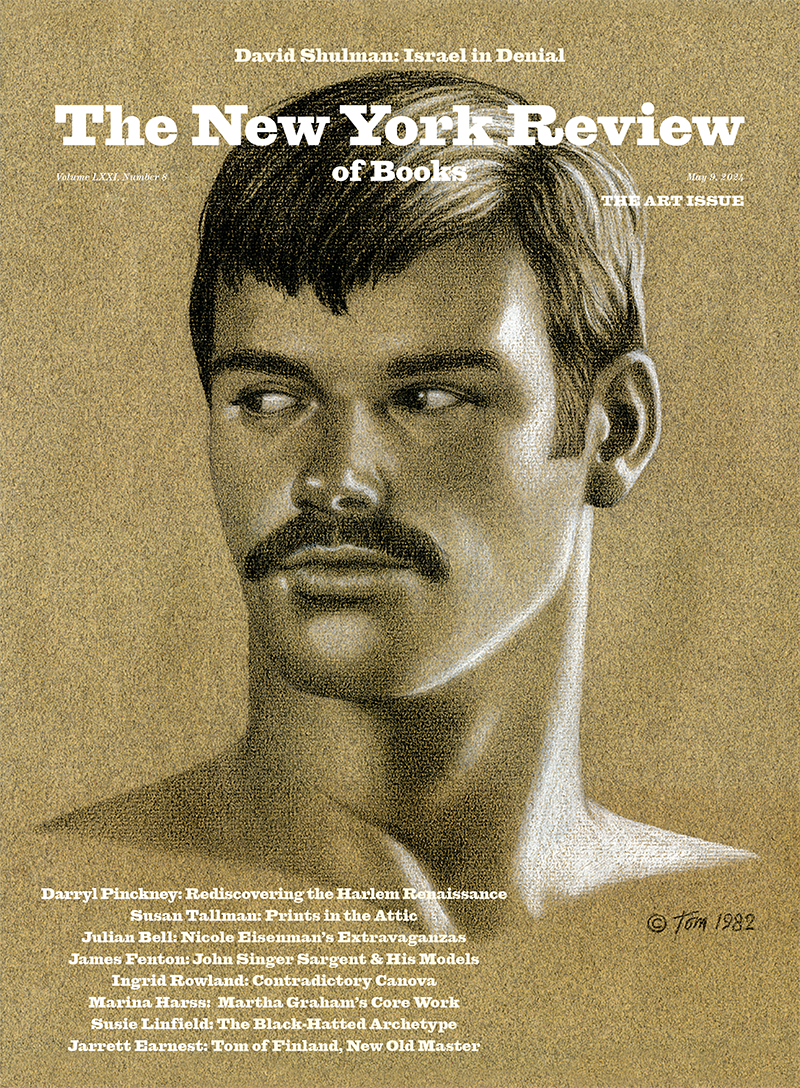
Daniel Boone was a man,
Yes, a big man!
And he fought for America
To make all Americans free!
What a Boone, what a do-er
What a dream come-er true-er was he!
This irksomely catchy faux folk song, together with Fess Parker’s earnest portrayal of the frontier hero for Disney, cemented an image of Daniel Boone in the minds of two or three generations of Americans. The TV show first appeared in the early Sixties, when its American audience was innocent in the scariest sense of that word. Disneyfied Daniel Boone represented the unpretentious, forthright, steadfast, and homespun style with which we were going to civilize the entire world.
“Forget the coonskin cap,” Robert Morgan’s biography begins; “he never wore one.” Though this headgear was imposed upon him by image-fabricators well before Disney, Boone considered it “uncouth, heavy, and uncomfortable.” He preferred a beaver felt hat—just as appropriate for his impressive career as a hunter and trapper, and far more practical. Morgan’s Boone is not a debunking biography, though. While remaining an admirer, Morgan sees his subject as “more complicated…, stranger, and far more interesting” than the tales most commonly told of him.
Never so physically large as the folklore would have it, the real Boone is in some ways even bigger than his legend. Beginning in Quaker Pennsylvania (where he was born forty-two years before the Declaration of Independence), he reached Yellowstone before the end of his days. Though at different times of his life he had claims on hundreds of thousands of acres of Kentucky and Missouri, he died, in the ruefully caustic words of his nephew Daniel Bryan, “not owning as Much land as would make his grave.”
Morgan understands very well that Boone cannot be extricated whole from his mythology as an expert and archetypal frontiersman. The problem is complicated by the fact that Boone was a very large celebrity during his lifetime (rating among other things a substantial passage in Lord Byron’s Don Juan). That situation caused him some serious problems over the years, but more often than not Boone cooperated, rather enthusiastically, in promoting his own larger-than-life image. By carefully drawing on many different accounts, Morgan works toward as clearly focused a picture of the real man as possible, while at the same time (and quite openly) reworking the legend better to suit his own tastes, and maybe ours. Emerson declared, “All history resolves itself very early into the biography of a few stout and earnest persons.” Morgan’s Boone can be read as an illustration of this principle.
George Boone III, Daniel’s grandfather, brought his family from England to Philadelphia in 1717. The Boones had become Quakers fifteen years before. Daniel’s father, Squire Boone, was quite likely a Freemason as well—so Morgan argues on the basis of a Masonic symbol carved on his tombstone, probably by Daniel himself. Expert as Huckleberry Finn at avoiding school, the boy Daniel must nevertheless have logged a fair amount of time in Quaker meetings. As Quakers, the Boones forbade dancing parties for the young, but Daniel snuck out and attended those of neighbors. When his mother shut the children into the house during a smallpox epidemic, he and his sister are said to have deliberately infected themselves, so as to be sooner free when they recovered.
In the 1740s, two of Daniel Boone’s older siblings married outside the Quaker community. Twice rebuked by the Meeting for these derelictions, Squire Boone decided to leave Pennsylvania. It was not uncommon to walk away from such extremely local religious disputes in those days, when there were plenty of places to go to. In 1750, the Boones moved southwest, to North Carolina’s Yadkin River Valley.
Daniel Boone, meanwhile, had been given his first “short rifle gun” at the age of twelve—he’d previously hunted with a club—and thanks to his habitual truancy, he was well on his way to becoming a skillful hunter before the family moved to the Yadkin. On one occasion when he stayed out overnight his family sent a search party after him. In the 1740s, settler–Indian relations in Pennsylvania were generally peaceful; there were still plenty of Indians in the woods the boy Daniel explored, along with “white hunters who lived like Indians.” Much was learned on either side, and Morgan reminds us that “white and Indian communities on the frontier mirrored each other in many ways.”
Beginning in 1755, this intercultural harmony was shattered, when the Seven Years’ War between England and France expressed itself as the French and Indian War on the North American continent. Newly hostile Indians in Pennsylvania practiced a style of asymmetrical warfare that would be quite recognizable to twenty-first-century terrorists, avoiding major battles in favor of massacring isolated settler households. These tactics produced tremendous confusion and fear and, as a literary by-product, a new genre of tabloid horror story defined by Peter Silver, in his recent study Our Savage Neighbors, as the anti-Indian “pathetic sublime.” Pennsylvania Quakers, whose first response to the war was to found the “Friendly Association for Regaining and Preserving Peace with the Indians by Pacific Measures,” became a magnet for fearful suspicion of collaboration, aroused by pamphlet propaganda.
Advertisement
Twenty-one-year-old Daniel Boone (along with the young George Washington and Boone’s first cousin Daniel Morgan) joined an expedition led by General Edward Braddock against the French-Indian stronghold at Fort Duquesne, which ended in a disastrous defeat near the Monongahela River. When the rout began, Boone (present as a teamster, not a combatant) cut his horses loose from the wagon he was driving and rode back to the Yadkin River Valley, where he married Rebecca Bryan the following year. In 1759, following Indian attacks in North Carolina, the Boones and their two young sons moved to Culpepper, Virginia. But Daniel had already begun to hear enticing rumors of Kentucky.
Between 1760 and 1762, Boone hunted very extensively beyond the Blue Ridge Mountains, into Cherokee country which very few white men then dared to penetrate. A story has it he was absent from his hearth for two years straight, and returned to find a newborn daughter, Jemima, who could not possibly have been his, but perhaps had been fathered by one of his brothers. In some versions, Rebecca begs for his mercy; in one she says plainly, “You had better have staid home and got it yourself.” Boone was philosophical about the surprise. “In no version,” Morgan points out, “does Daniel get angry, accuse his wife, or threaten to leave her.” Instead, Jemima became his favorite, growing to be a spirited young woman who survived a kidnapping by Indians in 1776 and a bullet wound during a siege of the Boonesborough fort two years later.
In 1762 the Boones and their four children moved back to the Yadkin, where peace had been made with the Cherokees. In 1765, after their father died, Daniel and his brother Squire traveled to Florida. “The death of a father is a time for reaching out,” Morgan pronounces, “for stretching, moving ahead.” Though the Boones found little game in Florida, and didn’t much like the territory, Daniel made a land claim and proposed to move his family there. Rebecca, for once, would have none of it.
John Findley, another member of Braddock’s ill-fated expedition, was the first to describe Kentucky to Boone. In 1769, Boone made his first excursion there with Findley and four other men. Scarcely visited by Europeans then, this country was thick with game. But it was not just “an idyll in the wilderness.” Boone, regardless of the ease with which he adopted many Indian ways, was a commercial hunter. Just before Christmas a band of Shawnees captured Boone and his companion John Stewart and confiscated the huge store of hides and furs they had laid up in six months of hunting, then let them go with a warning not to return to Kentucky. When Boone and Stewart stole back some of the horses the Indians had also taken, they were recaptured and held until, after seven days, they managed to escape. This episode set a persistent pattern: expert as he was in exploring and hunting, Boone seldom managed to bring home his spoils.
Boone’s brother Squire had come out to search for the party in January of 1770. While the others returned, Squire, Daniel, and John Stewart elected to stay for the winter fur-trapping season. Separated from the Boones, John Stewart vanished; some years later his body was found in a hollow tree. In May, Squire returned to the Yadkin, while Daniel remained in Kentucky, alone, till Squire rejoined him three months later. Reminiscent of an Indian vision quest, Boone’s solitary time in the wild was probably the most formative experience of his life.
Boone’s lone Kentucky pilgrimage inspired some uncontrolled slobbering on the part of Victorian writers, some of which Morgan holds up for display, if not entirely for ridicule. C.W. Webber, for example, describes Boone going “deeper and deeper with yet more restless strength into the cool profounds of the all-nourishing bosom of his primeval mother.” Though finding this passage rather too purple, Morgan thinks the sexualizing of Boone’s relationship to virgin Kentucky is not to be dismissed, invoking Annette Kolodny’s description of “Boone’s passion for the wilderness as a male fantasy of ‘privatized erotic mastery.'” Fortunately, Morgan’s own imaginative descriptions of Boone’s experience are much stronger than any such rhetoric—so powerful that the reader can feel something of Boone’s rapture.
In the winter of 1771, a member of a large party called the Long Hunters went cautiously to investigate an unusual sound and
Advertisement
saw a sight that astonished and then made him laugh. Lying on his back on a deerskin in a little clearing, a bare-headed man was singing to the sky. It was Daniel Boone, alone in the forest, indulging his love of song and craving a human voice, even if it was his own.
Here was Boone not only enjoying “the Enlightenment sense of harmony in nature and between man and nature” but also (according to Morgan’s supposition that Boone had earlier spotted the Long Hunters) intentionally creating an image for an audience of himself doing just that.
Exploitation, inevitably, came next. If the Kentucky odyssey gave special satisfaction to Boone, it also made him, in the practical sense, the greatest white expert on the region. His first attempt to settle his family there failed, thanks to an Indian attack that killed, among others, his oldest son. But by 1775 Boone was cutting a road through Cumberland Gap on behalf of the Transylvania Company, a corporation, headed by Richard Henderson, that had purchased much of Kentucky from Cherokees led by Attakullakulla.
Not all the Indians in Kentucky accepted this deal, however, and once the American Revolution was underway, Indian hostilities against Kentucky settlers began to be abetted by the British. While hunting alone in the winter of 1778 near a salt-boiling operation at Blue Licks, Boone was captured by a large Shawnee army on its way to attack Boonesborough, the settlement he had founded and partially fortified on behalf of the Transylvania company. Boone quickly worked a deal to surrender the twenty-six salt-boilers without a fight, on the understanding that they would not be harmed, and that the attack on Boonesborough would be called off. To win this latter point, Boone even promised the Shawnee Chief Cottawamago (Blackfish) that in the spring he would bring the settlers from Boonesborough to form a joint community with the Shawnee on the Little Miami River.
Boone and sixteen of the salt-boilers were adopted by the tribe, Boone becoming the son of Blackfish, with the new name Sheltowee—“Big Turtle.” In March 1778, Boone accompanied a Shawnee party taking the ten unadopted captives to be traded to a British officer in Detroit named Henry “Hair-Buyer” Hamilton. Though Hamilton apparently offered to ransom him, Boone returned to Chillicothe with the Indians, where he seemed to thrive as a member of the tribe.
The lack of any evidence that Boone took an Indian wife during this period somehow stimulates Morgan to a rather overheated generalization on the sexual preferences of Shawnee women. “This seemed the ultimate ‘natural’ position for surrendering to pleasure, face buried in the oblivion of fur, turned so the G-spot would be touched by her lover’s member,” etc. Talk about the “male fantasy of ‘privatized erotic mastery'”!
Even without an Indian bride, Boone took to life as Sheltowee enthusiastically—hunting and gaming with his Indian brothers and also fixing their firearms. He went about singing and whistling and appeared so happy that some of the other captives suspected his loyalty to the settlements. Meanwhile Boone (an expert gunsmith) repaired and hid away a weapon for himself, and hoarded a store of ammunition. In June, as the Shawnees again began planning a large-scale attack on Boonesborough, he made a successful break for it, covering the 160 miles to the settlement in just under four days. Rebecca had given him up for dead and taken the family back east; only Jemima Boone still waited for him in the half-finished fort.
The defense of Boonesborough is also mythological stuff, and without Boone’s leadership it would probably have failed. Boone rushed the defenders to complete the stockade already being built and bought more time by negotiating with Blackfish once the Shawnee army did arrive. Fighting was heavy and serious once it began, but the Shawnees could not reduce a fort without artillery, and after a ten-day siege they withdrew. Morgan is not alone in arguing that the fall of Boonesborough would have been a major strategic triumph for the British. Though it could not have permanently turned back the tide of western settlement it would have produced a considerable delay. Still, after the battle one of Boone’s rivals, Richard Callaway (whose daughters had been kidnapped with Jemima Boone), managed to have him court-martialed for treason. Though Boone was easily exonerated, the event casts light on the ambiguities of his situation.
Boone spent most of the American Revolution outside the borders of the original thirteen colonies, on shifting ground where loyalties were often difficult to read. During Lord Dunmore’s War in 1774 he had held a British commission, a credential he continued to produce when convenient. To be perceived as a white Indian at a time when settlers were becoming more and more hostile to Indians (with plenty of real scalped and mutilated bodies to back them up) was a still greater risk.
Boone had grievous losses at Indian hands: his brother was slain while deer-hunting with Daniel; his eldest son James was tortured to death at the age of sixteen (by a formerly friendly acquaintance of the Boones) during the family’s first foray into Kentucky; his second son Isaiah was shot through the heart at the Battle of the Blue Licks in 1782 (where Daniel Boone reluctantly followed more hotheaded leaders than himself into a fatal ambush he had warned them was waiting). Despite all that, Boone never seemed to hate Indians the way the other settlers did and expected their comrades to do. Boone did James’s Shawnee killer no violence when he ran across him thirteen years after his son’s agonized death (though others in the party killed the man).
Morgan attributes Boone’s exceptional open-mindedness to his rearing among peaceful Indians in Pennsylvania, to a strong element of Quaker morality in his judgments, and even to the progressive ideas of Freemasonry. He quotes F. Scott Fitzgerald’s The Crack-Up: “The test of a first-rate intelligence is the ability to hold two opposed ideas in mind at the same time, and still retain the ability to function.” Certainly Morgan’s Boone had an unusual ability to speak more than one language, live in more than one culture, and see more than one side of a question. And Boone could not live in the wilderness world that he loved best, with abundant game and few Europeans, without accepting that the Indians were part of it.
As a surveyor in Kentucky after 1785, Boone helped superintend one of the most rapacious land-grabs in US history. His son Nathan said that “in the woods he would run a line as straight as the next man,” but Boone had no interest in paperwork or other technical requirements, so a great many of his claims eventually went sour (the voiding of the Transylvania Company’s purchase after the American Revolution was also a damaging factor). Turned out of his own Kentucky home by the government, Boone was so loathe to be beholden to anyone that he refused money from his friend Peter Houston (who quietly passed it to Rebecca instead).
In 1799 Boone was invited by the governor of then Spanish Missouri to settle there. He served as a kind of sheriff, and at one point had claims to some ten thousand Missouri acres—most of which he lost when Missouri changed hands with the Louisiana Purchase, thanks in part to his usual negligence of paperwork, in part to the indifference of the nation to all he had done to create it. He gave up the last inch of land he owned in Missouri to satisfy claimants from Kentucky. Boone was technically destitute when he died, but it didn’t seem to bother him. His children were prosperous enough to give him a home. In his mid-eighties, he hunted and walked the woods as much as his failing faculties permitted, and oversaw the carpentry of his own coffin. Lord Byron’s description seems reasonably accurate:
For killing nothing but a bear or buck, he
Enjoyed the lonely, vigorous, harmless days
Of his old age in wilds of deepest maze.
By the time he was approaching fifty, Boone had already enacted most of the stuff of his legend, amplified by tales told by others and himself; on the western frontier, the yarn and the brag were well-established genres. In 1783, Boone began talking to a schoolmaster, John Filson, who included “The Adventures of Col. Daniel Boone” as a chapter in his very successful book Discovery, Settlement, and Present State of Kentucky. This work was translated into several languages; in England, it brought Boone’s wilderness idyll to the attention of the Romantic poets.
Through this conduit Boone was to become the model for James Fenimore Cooper’s Leatherstocking, and perhaps even for Faulkner’s Boon Hogganbeck. Though written in the first person and purporting to flow from Boone himself, Filson’s as-told-to narrative has a highly unlikely style for the real Boone: “One day I undertook a tour through the country, and the diversity and beauties of nature I met with in this charming season expelled every gloomy and vexatious thought,” etc. Morgan argues that Boone, who always knew how to adjust his speech to his audience, might really have spoken to Filson in this manner, while Boone’s youngest son Nathan says bluntly, “Much of the language is not my father’s.”
Boone himself always endorsed the truth of Filson’s narrative, something he did not do in all cases: his portrait in an epic poem by Daniel Bryan displeased him. In his eighties he began dictating a memoir to one of his granddaughters but the project was never finished, the manuscript lost. John James Audubon wrote an account of his meeting with Boone, and painted his portrait from memory. In the mid-nineteenth century two biographies were published by ministers who had interviewed Boone very late in his life: Reverend Timothy Flint and Reverend John Mason Peck. The man who hoped to be Boone’s definitive biographer, Lyman Coleman Draper, never finished his monumental Life of Daniel Boone, but a version resurrected by editor Ted Franklin Belue for publication in 1998 goes through the Shawnee siege of Boonesborough. Two shorter books carved from the corpus of Draper’s voluminous research appeared around the same time: Draper’s interviews with Nathan Boone (My Father, Daniel Boone), and the brief but telling memoir of Boone by Peter Houston.
Morgan has viewed all these sources through a prism of his own design. He likes best to see Boone as he was perceived by the New England Transcendentalists, Emerson and better yet Thoreau. Best of all is Whitman, whose “Song of the Open Road” Morgan reads (with a somewhat surprising plausibility) as a literary avatar of Boone’s projection of himself across the North American continent:
I inhale great draughts of space.
The east and west are mine, and the north and south are mine.
Robert Morgan’s forebears were eighteenth-century immigrants themselves, and his family made a homestead in the North Carolina mountains in 1840. There is enough frontier experience in his background for him to take Boone’s legend personally. In his considerable career as a poet, Morgan has been as intent upon nature as Robert Frost, and more particularly fascinated with wild nature. “We do not talk loud in forests,” he writes in his poem “Under Cover,” from The Strange Attractor,
Something in the blood
says don’t violate the poise of wood
and wild, don’t insult with words
this place where every bush may hide
an ambush, and each syllable
be heard by hidden, larger presence.
As a fiction writer, Morgan has chronicled, in both past and present, the people of southern Appalachia, whose gnarly independence and refusal to conform with their neighbors (or even to tolerate very near neighbors) had by the late twentieth century pretty well ceased to be an adaptive trait. His short story “Watershed,” from The Mountains Won’t Remember Us, describes a settler expedition against Indians of the kind familiar to Daniel Boone. In the confusion of combat, the young narrator slays an Indian girl about his own age, whom he really would have preferred to rescue. The story ends with his description of return to the settlements:
They seemed more cabins and clearings along the river than had been there the night before. We come to one after another. I don’t reckon any had been built during the night, but it seemed they was more cleared ground and trails, and the houses and barns had multiplied.
In Morgan’s vision of Daniel Boone’s relationship to wilderness, this rather odd conclusion finds its larger setting.
“In 1784,” Jack Turner writes in The Abstract Wild,
the federal government adopted a system of rectangular surveying first used by the French for their national survey. The result was a mathematical grid: six-mile squares, one-mile squares. Unfold your topo map and there they are, little squares everywhere. Fly over a town or city and you will see people living in a matrix resembling a computer chip. The grid also produced rectangular farms, national parks, counties, Indian reservations, and states, none of which have any relation to the biological order of life.
For the pioneers, Turner argues, the grid “was a physical expression of order and control—the aim of their morality. The idea, of course, was to sell the grid for cash.”
Such was the ultimate goal of Daniel Boone’s work as a surveyor. He was heartily sick of it before he was done. In divesting himself of all his claims in his effort to satisfy putative creditors, he seemed to reject the very idea of land ownership. Boone told a man who traveled to Missouri to press a doubtful Kentucky land claim on him that “he had come a great distance to suck a bull, and he reckoned he would have to go home dry.”
This paradoxical relationship to wilderness is a vein that runs all through Boone’s career—as indeed it has run through Robert Morgan’s. The governing insight of this biography is that as much as Boone loved to be a solitary wanderer in a paradisal wild (then not at all abstract but wholly real), he wanted almost or just as much to have the company of his family, his ten siblings, his wife Rebecca, and their ten children. That the one wish was doomed to wreck the other would not have been obvious to Boone at the time; thus Morgan’s version of his story becomes a study in unintended consequences. The self-description which Filson put in his mouth—“an instrument ordained to settle the wilderness”—takes on a double edge. It is Boone’s peculiar tragedy (shared with the expanding people he led) not to be able to grasp his heart’s desire without destroying it.
This Issue
December 20, 2007
This Issue
December 20, 2007