
Napoleon famously described China as a sleeping giant that would shake the world when it finally awoke. Well, now the giant is up and about, and the rest of us can’t help but notice. 2010, indeed, could well end up being remembered as the year when China started throwing its weight around.
Why this should be happening now, in precisely this way, is not immediately obvious. For years Chinese leaders seized every opportunity to assert that their country’s growing power posed no threat to the international status quo. Talk of the “peaceful rise” was all the rage. Chinese diplomats deftly disarmed the concerns of their neighbors in the region, reassuring anyone who would listen that Beijing would never stoop to the sorry unilateralism of those imperialists in Washington. Journalists spoke of China’s “charm offensive.”
China Rising, a 2007 book by the University of Southern California’s David Kang, began by approvingly citing a speech a year earlier by Chan Heng Chee, Singapore’s ambassador to the United States. “Dynastic China’s relations with Southeast Asia were to a large extent based on ‘soft power,'” she declared. “It was China’s economic power and cultural superiority that drew these countries into its orbit and was the magnet for their cultivation of relations.” Chan concluded her remarks by saying that “there is much optimism in Southeast Asia” about China’s growing international heft.
That optimism now seems distinctly historical. In March of this year China startled the rest of East Asia by announcing that it would henceforth regard the territories in the resource-rich South China Sea as being an area of “vital national interest,” on a par with Tibet and Taiwan. Vietnam, Indonesia, the Philippines, Brunei, Malaysia, and Taiwan all claim various islands within the region as their own, but for the past few years China had succeeded in defusing the potential for conflict by pledging to resolve these disputes through negotiation, demonstrating its seriousness by joining a nonaggression pact under the aegis of the Association of Southeast Asian Nations (ASEAN). Now, by contrast, the People’s Liberation Army Navy is aggressively patrolling the disputed waters. Chinese naval ships have seized dozens of Vietnamese fishing boats and arrested their crews.
In September the Japanese Coast Guard arrested the captain of a Chinese fishing trawler after his boat collided with two Japanese vessels in waters off the Japanese-administered Senkaku Islands, which are also claimed by both Beijing and Taipei as their own. (In Chinese they are known as the Diaoyu Islands.) The Chinese thereupon threatened the Japanese with unspecified reprisals unless the captain was released, and a wave of anti- Japanese demonstrations—the one sort of mass gathering allowed by the Communist government in Beijing—swept over the country. Tokyo backed down and released the man without putting him on trial as originally announced, thus granting the Chinese a dubious diplomatic victory.
Some analysts speculate that the Japanese caved because the Chinese chose the same moment to curtail their exports of rare earth elements (REEs), raw materials that are crucial to the manufacture of much high-end gadgetry. (Japan is the leading consumer of REEs but has almost no supplies of its own.) Yet even after Tokyo’s concessions Beijing has kept up its bluster, insisting, for example, on compensation for damage to the Chinese ship. Then, at an East Asian summit in Hanoi on October 29, it canceled at the last minute the first official meeting between Chinese Premier Wen Jiabao and Japanese Prime Minister Naoto Kan since the dispute began, after accusing Japan once again of “violating Chinese sovereignty and territorial integrity.”
The timing of these episodes is especially mysterious when you consider that China may have actually done considerable damage to its own interests. Its conflict with the ASEAN countries has almost certainly undone years of patient diplomatic work to bolster Beijing’s reputation. The dispute was immediately seized upon by the United States, which offered its services as an arbiter. For years Washington’s focus on its wars in Iraq and Afghanistan contributed to what some saw as its creeping marginalization in the region. Now, suddenly, the uncertainty over China’s intentions is encouraging Japan, South Korea, India, and several Southeast Asian countries—including, most bemusingly, Vietnam—to reassert their desire for cooperation with the Americans. The Singaporeans are now urging the US to get more involved in the region’s affairs.
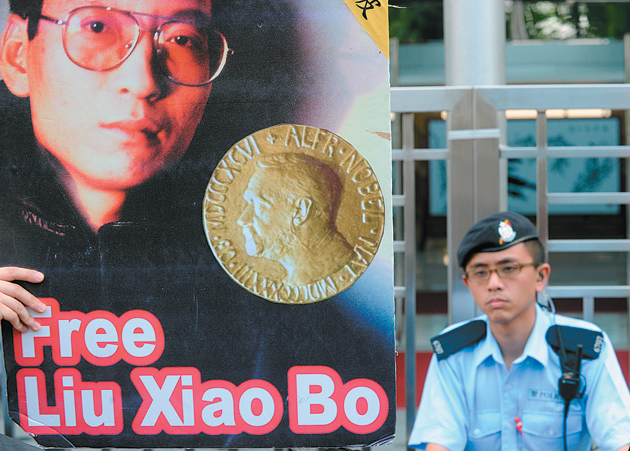
Meanwhile, Beijing’s increasingly stentorian defense of its mercantilist trade policies, especially its insistence on holding down the value of its currency, is alienating its trading partners in Europe as well as the US. In July the German companies Siemens and BASF made a remarkably frank public complaint to Premier Wen about Chinese treatment of foreign investors—and those fears about China’s reliability as a business partner were exacerbated by China’s de facto ban on the export of REEs, which was lifted abruptly (and inexplicably) on October 28. Finally, the extraordinary stream of official invective that greeted the award of the Nobel Peace Prize to the dissident Liu Xiaobo in October certainly hasn’t helped. I haven’t seen polling data yet, but I would not be surprised to discover that China’s international reputation has reached a new low.
Advertisement
Why the sudden turnaround? One reason could be a surfeit of self- confidence. 2010, after all, may well prove to be the year in which the People’s Republic surpassed Japan to become the world’s second-largest economy; Chinese growth has continued apace during a period when the world’s established economies were slogging through a deep recession. Yet China, as its own leaders acknowledge, still has a long way to go. At $6,600, its per capita GDP remains that of a developing country—just above Namibia’s in the world rankings.
Another answer might involve China’s internal politics. As Ian Johnson recently noted in these pages,1 the Chinese Communist Party (CCP) has been trying to negotiate its most complicated leadership transition since, arguably, the reform period began, and this—or so one theory goes—has encouraged rivals for power within the political establishment to spare no effort in demonstrating their credentials as defenders of Chinese national pride. This makes sense. And yet all the recent muscle-flexing has also taken place at a time when some Chinese leaders—above all Premier Wen—have hinted about the need for political reform. Which trend should we take more seriously? The inner workings of the Party determine economic and every other kind of national policy and, as the books under review show by default, they remain as secret as ever. How do we figure out a place as big, and as complicated, as modern-day China?
There is certainly no shortage of people willing to give it a try. Yet it was not so long ago that China-watching was an occupation limited to a select and frustrated few. A small band of Western academics and intelligence officers who could only dream of gaining access to the People’s Republic struggled to make sense of the place from afar. They spent their days poring over newspapers in the Universities Service Center in Hong Kong (a mostly American-financed repository of all things Chinese) or doggedly interviewing the émigrés who managed to find their way out through tightly closed borders. In his vivacious memoir China Watcher, leading American Sinologist Richard Baum recalls a time when just getting your hands on an internal Party document was enough to launch a career—not that many people outside academia really cared that much. The relative marginality of China studies reflected the profound isolation and impoverishment of Mao’s Middle Kingdom. Compared with the all-defining struggle between the Soviet Union and the West, China was something of a sideshow.
These days, of course, the dilemma facing would-be Sinologists is exactly the opposite. The trickle has become a deluge. You can interview tycoons and peasants, or crunch the statistics gushing from government offices or stock markets. The inner workings of the Communist Party may remain the proverbial black box, but overall access to virtually every other part of society has improved immeasurably. Mandarin-speaking foreigners poke around in some of the country’s darkest corners. Ironically, the opening of China’s borders has coincided with the rise of the Internet, meaning that physical presence is no longer quite as important as it used to be. Nowadays, you can track public developments in China from the comfort of your home office—and not only from the ever-proliferating array of foreign websites and forums devoted to scrutinizing the country. The Chinese themselves, needless to say, are the best source. China’s population of Web users, at 384 million, already exceeds the population of the United States, and many of them are bloggers, engaging in passionate discussions that will never find their way into the Party-controlled press.
Today, in short, just about anyone can become a China hand. Combine this with the centrality of China’s new position on the world stage, and it is easy to see why so many are tempted to try to make sense of the place. The results, as one might expect, are uneven. Recent books range from travelogues and journalistic grab bags to intensely serious academic studies. Very few of the many guides on business and economics rise above the usual bromides. China’s Megatrends, by John and Doris Naisbitt, represents the low point of the genre: studded with fawning tributes to the government and generalizations so grand as to be useless, it exults in the platitude: “We wished some of the journalists who criticize China so self-righteously and condescendingly would also write about the cosmopolitanism and savoir-vivre of some top-ranking Chinese politicians.”
Advertisement
The other extreme is represented by Yasheng Huang’s Capitalism with Chinese Characteristics, a brilliant examination of economic policy since the start of the reform era that builds on meticulously mined data to arrive at some provocative insights into the broader pattern of Chinese Communist Party decision-making. Huang argues that during the post-Tiananmen period China has in fact backtracked from genuinely market-oriented economic reform, giving priority instead to a top-heavy and increasingly inefficient brand of state capitalism.
James Fallows’s collection of China essays, originally published in The Atlantic Monthly, uses old-fashioned reporting and pointed anecdote to illuminate topics ranging from renminbi valuation to environmental policy. Particularly disquieting, for example, are his visits to the Chinese towns that both mine coal and use it to fire the kilns that produce cement. In these “coal-and-cement towns,” he writes, “people and buildings are colored black by the coal dust swirling around them, and coated gray and white by the cement dust that leaks from the kilns and…pours from the exhaust stacks.”
Common to many of these books is the assumption that modern China cannot be properly understood without reference to its historical and cultural sources. The British journalist Martin Jacques and the American political analyst Christopher Ford both seek to explain how China will behave on the world stage by exploring China’s intellectual traditions. Jacques argues that culture is the key. It is of utmost importance, he says, that we understand that China is not a “nation-state” in the usual Western understanding of the term, but rather a “civilization-state” founded on the Confucian legacy of “emphasis on moral virtue, on the supreme importance of government in human affairs, and on the overriding priority of stability and unity….” This is a worldview that emphasizes respect for hierarchical relationships; it privileges the collective over the individual, and regards opposition to the state not only as dangerous to the established social order but as downright immoral to boot.
Jacques believes that these fundamentally non-Western values, coupled with long-held Han Chinese beliefs in their own innate cultural and racial superiority, challenge Western assumptions about the primacy of individual rights and the principles of institutionalized conflict that lie at the heart of democratic systems. And this, in turn, means that we are now embarking on an era of “contested modernity,” one in which Western nations no longer impose their own values on the world at large. (One detects a whiff of schadenfreude here on the part of Jacques, a former editor of Marxism Today who clearly has a bone to pick not only with the Washington Consensus on economic development but with the advocates of multiparty democracy and human rights.) The West, he asserts, has yet to recognize the consequences of the rapid rise of this powerful and proudly non-Western society, a development that is likely to challenge and undermine the assumptions underlying the existing global order.
Jacques’s book—which includes ruminations on the evolution of the Euro- pean colonial system and a long analysis of modern Japanese history—is ambitious and ultimately rather baggy. Christopher Ford, who has had a long career as a US government legal expert, chooses instead to stick to his brief. With impressive zeal he works his way through the canon of Chinese political philosophy, digesting not only Confucius and his heirs but also the Legalists (who shared the Great Sage’s belief in the primacy of the state while ruthlessly discarding his insistence on virtue), the highly influential “manuals of war and statecraft” known as the bingjia, and even a few Taoists for good measure. Like Jacques, Ford finds that these sources—however they might differ on other counts—revolve around the same obsession with “the need for political unity” and “the natural order of all politics as a pyramidal hierarchy.” The emperor is the only truly legitimate ruler under heaven; opposition to his rule is thus a form of civic sinfulness even when practiced by foreigners, and other states can exist only in fealty to him. Translated into international relations, this millennia-old discourse represents a
tradition [that] is suffused with a monist political ideology that conceives of world order in fundamentally hierarchical terms, idealizes interstate order as tending toward universal hegemony or actual empire, and lacks a meaningful concept of coequal, legitimate sovereignties pursuant to which states may coexist over the long term in nonhierarchical relationships.
If we are to take this at face value, it is hard to imagine how a culture steeped in such thinking can tolerate a genuinely multipolar world order.
All of this is suggestive. Some of it is probably even true. The problem, of course, is that generalizing about culture is inherently slippery. Cultures change. They change us, and we change them. As social animals we are undoubtedly shaped by the legacy of the past, but this is a dynamic process that works in many mysterious ways. Reading the bingjia literature will tell you quite a lot about China, I’m sure, but I didn’t find much in Ford’s gloss to explain how a group of revolutionaries inspired by the radically egalitarian theories of a nineteenth-century German political economist somehow succeeded in seizing power in China in 1949. I found it even less helpful in understanding why one of those selfsame Communists, Deng Xiaoping, decided to reverse course in 1978, steering his Marxist comrades away from Mao’s doctrine of permanent revolution and toward a modern market economy, albeit one under firm Party control.
Ford, at least, seems to be aware of the problem; his book is filled with hedges and qualifiers that acknowledge the complexity of the task of interpretation. Jacques, by contrast, writes like a convinced essentialist. Japan, for him, represents a society that has remained stubbornly true to its own uniquely non-Western values despite its embrace, over the past century and a half, of a Western program of modernization; in this, he suggests, it is a model for China. If so, it’s a poor way to prove the point. In 1945, seemingly overnight, the Japanese collectively sloughed off precisely the “core values” of their own brand of samurai militarism that until then had been regarded by many onlookers, Japanese and foreign, as the wellspring of the national culture. Modern-day Japan clings, with remarkable consistency, to a pacifist ethos that is reflected in both popular sentiment and its official constitutional arrangements—an outcome that would have been impossible to predict if all you had read were the books of the authorities on pre-war Japanese culture (like the American anthropologist Ruth Benedict’s The Chrysanthemum and the Sword, approvingly cited by Jacques).
Japan may still seem intransigently unique to many outsiders, but in fact no other country in the world has endured more in the way of radical social change over the past 150 years—unless you count the other East Asian economic success stories like South Korea, Taiwan, Hong Kong, or Singapore. No one who knows them would argue that these societies, even after decades of headlong modernization, essentially mimic the United States or Western Europe; yet the claim that they somehow embody unsullied, hierarchical “Confucian” values is, by now, a very hard one to make. It’s not just that Seoul and Taipei have genuinely accepted democratic institutions. Consider, for a moment, what Confucius would have had to say about market capitalism, global trade, or women working in the same professions as men.
Judging by the evidence, we might even find ourselves asserting that principles that are ostensibly “Confucian” uniquely equip societies to embrace and promote violent technological change precisely because they give priority to education. But one doesn’t hear that argument much—perhaps because it demonstrates the unpredictable and paradoxical effects that “culture” can yield. (By the way, Chinese bloggers have a remarkable track record of dislodging corrupt low- and middle-level Party officials from office; I have yet to hear of someone losing their place in the nomenclatura for violating norms of filial piety.)
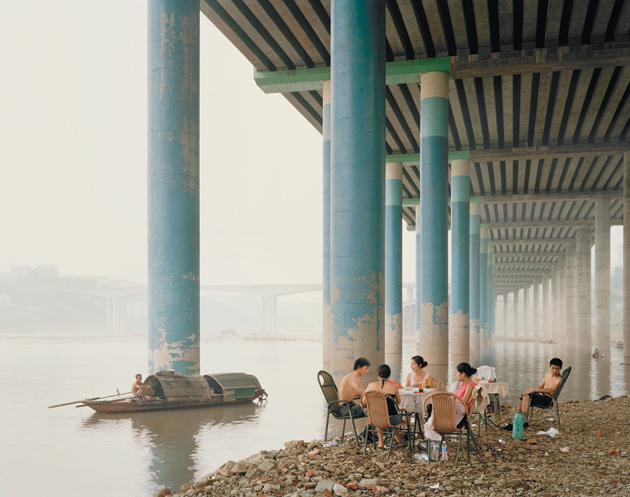
From my own years in the region, I’m inclined to think that the experience of the other East Asian countries—which Deng privately regarded as practical models for what he wanted to do with his own—throws a great deal of light on where China is headed now. Consider, for a moment, the city of Shenzhen. Back in 1979, when the CCP decided to designate it as one of the first four “Special Economic Zones” in the country, Shenzhen was home to about 80,000 people, most of them fishermen or farmers. Today the place has a population of just under nine million, a bit more than New York City’s. The workforce that fills its countless factories is drawn from China’s immense “floating population” of migrant workers desperate to escape the poverty of rural life. Virtually everyone who lives in Shenzhen comes from somewhere else. And since all Shenzheners are outsiders, they tend to speak to each other in Mandarin Chinese rather than the Cantonese dialect that prevails in most of surrounding Guangdong Province and Hong Kong.
Shenzhen is now the fulcrum of the Pearl River Delta, China’s industrial heartland. James Fallows rightly notes that Guangdong Province alone probably has a manufacturing workforce larger than that of the entire United States; as of 2007 the region accounts for a bit less than half of China’s exports. (If you own a computer, a mobile phone, or an iPod, that device is likely to include components that have passed through Shenzhen or its environs at some point.) What fascinates me is less Shenzhen’s industrial might than its role as a social proving ground. As Huang shows in his book, throughout the reform period Shenzhen and the province around it have formed a prodigious engine of entrepreneurship, generating private companies at a rate unmatched anywhere else in China. Shenzhen has been at the forefront of a myriad of Chinese social trends, including, to name only a few, theme parks, Ponzi schemes, super-tall skyscrapers, and beauty contests.
The proximity of Hong Kong, just a subway ride away, clearly has much to do with this spirit of comparative openness and unabashed materialism. It is interesting that Chinese Premier Wen chose Shenzhen as the venue for his recent remarks about the need to make the Party more accountable to the public.
Of course we shouldn’t identify Shenzhen with China as a whole. For one thing, most Chinese still live in the impoverished countryside, and the benefits of development in the coastal boomtowns remain out of their reach. For another, all the big decisions that matter are made by a Communist Party elite that has shown little inclination to surrender a significant measure of power.
Nonetheless, I don’t think that we can dismiss the Shenzhen factor out of hand. As Peter Hessler shows in his remarkable report, Country Driving: A Journey through China from Farm to Factory, the only constant in today’s China is change. Hessler embarks on a series of road trips through underdeveloped western China, rents a house in a village that provides a portal into the transformation of rural life, and follows two entrepreneurs as they start up a factory in the coastal city of Wenzhou. The author has the advantage of speaking fluent Mandarin, and his conversations with the locals are blessed by a quirky spontaneity. At one point, searching for a weathered remnant of the Great Wall in Inner Mongolia, Hessler realizes that his car is standing on it. “It’s not a problem,” his guide tells him. “They just don’t want people to drive on it for long distances.” But underlying the comedy is the momentous and disorienting shift of urbanization:
In northern villages, people were rarely suspicious, and it was standard for them to invite me in for tea or a meal. I had no illusions about the toughness of rural life, and my time in the Peace Corps had taught me not to romanticize poverty. But nevertheless there was something poignant about driving through the dying villages. These were last glimpses—the end of small towns and rural childhoods; perhaps even the end of families with siblings. And rural traditions of honesty and trust wouldn’t survive the shift to city life. There weren’t many parts of the world where a stranger is welcomed without question, and entrusted with children, and it made me sad to drive away from Temple of Peace.
The people in this account are all vividly realized, not the disembodied abstractions that flit through so many of the big-view books on China. My favorite is Cao Chunmei, the wife of Hessler’s rural landlord. Buffeted by the forces of rapid change, she is spiritually unmoored, desperately seeking solace in Buddhism and folk religion. For a while she even flirts with the New Age faith of Falun Gong—that is, until it is crushed by the CCP, which has come to fear its potential as a rival for power. “Even when it comes to religion, the Chinese can be pragmatic,” Hessler concludes. “They might possess the desire to believe, but few will cling to a doomed faith once the government applies serious pressure.”
That rings true. Yet Hessler is such a good reporter that he frequently ends up capturing details that undercut his own larger conclusions. So, for example, he follows villagers as they indulge in the ancient ritual of sweeping the graves of their ancestors—in casual defiance of the propaganda loudspeakers booming out reminders that the Party has banned the custom. Hessler clearly doesn’t believe that there is any social agent with the wherewithal to challenge the Party’s monopoly on power anytime soon, and he is good at showing the sophistication with which Communist functionaries on the ground divert and control yearnings for political change.
He is perfectly aware that China experiences large numbers of “mass incidents” every year (in 2009 there were 90,000 of them), but unlike other grand theorizers on this topic he actually gets out and talks to some of the discontented—in his case, people who have been forcibly resettled by the construction of a huge dam project, losing their homes and livelihoods in the process. He concludes that most such protests have little political effect, since they are, ultimately, “intensely local and individual,” and observes that “there are plenty of pressure valves to redirect the energies” of the protesters.
Yet his book can hardly be read as an apology for CCP rule—in stark contrast to Jacques, who blithely informs us that Chinese culture regards “paternalism” as “a desirable and necessary characteristic of government.” As Hessler’s experience strongly suggests, the Chinese are on the move, and the Party will have to move with them if it is to hang on. “In the development zone,” he writes,
I was most heartened by signs of individualism—ways in which people had escaped the group mentality of the village, learning to make their own decisions and solve their own problems.
Broader change could follow, he muses, when the “middle and upper classes” no longer find that the system works to their advantage—“but that hadn’t happened yet….” Given the intensity of the transformation Hessler depicts, one wonders how soon that “yet” will arrive. I finished his book with a distinct lack of envy for the apparatchiks faced with managing the process.
And what about Confucius—depicted by so many other observers as the fount of Chinese values? It is striking that Hessler’s book contains exactly one reference to the Great Sage—and he is mentioned in the same breath as Jesus Christ, John D. Rockefeller, and Mao Zedong (all four of them members of the private pantheon of a factory employee). The dynamism and volatility of the society depicted by Hessler, one might conclude, do not have a great deal in common with the grand, “classical” ideological systems presented by more high-altitude observers like Jacques and Ford. China may not be on a road to Jeffersonian democracy, but the Party has a great deal of adapting ahead of it if it intends to maintain control. China is changing the world, but it is changing itself even more, and we should expect plenty of surprises along the way.
—November 10, 2010
This Issue
December 9, 2010
This Issue
December 9, 2010
-
*
See “The Party: Impenetrable, All-Powerful,” The New York Review, September 30, 2010. ↩