
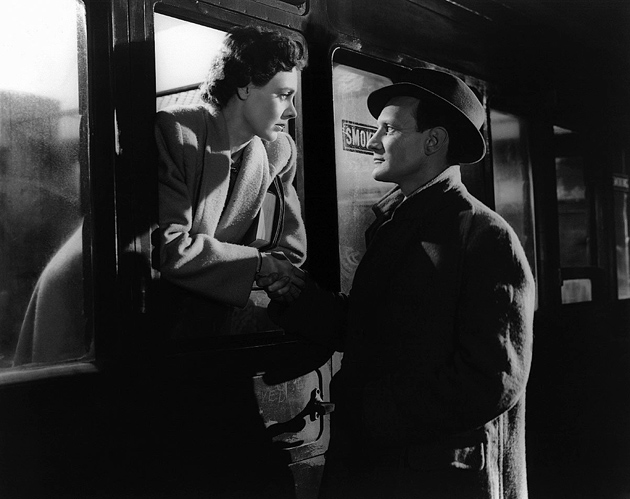
The Way We Live Now
Railways have been declining since the 1950s. There had always been competition for the traveler (and, though less marked, for freight). From the 1890s horse-drawn trams and buses, followed a generation later by the electric or diesel or petrol variant, were cheaper to make and run than trains. Lorries (trucks)—the successor to the horse and cart—were always competitive over the short haul. With diesel engines they could now cover long distances. And there were now airplanes and, above all, there were cars: the latter becoming cheaper, faster, safer, more reliable every year.
Even over the longer distances for which it was originally conceived, the railway was at a disadvantage: its start-up and maintenance costs—in surveying, tunneling, laying track, building stations and rolling stock, switching to diesel, installing electrification—were greater than those of its competitors and it never succeeded in paying them off. Mass-produced cars, in contrast, were cheap to build and the roads on which they ran were subsidized by taxpayers. To be sure, they carried a high social overhead cost, notably to the environment; but that would only be paid at a future date. Above all, cars represented the possibility of private travel once again. Rail travel, in what were increasingly open-plan trains whose managers had to fill them in order to break even, was decidedly public transport.
Facing such hurdles, the railway was met after World War II by another challenge. The modern city was born of rail travel. The very possibility of placing millions of people in close proximity with one another, or else transporting them considerable distances from home to work and back, was the achievement of the railways. But in sucking up people from the country into the town and draining the countryside of communities and villages and workers, the train had begun to destroy its own raison d’être: the movement of people between towns and from remote country districts to urban centers. The major facilitator of urbanization, it fell victim to it. Now that the overwhelming majority of nonelective journeys were either very long or very short, it made more sense for people to undertake them in planes or cars. There was still a place for the short-haul, frequently stopping suburban train and, in Europe at least, for middle-distance expresses. But that was all. Even freight transportation was threatened by cheap trucking services, underwritten by the state in the form of publicly funded freeways. Everything else was a losing proposition.
And so railways declined. Private companies, where they still existed, went bankrupt. In many cases they were taken over by newly formed public corporations at public expense. Governments treated railways as a regrettable if unavoidable burden upon the exchequer, restricting their capital investment and closing “uneconomic” lines.
Just how “inexorable” this process had to be varied from place to place. “Market forces” were at their most unforgiving—and railways thus most threatened—in North America, where railway companies reduced their offerings to the minimum in the years after 1960, and in Britain, where in 1964 a national commission under Dr. Richard Beeching axed an extraordinary number of rural and branch lines and services in order to maintain the economic “viability” of British Railways. In both countries the outcome was an unhappy one: America’s bankrupt railways were de facto “nationalized” in the 1970s. Twenty years later, Britain’s railways, in public hands since 1948, were unceremoniously sold off to such private companies as were willing to bid for the most profitable routes and services.
In continental Europe, despite some closures and reductions in services, a culture of public provision and a slower rate of automobile growth preserved most of the railway infrastructure. In most of the rest of the world, poverty and backwardness helped preserve the train as the only practicable form of mass communication. Everywhere, however, railways—the harbingers and emblems of an age of public investment and civic pride—fell victim to a dual loss of faith: in the self-justifying benefits of public services, now displaced by considerations of profitability and competition; and in the physical representation of collective endeavor through urban design, public space, and architectural confidence.
The implications of these changes could be seen, most starkly, in the fate of stations. Between 1955 and 1975 a mix of antihistoricist fashion and corporate self-interest saw the destruction of a remarkable number of terminal stations—precisely those buildings and spaces that had most ostentatiously asserted rail travel’s central place in the modern world. In some cases—Euston (London), the Gare du Midi (Brussels), Penn Station (New York)—the edifice that was demolished had to be replaced in one form or another, because the station’s core people- moving function remained important. In other instances—the Anhalter Bahnhof in Berlin, for example—a classical structure was simply removed and nothing planned for its replacement. In many of these changes, the actual station was moved underground and out of sight, while the visible building—no longer expected to serve any uplifting civic purpose—was demolished and replaced by an anonymous commercial center or office building or recreation center; or all three. Penn Station—or its near contemporary, the monstrously anonymous Gare Montparnasse in Paris—is perhaps the most notorious case in point.1
Advertisement
The urban vandalism of the age was not confined to railway stations, of course, but they (along with the services they used to provide, such as hotels, restaurants, or cinemas) were by far its most prominent victim. And a symbolically appropriate victim, too: an underperforming, market-insensitive relic of high modern values. It should be noted, however, that rail travel itself did not decline, at least in quantity: even as railway stations lost their charm and their symbolic public standing, the number of people actually using them continued to rise. This was of course especially the case in poor, crowded lands where there were no realistic alternatives—India being the best illustration but by no means the only one.
Indeed, despite underinvestment and a degree of intercaste social promiscuity that renders them unappealing to the country’s new professionals, the railways and stations of India, like those of much of the non-Western world (e.g., China, Malaysia, or even European Russia), probably have a secure future. Countries that did not benefit from the rise of the internal combustion engine in the mid-twentieth-century age of cheap oil would find it prohibitively expensive to reproduce American or British experience in the twenty-first century.
The future of railways, a morbidly grim topic until very recently, is of more than passing interest. It is also quite promising. The aesthetic insecurities of the first post–World War II decades—the “New Brutalism” that favored and helped expedite the destruction of many of the greatest achievements of nineteenth-century public architecture and town planning—have passed. We are no longer embarrassed by the rococo or neo-Gothic or Beaux Arts excesses of the great railway stations of the industrial age and can see such edifices instead as their designers and contemporaries saw them: as the cathedrals of their age, to be preserved for their sake and for ours. The Gare du Nord and the Gare d’Orsay in Paris; Grand Central Station in New York and Union Station in St. Louis; St. Pancras in London; Keleti Station in Budapest; and dozens of others have all been preserved and even enhanced: some in their original function, others in a mixed role as travel and commercial centers, others still as civic monuments and cultural mementoes.
Such stations, in many cases, are livelier and more important to their communities than they have been at any time since the 1930s. True, they may never again be fully appreciated in the role they were designed to serve—as dramatic entrance portals to modern cities—if only because most people who use them connect from tube to train, from underground taxi rank to platform escalator, and never even see the building from the outside or from a distance, as it was meant to be seen. But millions do use them. The modern city is now so large, so far-flung—and so crowded and expensive—that even the better-heeled have resorted to public transport once again, if only for commuting. More than at any point since the late 1940s, our cities rely for their survival upon the train.
The cost of oil—effectively stagnant from the 1950s through the 1990s (allowing for crisis-driven fluctuations)—is now steadily rising and unlikely ever to fall back to the level at which unrestricted car travel becomes economically viable again. The logic of the suburb, incontrovertible with oil at $1 a gallon, is thus placed in question. Air travel, unavoidable for long-haul journeys, is now inconvenient and expensive over medium distances: and in Western Europe and Japan the train is both a pleasanter and a faster alternative. The environmental advantages of the modern train are now very considerable, both technically and politically. An electrically powered rail system, like its companion light-rail or tram system within cities, can run on any convertible fuel source whether conventional or innovative, from nuclear power to solar power. For the foreseeable future this gives it a unique advantage over every other form of powered transportation.
It is not by chance that public infrastructural investment in rail travel has been growing for the past two decades everywhere in Western Europe and through much of Asia and Latin America (exceptions include Africa, where such investment is anyway still negligible, and the US, where the concept of public funding of any kind remains grievously underappreciated). In very recent years railway buildings are no longer buried in obscure subterranean vaults, their function and identity ingloriously hidden under a bushel of office buildings. The new, publicly funded stations at Lyon, Seville, Chur (Switzerland), Kowloon, or London Waterloo International assert and celebrate their restored prominence, both architectural and civic, and are increasingly the work of innovative major architects like Santiago Calatrava or Rem Koolhaas.
Advertisement
Why this unanticipated revival? The explanation can be put in the form of a counterfactual: it is possible (and in many places today actively under consideration) to imagine public policy mandating a steady reduction in the nonnecessary use of private cars and trucks. It is possible, however hard to visualize, that air travel could become so expensive and/or unappealing that its attraction for people undertaking nonessential journeys will steadily diminish. But it is simply not possible to envision any conceivable modern, urban-based economy shorn of its subways, its tramways, its light rail and suburban networks, its rail connections, and its intercity links.
We no longer see the modern world through the image of the train, but we continue to live in the world the trains made. For any trip under ten miles or between 150 and 500 miles in any country with a functioning railway network, the train is the quickest way to travel as well as, taking all costs into account, the cheapest and least destructive. What we thought was late modernity—the post-railway world of cars and planes—turns out, like so much else about the decades 1950–1990, to have been a parenthesis: driven, in this case, by the illusion of perennially cheap fuel and the attendant cult of privatization. The attractions of a return to “social” calculation are becoming as clear to modern planners as they once were, for rather different reasons, to our Victorian predecessors. What was, for a while, old-fashioned has once again become very modern.
The Railway and Modern Life
Ever since the invention of trains, and because of it, travel has been the symbol and symptom of modernity: trains—along with bicycles, buses, cars, motorcycles, and airplanes—have been exploited in art and commerce as the sign and proof of a society’s presence at the forefront of change and innovation. In most cases, however, the invocation of a particular form of transport as the emblem of novelty and contemporaneity was a one-time thing. Bicycles were “new” just once, in the 1890s. Motorbikes were “new” in the 1920s, for Fascists and Bright Young Things (ever since they have been evocatively “retro”). Cars (like planes) were “new” in the Edwardian decade and again, briefly, in the 1950s; since then and at other times they have indeed stood for many qualities—reliability, prosperity, conspicuous consumption, freedom—but not “modernity” per se.
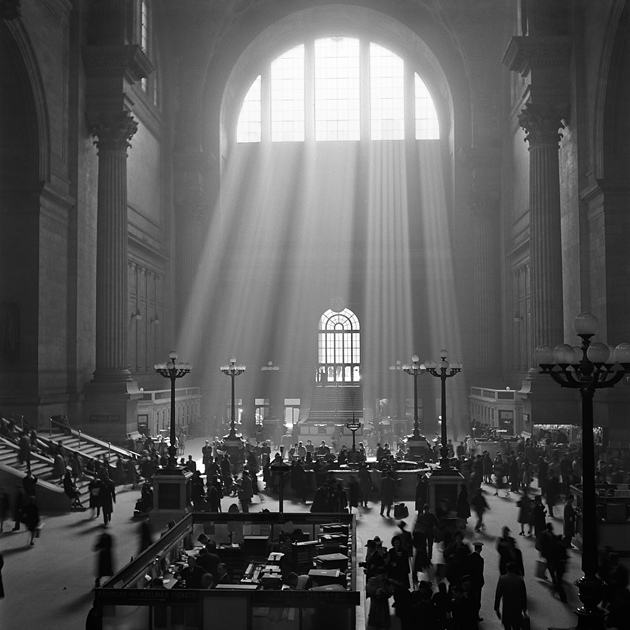
Trains are different. Trains were already modern life incarnate by the 1840s—hence their appeal to “modernist” painters. They were still performing that role in the age of the great cross-country expresses of the 1890s. Nothing was more ultra-modern than the new, streamlined superliners that graced the neoexpressionist posters of the 1930s. Electrified tube trains were the idols of modernist poets after 1900, in the same way that the Japanese Shinkansen and the French TGV are the very icons of technological wizardry and high comfort at 190 mph today. Trains, it would seem, are perennially modern—even if they slip from sight for a while. Much the same applies to railway stations. The petrol “station” of the early trunk road is an object of nostalgic affection when depicted or remembered today, but it has been constantly replaced by functionally updated variations and in its original form survives only in nostalgic recall. Airports typically (and irritatingly) survive well past the onset of aesthetic or functional obsolescence; but no one would wish to preserve them for their own sake, much less suppose that an airport built in 1930 or even 1960 could be of use or interest today.
But railway stations built a century or even a century and a half ago—Paris’s Gare de l’Est (1852), London’s Paddington Station (1854), Bombay’s Victoria Station (1887), Zurich’s Hauptbahnhof (1893)—not only appeal aesthetically and are increasingly objects of affection and admiration: they work. And more to the point, they work in ways fundamentally identical to the way they worked when they were first built. This is a testament to the quality of their design and construction, of course; but it also speaks to their perennial contemporaneity. They do not become “out of date.” They are not an adjunct to modern life, or part of it, or a byproduct of it. Stations, like the railway they punctuate, are integral to the modern world itself.
We often find ourselves asserting or assuming that the distinctive feature of modernity is the individual: the unreducible subject, the freestanding person, the unbound self, the unbeholden citizen. This modern individual is commonly and favorably contrasted with the dependent, deferential, unfree subject of the pre-modern world. There is something in this version of things, of course; just as there is something in the accompanying idea that modernity is also a story of the modern state, with its assets, its capacities, and its ambitions. But taken all in all, it is, nevertheless, a mistake—and a dangerous mistake. The truly distinctive feature of modern life—the one with which we lose touch at our peril—is neither the unattached individual nor the unconstrained state. It is what comes in between them: society. More precisely civil—or (as the nineteenth century had it) bourgeois—society.
The railways were and remain the necessary and natural accompaniment to the emergence of civil society. They are a collective project for individual benefit. They cannot exist without common accord (and, in recent times, common expenditure), and by design they offer a practical benefit to individual and collectivity alike. This is something the market cannot accomplish—except, on its own account of itself, by happy inadvertence. Railways were not always environmentally sensitive—though in overall pollution costs it is not clear that the steam engine did more harm than its internally combusted competitor—but they were and had to be socially responsive. That is one reason why they were not very profitable.
If we lose the railways we shall not just have lost a valuable practical asset whose replacement or recovery would be intolerably expensive. We shall have acknowledged that we have forgotten how to live collectively. If we throw away the railway stations and the lines leading to them—as we began to do in the 1950s and 1960s—we shall be throwing away our memory of how to live the confident civic life. It is not by chance that Margaret Thatcher—who famously declared that “there is no such thing as Society. There are individual men and women, and there are families”—made a point of never traveling by train. If we cannot spend our collective resources on trains and travel contentedly in them it is not because we have joined gated communities and need nothing but private cars to move between them. It will be because we have become gated individuals who don’t know how to share public space to common advantage. The implications of such a loss would far transcend the demise of one system of transport among others. It would mean we had done with modern life.
—This is the second part of a two-part essay.
This Issue
January 13, 2011

This Issue
January 13, 2011
-
*
Penn Central Railroad went out of business in 1972, just eight years after opting for profit over prestige and flattening Manhattan’s Penn Station to make way for Madison Square Garden. ↩

