Table of Contents

Volume 51, Number 11 · June 24, 2004

Michael Massing, Unfit to Print?

Garry Wills, Lessons of a Master

The Genuine Article: A Historian Looks at Early America by Edmund S. Morgan

Alison Lurie, The Good Bad Boy

Mike Wallace, Babylon on the Subway

The Devil's Playground: A Century of Pleasure and Profit in Times Square by James Traub

Ghosts of 42nd Street: A History of America's Most Infamous Block by Anthony Bianco

Charles Simic, Adam's Umbrella

How to Quiet a Vampire by Borislav Peki´c, translated from the Serbian by Stephen M. Dickey and Bogdan Rakic

Andrew Hacker, Patriot Games

Who Are We?: The Challenges to America's National Identity by Samuel P. Huntington

Reason: Why Liberals Will Win the Battle for America by Robert B. Reich

On Paradise Drive: How We Live Now (And Always Have) in the Future Tense by David Brooks

The Two Americas: Our Current Political Deadlock and How to Break It by Stanley B. Greenberg

The Working Poor: Invisible in America by David K. Shipler

Ian Hacking, Minding the Brain

Looking for Spinoza: Joy, Sorrow, and the Feeling Brain by Antonio Damasio

Caroline Fraser, Heart of Darkness

The Faith of a Writer: Life, Craft, Art by Joyce Carol Oates

Rape: A Love Story by Joyce Carol Oates

I'll Take You There by Joyce Carol Oates

The Tattooed Girl by Joyce Carol Oates

I Am No One You Know by Joyce Carol Oates

Joseph Kerman, That Old Labyrinth Song

The Maze and the Warrior: Symbols in Architecture, Theology, and Music by Craig Wright

Daniel Mendelsohn, A Little Iliad

Troy a film directed by Wolfgang Petersen

Christopher de Bellaigue, Stalled in Iran

Thomas R. Edwards, The Awful Truth

Nothing Lost by John Gregory Dunne

Nicholas D. Kristof, A Little Leap Forward

China's Democratic Future: How It Will Happen and Where It Will Lead by Bruce Gilley

Robert Darnton, It Happened One Night

A Sentimental Murder: Love and Madness in the Eighteenth Century by John Brewer

The Return of Martin Guerre by Natalie Zemon Davis

The Rape of Nanking: The Forgotten Holocaust of World War II by Iris Chang

The Nanjing Massacre: A Japanese Journalist Confronts Japan's National Shame by Katsuichi Honda, edited by Frank Gibney

Nanking: Anatomy of an Atrocity by Masahiro Yamamoto

The Nanjing Massacre in History and Historiography edited by Joshua A. Fogel

Martyred Village: Commemorating the 1944 Massacre at Oradour-sur-Glane by Sarah Farmer

The Collaborator: The Trial and Execution of Robert Brassillach by Alice Kaplan

Bloody Saturday in the Soviet Union: Novocherkassk, 1962 by Samuel H. Baron

An Absolute Massacre: The New Orleans Race Riot of July 30, 1866 by James G. Hollandsworth Jr

An Ordinary Atrocity: Sharpeville and Its Massacre by Philip Frankel

Neighbors: The Destruction of the Jewish Community in Jedwabne, Poland by Jan T. Gross

Testing the New Deal: The General Textile Strike of 1934in the American South by Janet Irons

Contesting the New South Order: The 1914–1915 Strike at Atlanta's Fulton Mills by Clifford M. Kuhn

The Meetinghouse Tragedy: An Episode in the Life of a New England Town by Charles E. Clark

The Great Arizona Orphan Abduction by Linda Gordon

A Poisoned Chalice by Jeffrey Freedman

The Rule of Justice: The People of Chicago versus Zephyr Davis by Elizabeth Dale

The Politics of Court Scandal in Early Modern England: News, Culture and the Overbury Affair, 1603–1660 by Alastair Bellany

The Perreaus and Mrs. Rudd: Forgery and Betrayal in Eighteenth-Century London by Donna T. Andrew and Randall McGowen

Walk Towards the Gallows: The Tragedy of Hilda Blake, Hanged 1899 by Reinhold Kramer and Tom Mitchell

Trials of Intimacy: Love and Loss in the Beecher-Tilton Scandal by Richard Wightman Fox
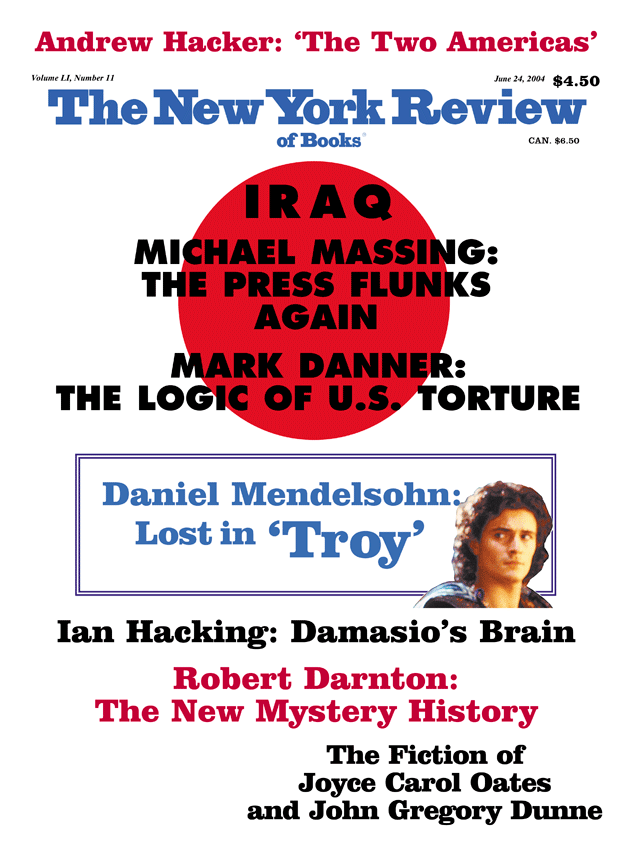
Mark Danner, The Logic of Torture


Contributors

Mark Danner, longtime staff writer at The New Yorker and contributor to The New York Review of Books, is the author of three books: The Massacre at El Mozote: A Parable of the Cold War; The Road to Illegitimacy: One Reporter's Travels Through the 2000 Florida Recount; and Torture and Truth. Danner's work has been honored with many awards, including a National Magazine Award, three Overseas Press Awards, and an Emmy. In June 1999, he was named a MacArthur Fellow. He is Professor of Journalism at the University of California at Berkeley and Henry R. Luce Professor of Human Rights and Journalism at Bard College. He divides his time between Berkeley and New York. His work is archived at markdanner.com.

Robert Darnton is Carl H. Pforzheimer University Professor and Director of the University Library at Harvard. His latest book is George Washington’s False Teeth: An Unconventional Guide to the Eighteenth Century. (June 2008)

Thomas R. Edwards is Emeritus Professor of English at Rutgers and a former editor of Raritan. His most recent book is Over Here: Criticizing America, 1968–1989. (June 2004)

Caroline Fraser is the author of God's Perfect Child: Living and Dying in the Christian Science Church. (December 2004)

Andrew Hacker teaches political science at Queens College. He is currently writing a book on higher education in collaboration with Claudia Dreifus. (October 2007)

Ian Hacking holds the chair of Philosophy and History of Scientific Concepts at the Collège de France. His most recent book is Historical Ontology. (April 2005)

Joseph Kerman is emeritus professor of music at the University of California, Berkeley. He began writing music criticism for The Hudson Review in the 1950s, and is a longtime contributor to The New York Review of Books and many other journals. His books include Opera as Drama (1956; new and revised edition 1988), The Beethoven Quartets (1967), Contemplating Music (1986), Concerto Conversations (1999), and The Art of Fugue (2005).

Nicholas D. Kristof is a columnist for The New York Times and the coauthor, with his wife, Sheryl WuDunn, of China Wakes and Thunder from the East. (May 2007)

Alison Lurie is the author of two collections of essays on children’s literature, Don’t Tell the Grownups and Boys and Girls Forever. She is a former professor of English at Cornell and has published nine novels, of which the most recent is Truth and Consequences. (May 2008)

Michael Massing, a contributing editor of the Columbia Journalism Review, writes frequently on the press and foreign affairs.

Daniel Mendelsohn, is the author of The Lost: A Search for Six of Six Million, which won the National Book Critics Circle Award and the Prix Médicis Étranger in France. A collection of his essays, How Beautiful It Is and How Easily It Can Be Broken, mostly from these pages, will be published in August. He teaches at Bard. (June 2008)

Charles Simic is a poet, essayist and translator. He has published twenty collections of his own poetry, five books of essays, a memoir, and numerous of books of translations. He has received many literary awards for his poems and his translations, including the Pulitzer Prize, the Griffin Prize and the MacArthur Fellowship. Voice at 3 A.M., his selected later and new poems, was published in 2003 and a new book of poems My Noiseless Entourage came out in the spring of 2005.

Mike Wallace is coauthor of Gotham: A History of New York City to 1898, author of A New Deal for New York, Distinguished Professor at John Jay College (CUNY), and Director of the Gotham Center for New York City History. He is working on Gotham II. (February 2005)

Garry Wills was born in Atlanta, Georgia. One of our most distinguished historians and critics, he is the author of numerous books, including Saint Augustine, Papal Sin, and the Pulitzer Prize–winning Lincoln at Gettysburg. He has won many other awards, among them two National Book Critics Circle Awards and the 1998 National Medal for the Humanities. He is currently Professor of History Emeritus at Northwestern University. A regular contributor to the New York Review of Books, he lives in Evanston, Illinois.

Christopher de Bellaigue was born in London in 1971 and has worked as a journalist in the Middle East and South Asia since 1994. His first book, In the Rose Garden of the Martyrs: A Memoir of Iran, was shortlisted for the Royal Society of Literature's Ondaatje Prize. He lives in Tehran with his wife and two children.


Search the Review
Advanced search