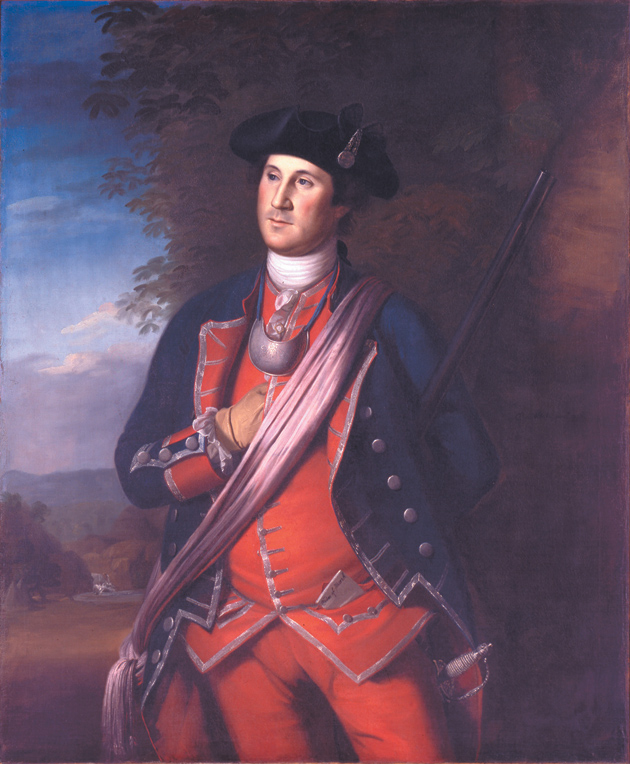
No two generals in the era of the early Republic appear to differ from one another more than George Washington and James Wilkinson. Although each man possessed considerable personal, political, and military skills and each at different times became commander in chief of the United States Army, the two generals seem to have little else in common. Washington was a revered figure in his own lifetime, someone who appeared to transcend the petty interests of ordinary men—a man of character, self-controlled, incorruptible, the epitome of selfless disinterestedness, and the savior of the new and fragile Union.
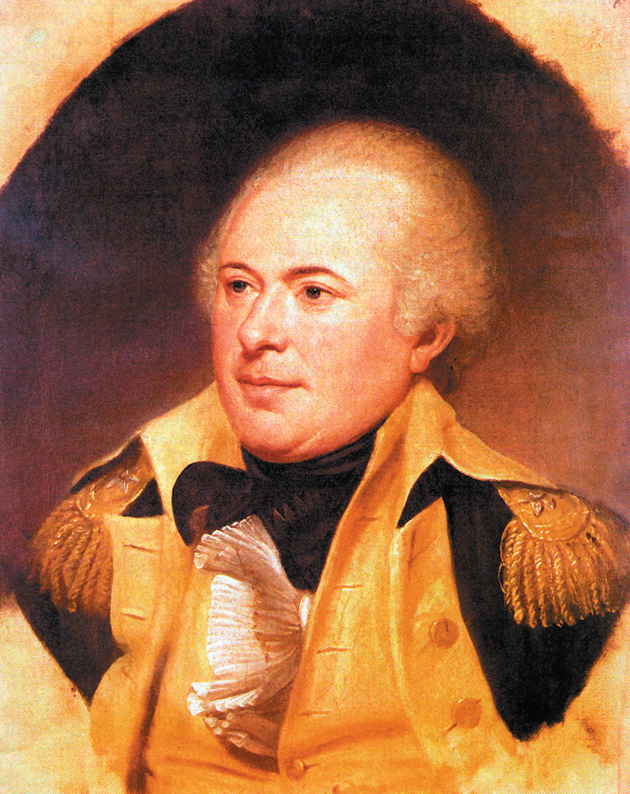
By contrast, Wilkinson, who was twenty-five years younger than Washington, was always a controversial figure, vain, flamboyant, and widely criticized for his selfishness and his lack of moral character. Throughout most of his career in the US Army, even as its commander in chief, he remained a paid secret agent of the Spanish government, a devious, untrustworthy, and corrupt creature who, far from endeavoring to preserve the Union, threatened several times to break it up. While Washington is rightly celebrated as one of America’s greatest heroes, Wilkinson may be the most unscrupulous character in all of American history.
But are the two men as opposite as they seem? Juxtaposing these two books suggests that Wilkinson and Washington may not be as different from one another as we have thought, or at least one of the authors wants us to think so.
Andro Linklater is a freelance historian who has several distinguished works on early American history to his credit. This biography of Wilkinson, who, writes Linklater, had “one of the most extraordinary careers as a secret agent in the history of espionage,” is probably the best we have; it certainly is the most smoothly written.
Wilkinson was born in 1757 in Maryland. As the son of minor gentry parents, he grew up in the same kind of slave-ridden and hierarchical world that Washington knew. Like Washington, Wilkinson lost his father when he was just a boy, and as a younger son he was not the heir of the estate. Despite these similar hardships, he seems to have had a better and more classical education than Washington did. At age sixteen he was sent to Philadelphia to become a physician, but he soon realized that medicine was not for him. As an intelligent and very ambitious eighteen-year-old, Wilkinson, like the young Washington, saw that the military offered the fastest route to distinction and glory. The outbreak of fighting between the colonists and the British at Lexington and Concord in 1775 gave him his opportunity.
Commissioned as a captain in the Continental Army in 1775, Wilkinson impressed everyone with his energy and courage, and in 1777, just shy of his twentieth birthday, he was appointed a lieutenant colonel. As General Horatio Gates’s chief of staff, he had a crucial part in negotiating the surrender of General John Burgoyne’s army following the Battle of Saratoga. But some indiscretions on his part led to a break with Gates; in fact, he fought a bloodless duel with Gates, and left the army in a rage.
Wilkinson married Ann “Nancy” Biddle and sought to live the life of a country gentleman. Although his marriage did not bring him the kind of wealth that Washington’s marriage to Martha Custis had, his new connection to the important Biddle family of Philadelphia was helpful. He was able to purchase at a fraction of its value the property of loyalist Joseph Galloway, which Linklater says was “the finest estate to be confiscated from any Tory in Pennsylvania.” Since he had extravagant tastes and always needed money, he accepted Congress’s offer of the post of clothier general to the army in 1779 at a salary of five thousand dollars a year. Deficiencies in his accounts, however, led to his resignation two years later. He set out to make his fortune in the new territory of Kentucky.
He soon emerged as an important leader in the territory of Kentucky, whose citizens were bitter that the United States government didn’t seem to care that the Spanish had closed the Mississippi to their trade. Wilkinson began pushing for the independence of Kentucky from the United States. In 1787 he organized a trading voyage to New Orleans, where he convinced the Spanish governor that he was willing to help Spain gain possession of Kentucky. Thus was begun what came to be called the “Spanish Conspiracy.”
Although Wilkinson later said that he had done no more than offer the Spanish empty promises in return for their opening up the Mississippi to American trade, in a secret document in 1787 he swore allegiance to Spain and became its Agent 13 in return for money. Wilkinson at first paid no more attention to the legal or ethical significance of what he was doing than the American settlers who later moved into Texas did when they swore allegiance to the Mexican government in return for good land. Both Wilkinson and the later migrants simply thought they were exploiting naive foreign authorities for their own benefit.
Advertisement
But when Wilkinson rejoined the US Army in 1791 and became brigadier general and second in command of the newly formed Legion, being simultaneously a paid agent of the Spanish government became more complicated. Since he was perennially in debt, Wilkinson found the lure of Spanish money impossible to resist. Linklater believes that by becoming a general in the US Army while spying for the Spanish government, “Wilkinson had crossed a Rubicon.” He was no longer a private citizen; if exposed, he faced court-martial and the possibility of the death penalty for treason. No doubt Wilkinson did not see it that way at all. He believed he was just using the gullible Spanish to fatten his wallet, and he probably thought that whatever information he passed on to the Spanish authorities did not really benefit them. Since many of his fellow Westerners were continually talking of undertaking armed expeditions and breaking away from the East and seizing Spanish territory, he did not view his shenanigans in quite the same light as they would be seen today.
Wilkinson was a good soldier, with an abundance of energy, personal warmth, and a sense of style that appealed to his fellow officers, and in 1797 he moved up to become commander in chief of the entire army. With rumors spreading that he was in the pay of the Spanish government, he realized that his dual role had become especially dicey, and initially he decided to end his spying for Spain. Yet since, as Linklater says, “self-interest guided everything Wilkinson did,” he could not help wanting to take advantage of the confusion accompanying the Spanish transfer of New Orleans and Louisiana to France and then the American purchase of the entire territory from France in 1803. He thus remained in the pay of the Spanish authorities.
Although he had courted the Federalists during the 1790s, Wilkinson continued to be strongly supported by President Thomas Jefferson after 1801, much to the puzzlement of historians. Linklater finds Jefferson’s dealings with Wilkinson “equivocal and troubling.” Not only did the President trust Wilkinson as the commander in chief in the face of rumors that he was a spy, but “he added civil and diplomatic posts to the general’s military command until at a crucial moment Wilkinson single-handedly possessed enough power to decide the fate of the nation.”
According to Linklater, Jefferson supported Wilkinson because the general was the only senior officer who backed Republican efforts to reform the army. Unlike the Federalist officers who favored a standing army, Wilkinson always spoke highly of the state militias, which were dear to Jefferson’s heart. Besides, Wilkinson seemed to have an unrivaled knowledge of the West and favored generous boundaries in support of Jefferson’s expansive claims to Spanish territory. “Wilkinson, who never remained faithful to any other superior,” writes Linklater, “was always Jefferson’s man.” In 1804 the President appointed him governor of the Louisiana Territory, which included all the land west of the Mississippi and north of the Territory of New Orleans (the present state of Louisiana).
What clinched Jefferson’s respect for Wilkinson was the general’s ultimate betrayal of Aaron Burr and their concerted plans in 1806 to break up the West and maybe invade Mexico. As commander in chief of the army, Wilkinson was crucial to the success or failure of Burr’s Western conspiracy. In the end he turned against his collaborator and became his principal accuser. Although he saw himself as the savior of the nation, many people were not so sure. In Burr’s trial for treason his defense attorneys excoriated Wilkinson and exposed all sorts of examples of his shady behavior. The foreman of the jury, John Randolph, concluded that Wilkinson was a more vicious traitor than Burr. The general, he claimed, was “the only man I ever saw who was a villain from the bark to the core.”
Although Wilkinson’s actions had destroyed any possibility of Burr’s conspiracy succeeding, he nevertheless emerged from the trial with his reputation severely tarnished. And things went from bad to worse. President Madison relieved him of command, and he was court-martialed but acquitted for lack of evidence. “It was, in consequence,” writes Linklater, “the depth of irony that after twenty highly successful and rewarding years of treachery, one single act of loyalty and patriotism should have plunged the rest of his life into ignominy.”
The need for experienced officers in the War of 1812 brought Wilkinson back into service as the supreme commander on the Canadian frontier. But after several failures the secretary of war relieved him of his command, pending a court-martial. Although he was acquitted, his military career was over. During that extraordinary career, he had faced three military tribunals and four congressional investigations into allegations of misdeeds. Yet he was never found guilty. No wonder it was said of him that although he had never won a battle, he had never lost an inquiry.
Advertisement
In 1817 he published three volumes of his Memoirs. Although the Memoirs, says Linklater, were dominated by “the theme of selfless patriotism betrayed by mean-minded politicians,” they do
succeed in illustrating Wilkinson’s historical importance in the two arenas for which he deserves to be remembered—opening up the Mississippi to western settlers, and ensuring that a restive army remained subject to civilian control.
George Washington was also interested in these two “arenas.” As a young officer in the Virginia militia he had tried to do something to open up the West to settlers. But as John Ferling writes in his curious book, Washington was not at all successful in these endeavors; indeed, his initial military experiences in the West were disasters. His ambush of inferior French forces in May 1754 was “a massacre,” in which a French official on a diplomatic mission was killed. Several months later he had to surrender to the French his hastily built and poorly located Fort Necessity in western Pennsylvania. To hide his humiliation, Washington in his reports grossly exaggerated the French losses and blamed the defeat on insufficient supplies. “He never, then or later,” writes Ferling, “admitted any errors on his part.”
Over the years all the authors of the many books on Washington have announced that they were seeking to rescue the human person hidden behind the mass of marble monuments. John Ferling desires to go much further. Not only does he want to strip off the “mythological” aura surrounding Washington, but he is eager to demonstrate, as no other historian ever has, that Washington was really a modern man, essentially no different from politicians in our own time. Although he never explicitly compares him with James Wilkinson, he implies that he was not all that different from a scrambler like Wilkinson, at least in his ambitiousness and desire to become rich and famous.
Ferling, who is professor emeritus of history at the State University of West Georgia, is a very productive historian of the Revolutionary and Founding era, with eight other books to his credit, including biographies of Washington and John Adams, an account of the election of 1800, and several studies of the American Revolution from different points of view—personal, political, and military. While writing his most recent book on the Revolution, he discovered that by looking at Washington “in a comparative manner,” he was led to ask questions about him that he had not asked in his earlier biography of the American hero.
What he discovered was that Washington was “a highly political individual” and “one of the very best politicians in American history.” Since nearly all historians and biographers have portrayed the commander in chief of the Continental Army and the first president as “pre-modern in his thinking,” as “nonpolitical and steadfastly seeking to stay above politics,” Ferling believes that he has asked “new questions that have resulted in fresh insights.” Washington, he thinks, was actually just an ambitious modern politician, different from others of his time, and from politicians of our own time, only in his skill in being a politician. Indeed, says Ferling, “George Washington was so good at politics that he alone of all of America’s public officials in the past two centuries succeeded in convincing others that he was not a politician.”
Ferling seems to think that being good at politics, getting people in public life to go along with you, is the same as being a modern politician. He has confused politics, which Washington was indeed very good at, with political parties and partisanship, which he truly did abhor and try to avoid. Eighteenth-century words are often the same as our words, but the meanings are different. Of course, the eighteenth century had politics, lots of it, and some of it was quite familiar. There were voters and elections, and even political campaigns of a sort, and there were political publications that were even more savage than today’s media. Still, that eighteenth-century political world was very different from the one that would clearly emerge following Washington’s death in 1799. He had seen it coming and he hated it.
Ferling, however, is not satisfied with simply revealing that Washington was something of a hypocrite in denying his political nature. He wants to show us that Washington was as conniving and as power-hungry as any of his countrymen. Indeed, his description of Washington’s motives and passions resembles Linklater’s portrayal of Wilkinson’s. Washington was simply more politically adept, faster on his feet, and luckier than Wilkinson. He seems to have been as egotistical and self-interested as Wilkinson. Washington, writes Ferling, was “madly ambitious and obsessed with recognition and renown.” Wil- kinson may have been especially vain, but Washington was “as proud a man as ever existed.”
Born without great advantages, Washington set out to make something of himself, and in doing so, according to Ferling, he was not above using some questionable means, including exploiting public office for personal gain. In a petition to the royal governor of Virginia for western lands, he “included some self-serving suggestions under the guise of helpful hints.” Prior to the Revolution all he seemed to care about was pursuing “wealth and the respect and acclaim it would engender.” Even his decisions to participate in the resistance movement against the British and ultimately in the Revolution, Ferling contends, were based on self-interest as well as constitutional issues. (It is not clear who has ever suggested otherwise.)
Because Washington “was mad for glory,” he took risks he should never have taken, both in the French and Indian War and in several of the battles of the Revolutionary War. Yet, says Ferling, he usually found scapegoats for his defeats or for the dire situations he often found himself in. By contrast, when he had victories, he tended to take sole credit for them, and in his reports to Congress he often engaged in “unabashed self-puffery” along with his “assiduous strategy of self-exculpation.” There is scarcely an action by Washington to which Ferling does not impute dark and self-interested motives. He explains Washington’s ability to get along with Congress to his “subtle, ingenious skills that almost always enabled him to manipulate the congressmen to his way of thinking”—political skills that Ferling oddly regards with distaste and as especially harmful to Washington’s reputation for greatness. It is almost as if Washington had no talent except his ability to manipulate people.
No historian denies that Washington as commander in chief made a host of mistakes, “dreadful—even spectacular—blunders,” Ferling calls them.
His refusal to consider an invasion of Canada, his personal insecurities that led to defective choices in field commanders, his disregard for the southern theater, his gamble that time was on America’s side and the enemy of Great Britain, all had nearly resulted in an outcome that would have been far less advantageous to America.
Had America lost the war, says Ferling, “history would see General Washington in a far different light, and one far less commendatory.”
Of course, that’s true. But America did not lose the war and that’s the main reason for Washington’s exalted reputation. History is not usually kind to losers. It would also have seen Churchill and Roosevelt in a far different light if the Allies had lost World War II.
After the war and his retirement as commander in chief, Washington, basking “in the adulation of his countrymen,” worked hard to advance his personal interests. For example, he pushed the Virginia legislature to charter companies to promote canal building, from which he would personally profit. Ferling implies that there was something sordid and unbecoming in the fact that Washington “for a year had sought public assistance for a private business venture from which he stood to realize a fortune.” But the canal companies Ferling refers to were not in fact private business ventures; they were publicly chartered corporations in which the state enlisted private wealth to carry out public purposes. Ferling seems unaware that the private character of these corporations would not be fully and legally established until the Supreme Court’s Dartmouth College decision in 1819.
Although Ferling believes that “most people, including those in public life, are self-serving,” he thinks that Washington could have made his reputation “more creditable” if he had occasionally “stood for something after 1783 that would have been to his detriment.” Not only is this a strange way of looking at the behavior of someone who had no government pension to fall back on, but it ignores the agony that Washington went through in 1784 in deciding what to do with 150 shares of the canal companies that the Virginia legislature had given him for his work on behalf of the public interest. Not wanting to insult the legislature by declining the gift, but at the same time not wanting to compromise his reputation for disinterestedness by keeping it, he eventually gave the shares to the college that became Washington and Lee—an act that Ferling misunderstands and garbles.
Ferling sees little that is heroic in Washington’s character. He mocks his modesty, regards his hesitancy in accepting the presidency as “largely theater by the consummate actor,” and believes that his conduct as president “leaned toward pomposity.” Ferling even dismisses Washington’s surrendering of his sword to Congress in 1783—an act of abjuring power that electrified the world—as “hardly startling” and actually self-serving. Although he praises Washington for being “a savvy political operator,” he criticizes him for not being sufficiently forward-looking. Washington was “antiquated” and “antediluvian” for not promoting the “egalitarian ideals” of the Revolution and for not advocating “profound social or political reform,” including “expanding suffrage rights” and “reducing social stratification.”
Despite all of Ferling’s extensive research in the Revolutionary era, he often lacks a historian’s feel for the distinctiveness of the period; he certainly has little sense that the past is a foreign country where they do things differently. Indeed, his entire book assumes that the world back then was essentially the same as our world.
Ferling, for example, sees nothing very unusual about the politics of the 1790s; the essential fact of the decade is that two political parties, the Federalists and the Republicans, were disputing with each other. Hamilton and Jefferson were not as much arguing over the future character of the nation as they were playing “hardball politics.” Unlike Washington, who apparently “overreacted to the dangers attending partisan warfare,” Hamilton and Jefferson “were veteran politicians who viewed partisanship as part and parcel of republican politics and as not necessarily unhealthy.” James Madison was no different. With his “sudden flip-flop” from a nationalist in the 1780s to a Republican states-rights advocate in the 1790s, Madison was behaving as any “thoroughgoing politician” would in responding to the wishes of his constituents—the Senator Arlen Specter of his day. Apparently, in Ferling’s view, all that Madison worried about was his reelection.
In the end Ferling can’t easily explain how and why the Washington whose character he has tried to denigrate so excessively was honored and extolled by his countrymen. Despite the barrage of criticism he levels at Washington, he has to admit that Washington ultimately was a discerning statesman and a successful president; indeed, “no other president has been more successful.” But in Ferling’s bizarre interpretation Washington was successful because he somehow or other was able to use his immense political talents to hoodwink the country into glorifying him. “No one,” he writes, “was better at self-promotion than Washington, though he did it in such a quiet, understated manner that few were aware of what he was up to.” He had “the hidden skills of an illusionist,” and thus he was able to convince the people of the United States that he was not a typical politician but a transcendent figure, an icon.
This is scarcely persuasive. The American people were not beguiled into believing that their commander in chief and first president was an extraordinary man. Living in a world where hustlers and schemers like James Wilkinson flourished, the people of the early Republic knew the genuine article when they saw it. The mythological aura that came to surround Washington was backed up by a substantial reality. Precisely because Washington was so obviously different from the likes of Wilkinson, precisely because he tried so often to behave in a disinterested manner and always sought to lead his nation as wisely as he could, he legitimately earned the admiration and respect of his countrymen.
This Issue
June 10, 2010

This Issue
June 10, 2010