

As three recent studies by the federal Bureau of Justice Statistics (BJS) show, prisoners are raped with terrible frequency in the United States.1 We still don’t know exactly how many people are sexually abused behind bars every year, but we do know that the number is much larger than 100,000. And we know that those responsible for this abuse are usually not other inmates, but members of the very corrections staff charged with protecting the people in their custody.
The BJS, which is part of the Department of Justice, found statistically significant variation in the incidence of sexual abuse at the hundreds of different facilities it surveyed. Its study of adult prisons, for example, found that 4.5 percent of prisoners nationwide had been sexually abused at their current facilities in the preceding year; but at seven prisons the rate was above 10 percent. Texas’s Estelle Unit had a rate of 15.7 percent, while in six prisons no inmates reported such abuse.
One of the most pernicious myths about prisoner rape is that it is an inevitable part of life behind bars. This is simply wrong. As the variance in the BJS findings shows, it can be prevented. In well-run facilities across the country it is being prevented—and this shouldn’t be surprising. After all, the government has extraordinary control over the lives of those it locks up. Stopping sexual abuse in detention is a matter of using sound policies and practices, and passing laws that require them.
The Prison Rape Elimination Act of 2003 (PREA), which charged the BJS with undertaking its surveys, also created a body called the National Prison Rape Elimination Commission, whose mandate was to study the problem more qualitatively and devise national standards for its detection, prevention, and response. Doing so proved to be a slow process. The commissioners convened expert committees, made an exhaustive review of available research, held numerous site visits and public hearings, and submitted draft versions of the standards for public comment. At every step they consulted corrections leaders, survivors of sexual assault in detention, researchers, advocates on behalf of prisoners, academics, legal experts, and health care providers. Finally, on June 23, 2009, six years after the passage of PREA, the commission published its recommendations. (Staff and board members from our organization, Just Detention International (JDI), the only US NGO dedicated solely to ending sexual abuse in detention, served on all eight of the expert committees appointed by the commission.)
The commission wrote four distinct sets of standards: one for adult prisons and jails, with an immigration supplement; one for juvenile facilities; one for “lockups,” i.e., temporary holding facilities for people recently arrested or being transferred; and one for “community corrections”—for example, people who are living in post-release halfway houses or are on probation. Its final report describes and explains them all. Reading it, one is repeatedly struck by how straightforward and plainly sensible these recommendations are—and, therefore, by how astonishing it is, and how appalling, that such basic measures haven’t already been standard practice for decades.
In 2000, in a Texas prison, a corrections officer was sexually harassing Garrett Cunningham, touching him inappropriately during pat searches and making crude comments. Cunningham, as he told the commission, complained to prison authorities, but they told him that he was exaggerating, and that the officer was just doing his job. Soon after, the officer handcuffed Cunningham, pushed his face into a pile of laundry, and raped him. Cunningham weighed 145 pounds; the officer more than twice that. He said that if Cunningham ever tried to report the rape, he would have other officers write false charges against him, or else transfer him to a rougher unit where he would be raped by gang members “all the time.” Then he told Cunningham that the officials he had complained to previously were friends of his who would always take his side.2
The commission’s first standard for all facilities stipulates that every corrections agency have “a written policy mandating zero tolerance toward all forms of sexual abuse.” Staff and inmates must “understand what constitutes sexual abuse, know penalties exist for perpetration by prisoners or staff, and believe management will treat all incidents seriously.”
Staff must be trained to identify early warning signs that someone is at risk of sexual abuse, prevent abuse from occurring, and respond appropriately when it does occur. Since “the persistent silence surrounding incidents of sexual abuse in correctional facilities is a reality that both victims and professionals in the field acknowledge,” all facility employees and volunteers must be required to report any suspicions of such abuse. “Mandatory reporting policies are powerful antidotes to the code of silence.” The standards also require that inmates be taught their rights, not only to be free from sexual abuse, but to be free from retaliation if they report it.
Advertisement
When Rodney Hulin was sixteen he set a dumpster on fire, causing about $500 worth of damage. He was 5'2″, he weighed 125 pounds, and he was sentenced to eight years in adult prison. Almost immediately after arriving he was raped by another inmate, as was confirmed by a medical examiner’s finding that his rectum was torn. His mother’s testimony to the commission describes how he wrote to the authorities asking to be moved to a safer place, and how his request was denied. The beatings and rapes continued. He wrote another letter, saying he was afraid “I might die at any minute. Please sir, help me.” Officials told him that his case did not meet the “emergency grievance criteria.” His mother called the warden, who told her that Rodney needed to “grow up.” “This happens every day,” he said, “learn to deal with it. It’s no big deal.” Less than three months after entering prison, Hulin hanged himself in his cell.3
Every inmate when first arriving at a facility is put through a classification process, meant to assess the security risk he poses. In most corrections facilities, inmates are not classified by their risk of being subject to sexual abuse. But as we saw from the BJS studies discussed in our previous article, such risk can be objectively assessed according to a number of well-known factors—like Hulin’s age and size, or the fact that he was entering prison for the first time, and that his crime was not violent.
One of the commission’s most important standards requires that all inmates be screened in order “to assess their risk of being sexually abused by other inmates or sexually abusive toward other inmates.” These screenings must rely on specific criteria that have been shown to be relevant to sexual violence. The results must then be taken into account when deciding where inmates will be lodged. “Without this process, vulnerable individuals may be forced to live in close proximity or even in the same cell with sexual assailants.” It happens frequently.4
Housing and surveillance become grave challenges when prisons are overcrowded, but as the report says:
Supervision is the core practice of any correctional agency, and it must be carried out in ways that protect individuals from sexual abuse. The Commission believes it is possible to meet this standard in any facility, regardless of design, through appropriate deployment of staff.
Its standards on “inmate supervision” and “assessment and use of monitoring technology” explain in detail how to do so.5
Marilyn Shirley was woken by a guard named Michael Miller at 3:30 one morning and summoned to the officers’ station. She was afraid something had happened to her twins, or to her husband, who had heart problems and diabetes. But when she got to the station she heard Miller on the phone, asking another officer for a signal if the lieutenant should head their way. When he hung up he began to grope her, demanding oral sex, and when she resisted he slammed her against a wall and raped her. He whispered in her ear, “Do you think you’re the only one? Don’t even think of telling, because it’s your word against mine, and you will lose.” Remarkably, however, as the commission reported, Shirley was able to hide and preserve her semen-stained sweatpants until her release six months later, when she accused Miller. He was convicted of rape and imprisoned—making Shirley’s story a very rare one.6
The commission’s standards call for coordinated responses to sexual abuse from security staff, investigators, the head of the facility, and medical and mental health practitioners. The immediate safety of the survivor must be the first priority—and since those raped in prison are so often abused repeatedly, often by multiple rapists, there is great urgency to this. But survivors also face very serious longer-term health concerns, both physical and mental,7 and the report proposes detailed standards on the care they should get.
Since few people in the immediate aftermath of rape in prison have Marilyn Shirley’s combination of bravery, presence of mind, and good luck, the commission is equally concerned with the nature of the investigations that must follow every report of sexual abuse.
The stakes are high: failure to investigate allegations sends a message to staff and prisoners that speaking out may put the victim at risk but has no consequences for the abuser. In such environments, silence prevails and abuse flourishes.8
The standards insist that agencies collect and carefully consider data on sexual abuse from all their facilities, and that facilities conduct “sexual abuse incident reviews”:
These reviews reveal patterns, such as vulnerable locations, times of highest risk, and other conditions…. [They] generate information administrators need to make efficient use of limited resources, deploy staff wisely, safely manage high-risk areas, and develop more effective policies and procedures.
When Laura Berry told the Arkansas corrections officer who had raped her that she thought she might be pregnant, he forced her, according to the commission’s findings, to drink turpentine and quinine, hoping that would induce an abortion. After Kenneth Young was raped at knifepoint by a cellmate in Pennsylvania, he flooded the cell to attract the attention of officers, and as punishment was put in a “dry cell” for ninety-six hours, with no access to running water, a shower, or a toilet—forced “to live in his own excrement,” as a court later put it. Alisha Brewer told our organization, JDI, that she was raped by three different corrections officers as a twenty-two-year-old prisoner in Kentucky; she reported the last two incidents, and was punished with more than four months of punitive segregation and loss of sixty days of good time on her sentence.9 Another prisoner who wrote to us, and who for obvious reasons prefers to remain anonymous, quoted the male officer who was abusing her: “Remember if you tell anyone anything, you’ll have to look over your shoulder for the rest of your life.” We get letters like this every day.
Advertisement
The commission’s standards require
facilities to monitor prisoners and staff who report abuse for at least 90 days to ensure that they are not experiencing retaliation or threats. If threats or actual retaliation do occur, the facility must take immediate action to stop the threatening behavior.

How much of a difference would the commission’s standards make if adopted and enforced nationally? It’s impossible to say with any precision. But as Jason DeParle wrote in these pages three years ago, “Since 1980 the murder rate inside prisons has fallen more than 90 percent, which should give pause to those inclined to think that prisons are impossible to reform.”10 While the dynamics of sexual violence are quite different from those of homicide, both problems shrink or grow behind bars depending on the effectiveness of a facility’s management.
The BJS studies suggest that sexual abuse has been nearly eradicated in some facilities already, and the policies and practices through which those institutions have achieved such success, as codified in the standards, are basic, common-sense measures. We believe that the incidence of prisoner rape would be cut dramatically if they were adopted everywhere—perhaps by as much as half over the next decade. As the BJS studies show, that would mean tens of thousands of people every year—perhaps as many as 100,000, or even more—who would be spared atrocious abuse.
Prisoner rape is one of the few issues on which there is no disagreement between Democrats and Republicans, or between the Christian right and liberals.11 Nor is it simply an issue that pits corrections officers against the rest of the world. Good and dedicated corrections staff know that sexual abuse in detention is a terrible problem not only for its immediate victims, but for them as well, and for the country as a whole. These are people who take pride in their jobs and their profession, and nothing could be more contrary to their mission than allowing those in their care to be raped. In facilities where rape is common and unchecked by authorities, where the rules seem to have no force and animosity between inmates and staff is fueled, their safety is at risk. And they know that traumatized survivors and undeterred rapists may, on release, be more prone to recidivism themselves.
Indeed, corrections officials were deeply involved in developing the standards. The JDI staff and board members on the commission’s expert committees were in a small minority of non-corrections participants. Many of the most important corrections leaders in the country served on the committees, including former presidents of the Association of State Correctional Administrators (ASCA), current and former directors of state departments of corrections, as well as prison wardens, among others. There were some points of contention between advocates of prisoner rights and corrections officials on issues such as whether officers should supervise inmates of the opposite sex,12 whether they should be able to see and hear everyone in their custody at all times, and whether inmates should have the right to confidential counseling.13 On all these issues, the corrections officials mostly prevailed. Overall, however, advocates and corrections officials on the expert committees were willing collaborators in a joint venture.
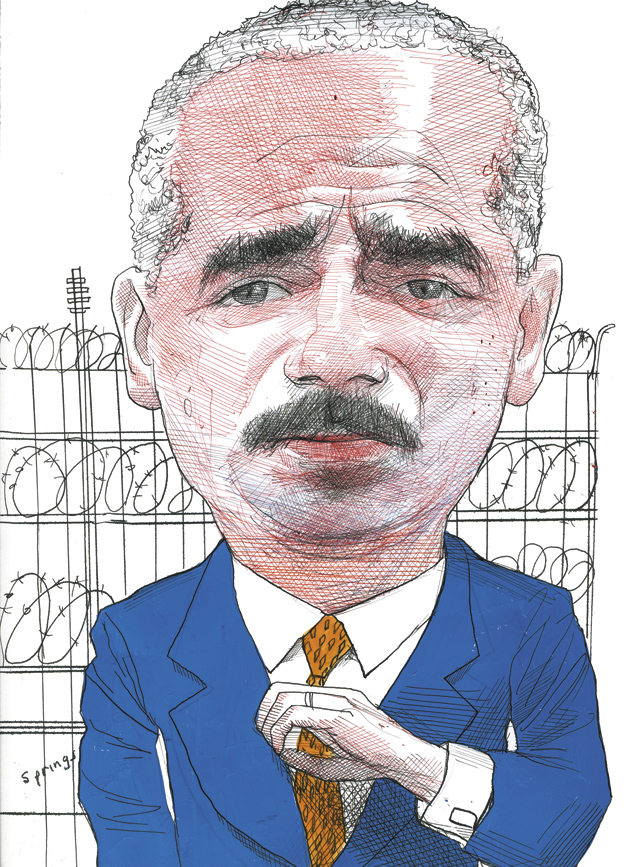
The commission’s recommended standards have been submitted to US Attorney General Eric Holder, who by law has until June 23, 2010, to review them and make any changes he deems necessary. Then he must issue them formally, following which they will become nationally binding.14 Now, however, he is being pressured to weaken the standards. And the opposition to the commission’s recommendations is led by corrections officials: in particular, by professional associations such as ASCA, which has accused the commission of being “one-sided and myopic” in its approach, and gone so far as to call it “childlike.”15
These corrections officials seem to have a great deal of influence over the current Department of Justice. The review it has undertaken since June 2009 resembles the commission’s in many ways, but what had been an open and inclusive process under the commission is now largely closed. We know which agencies are participating in the Justice Department’s internal working group on the standards—including officials from the Bureau of Prisons, who are also opposed to important aspects of the commissions recommendations16 —but we still do not have a list of the group’s members. Neither survivors of prisoner rape nor their advocates now have any formal role. It appears certain that Holder will request an additional year, or perhaps even more, for his own review.
The main concern expressed by opponents of the commission’s standards is that observing them will be too expensive. One PREA provision barred the commission and the attorney general from establishing standards “that would impose substantial additional costs compared to costs currently expended by Federal, State, and local prison authorities.” The commission was mindful of this throughout its work, however.17 And PREA is not the only relevant law here. Under the Eighth Amendment, which forbids cruel and unusual punishment, every corrections system is already obligated to protect its inmates from sexual abuse. Rape is illegal everywhere, including detention facilities, and all fifty states have laws making sexual contact of staff with inmates a criminal offense; so does applicable international law.18 Still, no one doubts that bringing corrections systems across the country into compliance with the standards will require money, and everyone acknowledges the importance of this consideration.
But opponents of the standards now seem to be trying to inflate estimates of their costs. And again, their influence over the Department of Justice is disturbing. In perhaps the most questionable aspect of the department’s review process, it has commissioned a study of the costs of implementing the standards that appears biased from the outset. The firm that was awarded the contract for this study, Booz Allen Hamilton, plans to rely on estimates of expenses from corrections administrators who volunteer to participate.19 Officials who oppose the standards will have an obvious incentive to exaggerate their anticipated costs—and so will officials who support the standards, since they also want and need more funding than is usually appropriated for them.20
The Justice Department needn’t rely on estimates of future costs. Instead, it could look to corrections systems that are already implementing the standards, to see what their actual costs are. JDI is working with three such systems right now—the California Department of Corrections and Rehabilitation, the Oregon Department of Corrections, and the Macomb County Sheriff’s Department in Michigan—to help them achieve compliance with the standards even before they are legally obliged to do so. California runs a large, troubled prison system, Oregon a smaller one, and Macomb County a medium-sized jail for men and women. All three systems face budget crises, and are unable to provide significant additional funding.
Between them, they will give a good indication of what is possible at what cost nationally. Max Williams, director of the Oregon Department of Corrections, estimates that his system has achieved compliance with 70 percent of the standards already. As he told us, “In Oregon, we haven’t had to hire any new staff as part of the effort to implement the standards. Instead, we have retrained and repurposed existing staff. We have made some hard dollar investments, in cameras, a database, etc., but those are tools we can use for much more than handling the problem of sexual abuse.”21 None of these systems are currently included in the Booz Allen study, however.
In any case, it is a mistake to consider the costs of implementing the standards without also taking account of the benefits. Even when the financial implications of prisoner rape are the only ones considered—and surely they are less important than the moral or simply human considerations involved here—the savings and tangible benefits of preventing rape are considerable. As the result of litigation when corrections staff have engaged in or allowed sexual abuse in their facilities, corrections systems have had to pay many millions of dollars in damages over the last few years.22 When survivors of prisoner rape require medical care, as they often do, corrections systems must bear most of the costs. And people traumatized by sexual assault behind bars are often unable to resume economically productive lives after their release.23
The Booz Allen study, as now conceived, is not a cost-benefit analysis. This is especially baffling when we consider that the executive order governing the federal rule-making process requires a cost-benefit analysis before the attorney general can issue the standards. Unless he is looking to rewrite them entirely, we can see no reason why he isn’t looking at their obvious benefits now.
Apart from costs, we believe that there is also another and perhaps more important reason why some corrections officials are opposed to the commission’s recommendations: the prospect that their compliance with the standards would be closely monitored.
The commission wrote that “the very nature of correctional environments demands that the government and the public have multiple ways to watch over” prisons and jails. The report quotes Michele Deitch, an expert on the oversight of corrections systems: “Effective prison management demands both internal accountability measures and external scrutiny. The two go hand-in-hand, and neither is a replacement for the other.”
Accordingly, the commission proposed a standard requiring that independent audits of every detention facility be made at least every three years.24 This standard also requires that data collected by these audits be made public. And the commission strongly endorsed a resolution of the American Bar Association recommending that federal, state, and territorial governments adopt effective systems of external oversight.25
Although effective oversight is not by itself enough to stop sexual abuse in detention, it is an indispensable part of any solution, and few reforms would do more to improve prison conditions generally. If the commission’s standards and recommendations are approved and enforced, they will greatly strengthen our systems of oversight.
This, we believe, is what the opponents of reform truly fear. Will Harrell, the former independent ombudsman of the Texas Youth Commission, who was appointed after pervasive sexual abuse of its juvenile detainees by staff was revealed in 2007, told us in an e-mail:
Administrators whose perspective was formed under the tradition of public exclusion are deeply resistant to independent, external oversight. They fear the loss of control over the flow of information. They fear potential embarrassment or scandal. But…the public must watch the watchmen.
Max Williams told us, “Many officials are afraid that these audits are designed to be a ‘gotcha,’ a ‘we’re going to zing you.’ That’s what they are worried about.”
To a certain extent, such fear is understandable. Even good corrections officers feel embattled by dangerous inmates who badly outnumber them. They also feel that they are underfunded and underpaid by the government, and ignored or reviled by the public. A sort of bunker mentality often grows among them, in which the most unforgivable act is reporting on a fellow officer. When that is the case, even in facilities where good people work, corruption spreads.
But no public institutions are more in need of transparency and accountability than prisons and jails. Without external scrutiny, sadistic and autocratic people can turn their facilities into private hells—as happened in Texas just a few years ago, when hundreds of children were raped night after night by their guards, and there was no help for them. Any decent system of oversight would have made that impossible.
Sexual abuse in detention is a human rights crisis in this country. Reform is urgent, and the commission makes clear how to achieve it. No one expects or wants Attorney General Holder simply to accept the commission’s recommendations without question, but it is worth emphasizing that a bipartisan, government-appointed commission has already spent years developing standards to prevent prisoner rape. Its proceedings were inclusive, responsible, and exhaustive, and the standards themselves products of compromise among experts, reflecting the best practices already in place at our best facilities. If Holder needlessly delays in approving these standards, or ones very much like them—worse, if he strips them of their force because of pressure from corrections leaders—then tens or hundreds of thousands of men, women, and children will continue to be raped while in the government’s care, when we could have prevented it.
—February 25, 2010; this is the second of two articles.
This Issue
March 25, 2010

This Issue
March 25, 2010
-
1
See our article in the March 11 issue, “The Rape of American Prisoners.” ↩
-
2
See the National Prison Rape Elimination Commission Report, pp. 10 and 93–94, and Cunningham’s testimony to the commission, available at www.justdetention.org/en/NPREC/garrettcunningham.aspx. ↩
-
3
See the National Prison Rape Elimination Commission Report, p. 69, and Hulin’s mother Linda Bruntmyer’s testimony to the commission, available at www.justdetention.org/en/NPREC/lindabruntmyer.aspx. ↩
-
4
Keith DeBlasio was sent to a minimum-security federal prison in West Virginia for fraud, but transferred to a higher-security facility in Michigan after complaining about corrections officials. There he was placed in a dormitory holding 150 inmates that had dozens of places that could not be observed and only one officer on duty at a time. A gang leader who had just served three days in segregation for brutally assaulting another inmate was made DeBlasio’s bunkmate; according to DeBlasio’s testimony before the commission, he raped DeBlasio “more times than I can even count” while fellow gang members stood watch. DeBlasio contracted HIV as a result. See the National Prison Rape Elimination Commission Report, p. 46, and DeBlasio’s testimony to the commission, available at www.justdetention.org/en/NPREC/keithdeblasio.aspx. ↩
-
5
Best of all is “what’s known in the profession as direct supervision”: “In a direct supervision facility, officers are stationed in living units and supervise incarcerated individuals by moving around and interacting with them.” This kind of regular contact gives officers a much better sense of what’s going on in their facility than they can otherwise have. But even in facilities whose architecture makes this impossible, guards can make their patrols at unscheduled, hence unpredictable times. Electronic surveillance equipment can be put in known blind spots. ↩
-
6
See the National Prison Rape Elimination Commission Report, p. 36, and Shirley’s testimony to the commission, available at www.justdetention.org/en/NPREC/marilynshirley.aspx. ↩
-
7
As the report says, “In non-correctional settings, one-third to one-half of rape victims consider suicide; between 17 and 19 percent actually attempt suicide.” The lasting emotional trauma may be particularly severe “in a correctional facility, where victims may regularly encounter the setting where the abuse occurred—in some cases their own cell. It also may be impossible to avoid their abuser, causing them to continually relive the incident and maintaining the trauma.” ↩
-
8
In instances of staff-on-inmate sexual abuse, staff often resign to forestall an investigation. Similarly, investigations are often dropped if an inmate (victim or perpetrator) is transferred from the facility or released. The standards mandate that all allegations be investigated and all investigations carried out to completion. There are detailed requirements for these investigations, to ensure that they are competent, thorough, and effective in producing sanctions against abusers. Moreover, the standards “require correctional agencies to attempt to formalize a relationship with the prosecuting authority in their jurisdictions through a memorandum of understanding or other agreement. These agreements should be the basis for making cases of prison sexual violence a higher priority for prosecutors.” When staff are the perpetrators, even when prosecutors decline to act, “termination must be the presumptive [administrative] sanction.” ↩
-
9
See [www.justdetention.org/en/survivortestimony/stories/alisha_ky.aspx](http://www.justdetention.org/en/survivortestimony/stories/alisha_ky.aspx). Survivors of sexual abuse in detention are sometimes put in segregated housing not as punishment, but for their own protection. However,
the living conditions in protective custody may be as restrictive as those imposed to punish prisoners. In a typical protective custody unit, individuals are placed in maximum-security cells. Privileges are greatly reduced, with as little as an hour a day outside the cell for exercise, extremely limited contact with other prisoners, and reduced or no access to educational or recreational programs.
This is what is popularly known as solitary confinement, and it can be especially devastating to people already traumatized. “The Commission’s standards allow facilities to segregate victims or potential victims of sexual abuse only as a last resort,” and “only on a short-term basis.” ↩ -
10
Jason DeParle, “The American Prison Nightmare,” The New York Review, April 12, 2007. ↩
-
11
PREA, which was the first civil law ever to address the problem, passed unanimously in both chambers of a deeply divided Congress. Chuck Colson’s Prison Fellowship Ministries and conservative think tanks such as Hudson Institute joined JDI (which was then called Stop Prisoner Rape) and other prisoners’ advocates to demand congressional consideration in the first place. Ted Kennedy was the bill’s champion, but Alabama Republican Jeff Sessions cosponsored it with him in the Senate; Republican Frank Wolf was joined by Democrat Bobby Scott in the House; and George W. Bush signed it. The commission itself was made up of five Republican and four Democratic appointees. ↩
-
12
The final draft of the commission’s cross-gender supervision standard—which is much more limited than the one in earlier drafts—states that, “Except in the case of emergency or other extraordinary or unforeseen circumstances, the facility restricts nonmedical staff from viewing inmates of the opposite gender who are nude or performing bodily functions and similarly restricts cross-gender pat-down searches.” Officials who oppose the standards claim that this requirement will force facilities to hire scores of additional staff. Those in support of the standards argue that such basic privacy can be accomplished through verbal announcements by staff before entering a housing area, through the installation of “privacy screens” in showers, and simply by allowing inmates who are using the toilet to place a towel temporarily over their cell windows. ↩
-
13
Corrections counselors are required to report all known or suspected crimes, meaning that inmates who seek counseling sometimes inadvertently become “snitches”—a dangerous label in prison, and one that deters people from seeking the help they need. Although JDI has shown that it is possible to allow inmates confidential counseling without endangering facility security at two large prisons in California, we could not persuade the commission to recommend this as national policy. ↩
-
14
Once the attorney general issues a final rule, the standards will become federal regulation and immediately binding on all federal prisons and jails. State and local facilities will have one year to achieve compliance with the standards; if they fail to do so thereafter, they will risk losing a portion of their federal funding for corrections. ↩
-
15
We are quoting a December 3, 2008, letter from ASCA’s executive directors, the husband-and-wife team of George and Camille Camp, to the chair of the National Prison Rape Elimination Commission, the Honorable Reggie B. Walton, a federal district judge. ↩
-
16
Harley Lappin, director of the Bureau of Prisons, wrote to Judge Walton on July 7, 2008, that “we believe the Commission exceeded its mandate by recommending costly standards and broadening definitions contained within the Prison Rape Elimination Act.” ↩
-
17
See the National Prison Rape Elimination Commission Report, p. 27. ↩
-
18
Sexual abuse in detention is considered torture under the International Covenant on Civil and Political Rights and the Convention Against Torture, both of which the US has ratified. ↩
-
19
We have read the Statement of Work for the Department of Justice’s request for proposals, but so far have not been allowed to see the Booz Allen Hamilton proposal or its final contract. After the Department of Justice rejected our requests to review those documents, JDI made a Freedom of Information Act request on January 14, 2010, for all documents pertaining to the contract with Booz Allen Hamilton. We know that technically, volunteering corrections administrators are asked to provide information on their current degree of compliance, and on what full compliance would require; Booz Allen is then supposed to figure out what full compliance would cost. But we also know that these corrections administrators are submitting their own cost estimates to the department. In any case, it is as easy to inflate estimates of what compliance with the standards will require as it is to exaggerate the costs of such measures. ↩
-
20
As the report says, the resources needed to ensure safe facilities must come from “Congress, State legislatures, and county and city officials…. Jurisdictions cannot use insufficient funding as an excuse for failing to ensure the constitutional rights of incarcerated individuals. The Federal courts have long rejected such arguments.” ↩
-
21
The commission writes in the report that the costs of complying with the standards will not be “substantial compared to what these agencies currently spend and are necessary to fulfill the requirements of PREA.” ↩
-
22
After years of egregious abuse, forty-nine girls at the juvenile detention center in Chalkville, Alabama, brought charges that “male staff had fondled, raped, and sexually harassed them.” (National Prison Rape Elimination Commission Report, p. 144.) Fifteen employees were fired or resigned as a result of the allegations, and that litigation ended in 2007 with a $12.5 million settlement. In February 2008, “a jury in Ann Arbor determined that the Michigan Department of Corrections, the former director of the department, and the warden at Scott [Correctional Facility] knew about the ‘sexually hostile prison environment,’ where nearly a third of male officers allegedly engaged in sexual misconduct.” Ten female inmates were awarded $15.4 million in damages; “more than 500 women who are or were incarcerated in Michigan prisons are [still] suing the State in a class action lawsuit.” (National Prison Rape Elimination Commission Report, p. 51.) Since the report was published, the series of lawsuits of which this was a part have resulted in a final settlement of $100 million. And these are only a few examples among many across the country. ↩
-
23
Tom Cahill, an Air Force veteran and a former chair of JDI’s board, was jailed for twenty-four hours on a civil disobedience charge in 1967. His jailer put him in a crowded cell and told the others there that he was a child molester; that if they “took care of him” they would get extra rations of jello. Cahill told the commission:
One of the prisoners turned and yelled out, “fresh meat.” I turned and looked at the guard, and he was smiling. After lights out, that’s when it started.
Six or seven guys beat me and raped me while another two dozen guys just looked away. I remember being bounced off the walls and the floor and a bunk like a ball in a pinball machine. They put me inside a mattress cover and then set it on fire. Then someone urinated on it to put it out. I kept waiting for it to end, but it went on, and on, and on….
After I was released from jail, I tried to live a normal life, but the rape haunted me…. I was diagnosed with bipolar disorder…. That one day I spent in jail has cost the government and the taxpayers at least $300,000.
I’ve been hospitalized more times than I can count and I didn’t pay for those hospitalizations, the taxpayers paid. My career as a journalist and photographer was completely derailed…. For the past two decades, I’ve received a non-service-connected security pension from the Veterans’ Administration at the cost of about $200,000 in connection with the only major trauma I’ve ever suffered, the rape.
See the National Prison Rape Elimination Commission Report, pp. 2 and 47, and Cahill’s testimony to the commission, available at www.justdetention.org/en/NPREC/tomcahill.aspx. ↩ -
24
The 2008 draft of the standard required annual audits, but this stricture was relaxed because of fierce protests from corrections officials. ↩
-
25
The American Bar Association resolution, which according to the report lists twenty requirements “that experts and practitioners generally agree are necessary to achieve true accountability and transparency” is available at www.abanet.org/crimjust/policy/cjpol.html#am08104b. It is resolution 104B from the 2008 annual meeting. ↩
