

1.
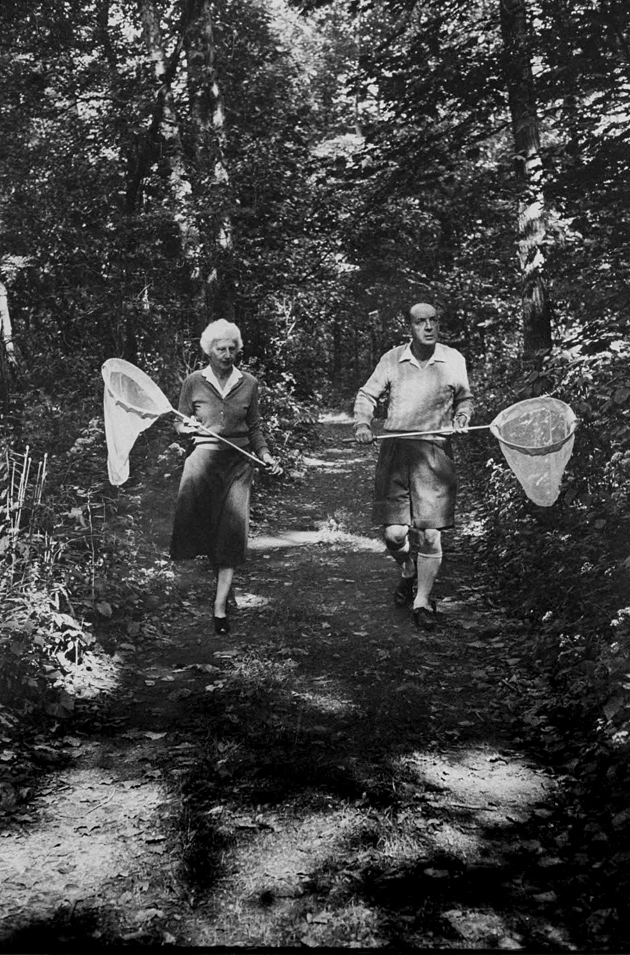
On May 28, 1940, Vladimir Nabokov arrived in New York—the third major stage of his exile from Russia, after Berlin and Paris. Nathalie Nabokov—his cousin Nicolas’s ex-wife—was meant to be meeting him, his wife Vera, and their son Dmitri. She had, however, been confused about their precise time of arrival. No one, therefore, was waiting for them at the dock. They took a taxi to the address they had been given on 61st Street. When they arrived, the meter appeared to be demanding $90. Sadly, Vera handed over all the money they had brought with them from Europe: a $100 bill. And the cab driver ruefully put her right. The fare was 90 cents.
“If there is anything good about exile,” wrote Joseph Brodsky in 1987, fifteen years after leaving Soviet Russia, “it is that it teaches one humility.” And one way exile teaches this lesson is through the everyday slapstick of linguistic mistakes: the misunderstood taxi meter, the mispronunciation.
Perhaps humility, however, isn’t the usual quality associated with Nabokov. Especially not by Nabokov. “Nowadays,” he wrote in 1973, four years before his death, “I take every precaution to ensure a dignified beat of the mandarin’s fan.” In his American exile, Nabokov fashioned an image of himself as oblivious to exile’s problems: “I’m the shuttlecock above the Atlantic, and how bright and blue it is there, in my private sky, far from the pigeonholes and the clay pigeons.”
Privately, Nabokov was less buoyant. In an unpublished note, he recorded that “the déménagement from my palatial Russian to the narrow quarters of my English was like moving from one darkened house to another on a starless night during a strike of candlemakers and torchbearers.” And this figure of the exile—painfully negotiating his dignity—is the key to understanding the history of Nabokov’s translations of Russian poetry into English, now collected as Verses and Versions.
In the 1960s, after Lolita had made him famous, Nabokov was at the center of two controversies involving the translation of Russian poetry. The first was Edmund Wilson’s attack on what he took to be Nabokov’s militant literalism when translating Pushkin’s verse novel, Eugene Onegin; the second was Nabokov’s reverse attack on the liberties Robert Lowell took in producing his imitations of Mandelstam. At the time, Nabokov appeared to be the mandarin, haughtily punitive and remote. Now, perhaps, it is easier to consider his theory of literal translation with more sympathy and precision.
Both controversies stemmed from a radical shift in attitude on Nabokov’s part. In Berlin, early in his career, he had freely and brilliantly translated Alice in Wonderland into Russian—preserving the forms of Carroll’s puns and parodies, rather than their literal content. (So that, for example, Carroll’s portmanteau inventions “reeling and writhing” were rendered into Russian by switching the initial syllables for reading and writing—chitat’ and pisat’—to create chesat’ and pitat’: scratching and feeding.) Having just arrived in America, he made rhyming translations of Russian nineteenth-century poetry—including an excerpt from Onegin. By 1964, however, when his full translation of Eugene Onegin was published, he had become a severe literalist. This shift cannot be understood without remembering the painful reinventions of Nabokov’s life in exile—and, especially, his decision to stop writing in Russian, for a limited émigré audience, and to write in English.
Nabokov despised biography, and history, as an explanation of a style. But the history of his exile is inescapable. For Nabokov, translation was an aesthetic issue that constantly morphed into an ethical one: a constant effort of what he called “fierce fidelity” to the silenced, the lost, and the dead.
In America, Nabokov undertook two major translation projects involving the canon of Russian poetry. (The canon of modern Russian poetry, that is: he also made a translation of the medieval Russian epic The Song of Igor’s Campaign.) The first, Three Russian Poets, made for James Laughlin at New Directions and published in 1944, contained translations from Pushkin, Lermontov, and Tyutchev. The second was his four-volume edition of Pushkin’s Eugene Onegin (including two volumes of commentary), eventually published by Bollingen in 1964.
The present book, Verses and Versions, seems to radically enlarge this corpus of translations—offering selections from eighteen poets, from Mihail Lomonosov, born in 1711, to Bulat Okudzhava, born in 1924. In fact, although the book does print crucial unpublished archive material, it is still based heavily on Nabokov’s two published books. Most significantly, poems by various classic poets first translated in the notes to Eugene Onegin are here reprinted in isolation. It’s therefore not certain—especially of poets who lived prior to Pushkin—whether the poems represent the selections Nabokov would have made had he been creating an anthology of Russian poetry. In the commentary to Onegin, for instance, he stated that the “greatest Russian poems of the eighteenth century are Derzhavin’s majestic odes to his queen and his God.” Neither of these poems was translated by Nabokov. Instead, the book offers one poem by Derzhavin, “Monument,” a conventional version of Horace’s “Exegi monumentum,” which Nabokov translated in the notes to Onegin when explaining the minute and brilliant parody to which it was subjected by Pushkin.
Advertisement
The central editorial decision of Verses and Versions has therefore been to arrange the poems, for clarity, not according to the chronological order in which they were translated by Nabokov, but according to the date of the originals’ composition. This allows Nabokov’s personal history of Russian poetry to emerge in silhouette—to see the weight he placed on Pushkin; on Pushkin’s lyrical, mystical successors Tyutchev, Lermontov, and Fet; and on the visionary, formally meticulous poetry of Hodasevich. But at the same time it partially obscures Nabokov’s shift in translation practice—which itself explains the difference between the two main sources themselves. The poems from Three Russian Poets were intended as stand-alone translations. The poems from the commentary to Eugene Onegin were offered more dryly as source material, as raw factual history.
And yet reading Verses and Versions, especially its collection of previously disparate material—including an early free translation from Onegin, Nabokov’s later literal version of a poem by Mandelstam, some early free translations of Hodasevich, along with his more extensive selections from Pushkin, Lermontov, and Tyutchev—it is possible to reconstruct this adjustment in his ferocious care for accuracy. Through these translations, and their attendant arguments, what becomes visible is the shared root both of Nabokov’s wrestling with the implications of fidelity and of his personal, pragmatic, haphazard project to redefine and preserve the canon of Russian poetry from the potential catastrophe of Soviet censorship and the émigré diaspora. The ethical demand of an aesthetic of elegy: that is what underlies the biography of Nabokov’s style.
2.
In 1945, in The Russian Review, Nabokov published a translation of three stanzas from the first canto of Pushkin’s chef d’oeuvre, Eugene Onegin. Ostensibly, Pushkin’s novel is a melancholy romantic comedy: Tatiana loves Eugene, who does not love Tatiana. When Eugene finally loves Tatiana, Tatiana is married to someone else. But the novel’s interest is not so much its plot as its dazzling form, in which relaxed improvisation is performed through a system of intense constraint. The novel is written in stanzas of fourteen four-stress lines, whose first twelve lines, as Nabokov notes, “include the greatest variation in rhyme sequence possible within a three-quatrain frame: alternate, paired, and closed.” Using this intricate stanzaic form, Pushkin skips around his romantic storyline, creating a montage of zigzagging digressions.
The stanzas translated by Nabokov represent part of what he later called “the most conspicuous digression in the canto. It shall be known as the Pedal Digression”—a riff on remembrance and lost love, in the form of a miniature essay on his beloved’s feet. Nabokov’s extraction of these stanzas therefore created a new object with multiple refractions. Originally a digression within a digression, the extracted stanzas are transformed into a poem. And the poem that emerges, about desire conditioned by memory and existing through it, stands as an emblematic key to Nabokov’s own style, which he would hone and refine throughout his subsequent career as an American writer: a fizzy marvel of sprezzatura.
XXXIII
I see the surf, the storm-rack flying…
Oh, how I wanted to compete
with the tumultuous breakers dying
in adoration at her feet!
Together with those waves—how much
I wished to kiss what they could touch!
No—even when my youth would burn
its fiercest—never did I yearn
with such a torturing sensation
to kiss the lips of nymphs, the rose
that on the cheek of beauty glows
or breasts in mellow palpitation—
no, never did a passion roll
such billows in my bursting soul.
In Nabokov’s second version of these stanzas, however, published in the first edition (later revised) of his complete translation of the novel, the rhymes and the rhythms disappeared. “In translating its 5500 lines into English I had to decide between rhyme and reason—and I chose reason. My only ambition has been to provide a crib, a pony, an absolutely literal translation of the thing….”
XXXIII
I recollect the sea before a tempest:
how I envied the waves
running in turbulent succession
with love to lie down at her feet!
How much I wished then with the waves
to touch the dear feet with my lips!
No, never midst the fiery days
of my ebullient youth
did I long with such anguish
to kiss the lips of young Armidas,
or the roses of flaming cheeks,
or bosoms full of languor—
no, never did the surge of passions
thus rive my soul!
This was the translation that Edmund Wilson famously deplored in these pages: “a bald and awkward language which has nothing in common with Pushkin or with the usual writing of Nabokov.” Wilson went on to catalog what he saw as Nabokov’s errors: attacking Nabokov’s “Farewell, pacific sites!/Farewell, secluded refuge!/Shall I see you?” “Nabokov translates literally ‘Увижу ль вас,'” wrote Wilson, tetchily, “where the English would be, ‘Shall I ever see you again?’ Such passages sound like the products of those computers which are supposed to translate Russian into English.”
Advertisement
But no computer could preserve, as Nabokov preserved more cleanly in his literal version of the Pedal Digression, Pushkin’s prestissimo shifts in tone: from the prosaic to the romantic to the frankly parodic. And the economy of these shifts is the essence of Pushkin’s style. In focusing on the moments where Nabokov’s more literal version turned gawky, Wilson ignored the crucial way in which Nabokov was faithful to Pushkin’s form. Freed from rhyme, Nabokov could transparently show how carefully Pushkin thought through his stanza’s construction—just as, more widely, he thought through his arrangement of the stanzas into cantos, with their own fake gaps and ellipses. Nabokov’s earlier rhyming translation, forced into padding and trimming, was therefore not just inaccurate at individual moments to a particular line’s meaning. More importantly, it also blurred the underlying armature of Pushkin’s style. To that armature, Nabokov was later absolutely faithful.
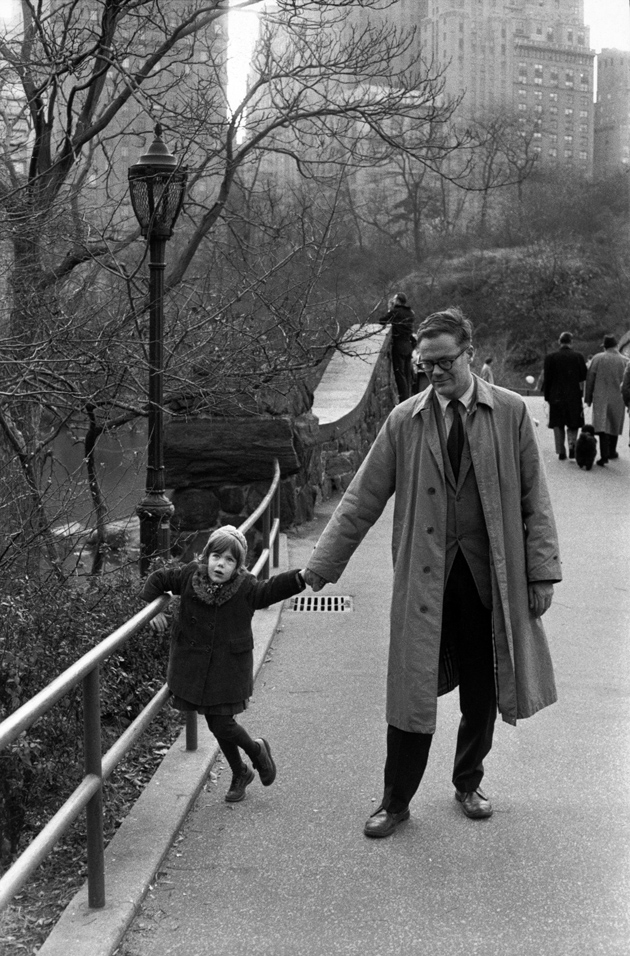
And yet everything depends, of course, on defining fidelity. Nabokov’s “absolutely literal translation” is an elusive ideal. “What is called the music of a poem is essentially time restructured in such a way that it brings this poem’s content into a linguistically inevitable, memorable focus,” Brodsky wrote in an essay on Anna Akhmatova. If this is true—if the content is focused through its form—then a notional choice between either of them is impossible. Every translation will instead entail a new and provisional negotiation.
In 1968, Olga Carlisle edited an anthology of Russian poetry entitled Poets on Street Corners. It included poems by Osip Mandelstam, who had died in the Gulag, with versions in English by Robert Lowell. Following his method in Imitations, Lowell’s translations were free versions, his priority being to write “live English,” accurate above all to a poem’s “tone.” A year later, Nabokov wrote his own rebutting version of one poem translated by Lowell:
For the sake of the resonant valor of ages to come,
for the sake of a high race of men,
I forfeited a bowl at my father’s feast,
and merriment, and my honor.
On my shoulders there pounces the wolfhound age,
but no wolf by blood am I;
better, like a fur cap, thrust me into the sleeve
of the warmly fur-coated Siberian steppes,—so that I may not see the coward, the bit of soft muck,
the bloody bones on the wheel,
so that all night blue-fox furs may blaze
for me in their pristine beauty.
Lead me into the night where the Enisey flows,
and the pine reaches up to the star,
because no wolf by blood am I,
and injustice has twisted my mouth.
When a short selection of Lowell’s Mandelstam versions appeared in The New York Review in 1965, a note was added, co-signed by Lowell and Carlisle, stating that their translations, “while trying to be as faithful as possible to Mandelstam’s images and meter, are not literal. Rather, they are adaptations attempting to recapture Mandelstam’s tone….” Nabokov queried this word “adaptation”: “‘Adapted’ to what? To the needs of an idiot audience? To the demands of good taste? To the level of one’s own genius?”
Nabokov’s dislike of Lowell’s adap- tation focused on the transition at the poem’s center, where Mandelstam metaphorically longs to take refuge in the steppes: “better, like a fur cap, thrust me into the sleeve/of the warmly fur-coated Siberian steppes.” In Lowell, this became: “no, tuck me like a cap in the sleeve/of a sheepskin shipped to the steppes.” In his commentary, Nabokov mocked the demotion of Mandelstam’s “rich heavy pelisse…to a ‘sheepskin'”: “Besides being absurd in itself, this singular importation totally destroys the imagery of the composition. And a poet’s imagery is a sacred, unassailable thing.”
With reason, Nabokov was skeptical of Carlisle and Lowell’s claim that they had been “as faithful as possible to Mandelstam’s images.” His more literal version of these lines is both clearer and more powerful—just as the poem’s climactic last line is also blurred in the Lowell version. Nabokov’s Mandelstam ends on a painful admission of entrapment: “injustice has twisted my mouth.” Lowell instead ends with a strangely exultant moment of bravado: “because I don’t have the hide of a wolf/or slaver in the wolf trap’s steel jaw.” “I am well aware,” wrote Nabokov,
that my laborious literal reproduction of one of the masterpieces of Russian poetry is prevented by the rigor of fierce fidelity from parading as a good English poem; but I am also aware that it is true translation, albeit stiff and rhymeless, and that the adapter’s good poem is nothing but a farrago of error and improvisation defacing the even better poem it faces in the anthology.
But even this grand dismissal cannot erase the persistent problem. Nabokov’s qualification of Lowell’s poem as “good” silently implies the consistent contradictions. For Nabokov’s laborious literalism, in creating a mediocre English poem, is arguably less faithful to Mandelstam’s great Russian original than Lowell’s imprecise but more musical imitation. It could also be argued that Lowell’s mistakes only lessen the value of this particular version, not the method of adaptation as a whole.
“My method may be wrong but it is a method,” Nabokov said of his philosophy of translation. And he was right. But Lowell’s was a method too. For translationese is always a mistranslation—inaccurate to the original’s effect. This was what Lowell rightly wanted to avoid. His accuracy, therefore, was founded on the paradoxical creation of original poems. And it was a method that was very close to Nabokov’s early translations themselves, including his first attempts at Pushkin. But that was when Nabokov had only just arrived in America, when he had not yet made the sad decision that the Russian émigré diaspora could not sustain a literature.
This is the source of Nabokov’s ferocity. Somewhere between 1944 and 1964, when he completed his version of Pushkin, Nabokov stopped believing in a community of readers. Instead, he dedicated himself to preserving an imperiled literature. “The charge—fidelity—was the same in both eras,” Wyatt Mason has written. “Only its polarity had changed.”
Translation, for Nabokov, in the isolation of his exile, became an art that had to be judged on ethical grounds. In his commentary on adapters, Nabokov added that “something very like cruelty and deception is the inevitable result of their misguided labors.” And we should pause on the sadness in Nabokov’s vocabulary—the vulnerability implied in that word “cruelty.” (In an interview two years later, his word for the adapted author was “tortured.”) Just as we should pause when he imagined a thought experiment: what if a poem of Lowell’s were “adapted” by a non-English speaker, and then re-Englished back—so that Lowell’s imagery, like his wonderful phrase “leathery love,” would turn into “the football of passion”? “I wonder,” Nabokov concluded, “on whose side the victim would be.”
Victim: as the subject of a translation!
But then, it was true. Mandelstam was already a victim, murdered by Stalin. Nabokov, in his exile, rightly viewed Mandelstam as “defenceless.” At a time when the Soviet state was intent on erasing history, Nabokov believed that an ideally literal translation was the only morally adequate aim. When Nabokov reprinted his commentary, he added: “I fervently hope that this little essay managed to reach the poet’s widow in Soviet Russia.”
An absolutely literal translation, however, always escapes us. With similar moral probity, after all, Brodsky would argue that a truly faithful translation would have to preserve Mandelstam’s stanza structures—since for Mandelstam “a poem begins with a sound, with a ‘sonorous molded shape of form.'” Without that, “even the most accurate rendition of his imagery” would be only “a stimulating read.” Fidelity is always a negotiation. The effort to maintain it can therefore create a melancholic comedy. Nabokov did not know, for instance, that Mandelstam’s widow, Nadezhda, had written to Lowell in March 1967, explaining that she had “greatly liked” his translations, precisely because they were not done “mechanically” but were “quite free.” This comedy, however, should not negate the continuing value of Nabokov’s impassioned engagement with what might constitute the literal. The opening of his 1954 poem “On Translating ‘Eugene Onegin'” contains an incontrovertible moral disgust:
What is translation? On a platter
A poet’s pale and glaring head,
A parrot’s screech, a monkey’s chatter,
And profanation of the dead.
3.
Nabokov’s concern for accuracy to the dead, however, wasn’t confined to translation. The history of Nabokov’s translations is inseparable from the larger history of his style: an ardent fidelity to reality’s infinitely receding, mortal beauty.
On arrival in America, Nabokov wrote a piece for the Russian émigré New York newspaper Novoe Russkoe Slovo. “The very term ‘émigré author’ sounds somewhat tautological. Any genuine writer emigrates into his art and abides there.” Russian writers, he continued, “have always loved their motherland nostalgically even without leaving it in reality. Not only Kishinev or the Caucasus but Nevsky Prospect seemed like a faraway exile to them.”
He was talking, of course, about himself. All art, and therefore all translation, according to Nabokov, was elegiac. Or, as Van Veen writes in Nabokov’s late novel, Ada, or Ardor, reality is always “a form of memory, even at the moment of its perception.”
The translated poems in Verses and Versions represent a suitcase of Nabokov’s themes: a vision of the poet as exile, existing in a constantly nostalgic relationship to reality. Previously uncollected translations now acquire a poignant place in Nabokov’s oeuvre—like his version of Pushkin’s poem recording a return to Mihaylovskoe, the Pushkin family’s country seat. When he was younger, Pushkin had been exiled there, from Odessa, for two years. The poem therefore represents a return to a home that was also a place of exile. The complications of this poem’s idea of belonging are important; and so is Pushkin’s nostalgic precision—a wind-mill in the distance, “rotating with an effort.”
Such exact notation of appearances, however—like Tyutchev’s “virescent rainbow edged with mauve”—leads into visions of another reality entirely. The book reprints Nabokov’s note on Lermontov’s poem “A Dream”: “To be a good visionary you must be a good observer.” And Nabokov goes on to describe how certain poets “have been particularly good at creating a fluid and iridescent medium wherein reality discloses the dreams of which it consists.” In this volume, a small poem by Tyutchev, in which he wishes he were a star—“not at midnight…but in the day-time when veiled/by the burning rays of the sun as if by smoke/they glow like pale divinities/in the pure and invisible ether”—becomes changed, under the pressure of its Nabokovian context, into a charged evocation of the world’s latent mystical meaning.
The disparate poems in Verses and Versions are all gathered by the magnet of Nabokov’s style. And at the apex of this personal canon is the émigré poet Vladislav Hodasevich, whom Nabokov had known in Paris.* “Even genius does not save one in Russia,” wrote Nabokov in his memorial piece on Hodasevich: “in exile, one is saved by genius alone.”
Hodasevich’s poem “Balláda” was translated by Nabokov as “Orpheus.” Reprinted in this anthology, it becomes an emblem of Nabokov’s own aesthetic. It begins with the poet sitting in a circular room: “looking up at a sky made of stucco,/at a sixty-watt sun in the sky.” The poet falls into a trance, an ecstasy of music. At the end, there is a revelation:
And the sixty-watt sun has now vanished,
and away the false heavens are blown:
on the smoothness of glossy black boulders
this is Orpheus standing alone.
Like Hodasevich, Nabokov was a mystic—but an everyday mystic—discerning the plot behind the apparent plot, the dream of which reality is made. Just as in his fiction “a second (main) story is woven into, or placed behind, the superficial semitransparent one”—mimicking the receding levels of reality.
Reality, wrote Nabokov, was “an infinite succession of steps, levels of perception, false bottoms, and hence unquenchable, unattainable….” Both writing and translating were therefore based on the same linguistics: an infinite gap between the word and the world. His image of himself translating Pushkin as “the gaunt, graceless literalist groping around in despair for the obscure word that would satisfy impassioned fidelity” is genetically related to his image of the half-Russian, half-English novelist Sebastian Knight writing in English, vexed by “the maddening feeling that the right words, the only words are awaiting you on the opposite bank in the misty distance….” In The Real Life of Sebastian Knight, the narrator argues that had Sebastian Knight “started to write in Russian, those particular linguistic throes would have been spared him.” This was not true of Nabokov. Exiled from the truth of reality in any language, his style, and theory of translation, represent a continuously ferocious effort of linguistic fidelity. “A literary conservative is an eternal incendiary,” wrote Hodasevich: “a keeper of the fire rather than a fire extinguisher.”
4.
But the great lesson of translation, like every phenomenon of exile, is still humility. After all, Nabokov’s portrait of the literary flamekeeper, the impassioned exile, was Pnin—a Russian professor on an American campus. “A man of great moral courage, a pure man, a scholar and a staunch friend, serenely wise, faithful to a single love, he never descends from a high plane of life characterized by authenticity and integrity,” wrote Nabokov of Pnin. “But handicapped and hemmed in by his incapability to learn a language, he seems a figure of fun to many an average intellectual….” And it is true: even at his most painfully bereft, Pnin is still cruelly comical: “‘I haf nofing,’ wailed Pnin between loud, damp sniffs. ‘I haf nofing left, nofing!'”
Noble but laughable, Pnin should be the patron saint of translation. For even now, in the era of displacement, we aren’t precise enough about translation, about what it might mean to translate literally: to be faithful. And one place to start might be the ordinary problem of pronunciation. “‘Gaw-gol,’ not ‘Go-gall,'” insisted Nabokov. “The final ‘l’ is a soft dissolving ‘l’ which does not exist in English. One cannot hope to understand an author if one cannot even pronounce his name.” And Nabokov?
Na-bo-kov. A heavy open “o” as in “Knickerbocker.” My New England ear is not offended by the long elegant middle “o” of Nabokov as delivered in American academies. The awful “Na-bah-kov” is a despicable gutterism. Well, you can make your choice now.
But the only moral choice is fidelity: Vladímir Nabókov.

-
*
Nabokov’s version of Hodasevich’s poem “[The Monkey](/articles/archives/2008/nov/20/the-monkey/)” appeared in The New York Review, November 20, 2008. ↩