

Except for the US, no rich nation in the world fails to provide comprehensive health care that is free or inexpensive to its entire population. Yet roughly 50 million Americans, 16 percent of the population, have no health insurance at all; most of them are relatively poor and nearly one third of them are age eighteen to thirty-four.
The proportion of uninsured has been rising steadily since the 1970s. Research by the Kaiser Family Foundation and others finds that those without health insurance die younger, work less due to chronic health conditions, and face persistent personal financial problems brought on by illnesses. A Harvard Medical School study found that some 45,000 deaths a year are associated with lack of health insurance. We can also safely conjecture that many people without health insurance limit their ability to enjoy a full life for fear of accident or serious disease. Those who are forced to go to public hospitals for treatment as their only recourse often get it too late—and the costs for treatment of disease and injury neglected for too long are high.
Despite the lack of coverage for one out of six citizens, Americans pay more than 17 percent of the Gross Domestic Product for their health care, more than any other rich nation by far. Yet America’s health care system is not measurably better and often considerably worse than that of other rich nations. For example, the US ranks forty-eighth in infant mortality among all nations, and its position has been falling. In 1960, the US ranked twelfth.
Moreover, rising costs of health care will be the principal causes of soaring federal budget deficits starting in the mid-2020s because they will push up expenditures on Medicare and Medicaid benefits rapidly. The projected rise in federal health spending has encouraged historically radical proposals from congressmen, notably the Republican Representative Paul Ryan, to transform Medicare from a single-payer plan, in which the government raises taxes and pays doctors and other private providers for medical care, into a system of vouchers, subsidized by the government, with which the elderly will choose between Medicare and privately offered insurance programs, though the annual increase in the value of the vouchers is not expected to keep up with the increase in the costs of health care.
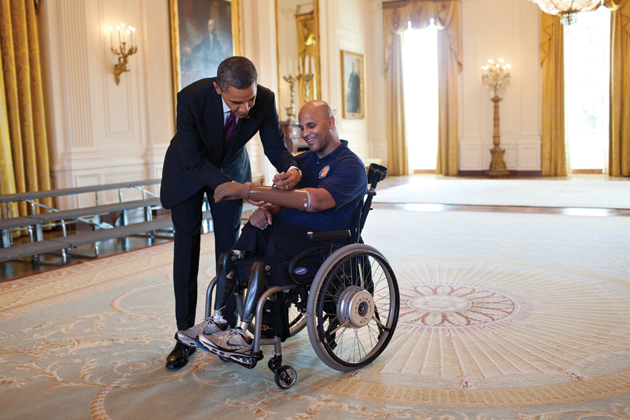
In March 2010, after sixty years of failed proposals, the Affordable Care Act (ACA), sponsored by President Obama, was passed by Congress following a year of laborious and heated congressional negotiations. It is America’s first program to provide coverage for almost all citizens, bringing health insurance to some 32 million more Americans. Half of the newly insured would be covered by significantly expanded Medicaid, the government program for the poor. The other half would be subject to an individual mandate, requiring them to sign up for at least a minimal insurance plan or pay a penalty. Lower-income Americans would be offered substantial subsidies to join the new plans. Four well-defined types of private insurance will be offered on state-run public exchanges, where premiums and benefits can be more easily compared.
Among other important reforms, the bill will also prevent health insurance companies from turning down applicants with preexisting health conditions or limiting annual benefits for those who get sick, two forms of protection that have been popular with the public. And employers with fifty or more workers would be required to provide insurance for them. None of these reforms goes into effect until 2014. One popular exception is the provision in the ACA that any child today may stay on his or her parent’s insurance plan up to age twenty-six, and already two million more young people are insured.
The major flaw of the ACA is that it lacks direct cost controls for money paid to hospitals and doctors, and for the purchase of drugs. There are no budget caps, for example. The bill does reduce somewhat the rate of growth of reimbursement for Medicare, however, and this may already be working to slow the growth of Medicare costs, although it is difficult to determine just what is causing slower growth rates because of the recent recession. The act also requires insurance companies to pay 80–85 percent of their premiums for medical care. Their current average is about 70 percent. The ACA has a number of experimental provisions that emphasize preventive care and change the way medical care is paid for. In one such experiment, providers will be rewarded for how well they treat a disease from diagnosis to cure rather than according to procedures prescribed.
The ACA will encourage the development of private accountable care organizations that will be held responsible for managing the costs of health care for their members. There will also be an Independent Payment Advisory Board to oversee the rise in health care costs, and recommend reducing them if they rise too rapidly. Experts are divided on whether these programs will be significant.
Advertisement
There is considerable good and some bad in the ACA, but it is at best attracting faint praise. Liberals in general are disappointed by the minimal insurance plans required by the mandate—basically the bill offers a plan with high deductibles that only covers catastrophic events. The most troubling failure of the ACA for liberals is the lack of a publicly run insurance alternative to the private plans offered on the health exchanges—the public option—that could have been the best way to keep costs down. Conservatives resent the individual mandate that all Americans buy insurance, even though mandates had been a staple of Republican health care proposals since the 1970s, for example the employer mandates proposed by Richard Nixon and individual mandates proposed by the conservative Heritage Foundation in 1989. They also dislike the new, more progressive taxes—mostly on those who earn $250,000 or more a year—to finance Medicare payments and to pay for the subsidies to individuals and the expanded coverage. The overall cost of the plan is an estimated $900 billion, half of which is financed by tax increases, the other half by changes to Medicare over time.
But overriding all these objections seem to be ideological issues, as Robert Blendon of the Harvard School of Public Health points out, not so much about how to deliver health care efficiently as about the appropriate scale and scope of government in America. A compilation of public opinion surveys by Blendon and John Benson, also of the Harvard School of Public Health, shows that, on balance, public opinion was more or less evenly split on or only slightly opposed to the ACA around the time it was passed. Yet there was considerable support for individual components of the ACA, such as requiring insurance companies to ignore preexisting conditions and the requirement that employers must provide insurance for their workers. Approval also breaks down by party affiliation and demographics. A large majority of Democrats, the young, the poor, and nonwhites strongly favored the plan, reflecting who the new legislation will help most.
Republican disdain, then, has a traditional source. The Obama health care plan is redistributive, helping the Democrats’ natural constituencies. Unsurprisingly, those without health insurance are disproportionately young, poor, and people of color.
Despite its passage, however, the ACA now faces its biggest challenge. Arguably its most important provision, the individual mandate, is under legal attack, with a Supreme Court decision expected this June. As the opponents fully understand, the individual mandate is critical to keeping premiums low on the new insurance plans that will not restrict membership for preexisting conditions or cap lifetime expenditures. Central to health insurance is that the healthy subsidize the unhealthy and the young subsidize the old.
If insurance companies must accept all people regardless of preexisting conditions, rational buyers would simply wait until they get sick before they sign up, and premiums would soar. Republicans are counting on the Court’s ruling to dismantle most of the ACA. Can it work without the individual mandate? As we shall see, it likely can, but not fully without additional changes that encourage voluntary enrollment.
The challenge in the Supreme Court reflects how partisan times have become. Republicans did not try to overturn Social Security when they gained control of Congress in the late 1930s. Similarly, they did not try to overturn Medicare after Lyndon Johnson signed it into law in 1965. But today, politics are more polarized and more fierce. Antigovernment doctrine is pervasive and well-financed organizations are in constant battle on these issues. Many constitutional lawyers believe that the mandate is constitutional, and even if the Supreme Court disagrees, there may be other ways to entice more of the noninsured to buy insurance. The question is whether Congress would endorse any such additions to the ACA, especially if Republicans retain strong control of the House in November whether Obama wins reelection or not.
Health care reform over the past sixty years has always been fought around intense ideological divisions. FDR favored universal health care before his death, though he hesitated to develop a specific plan; his successor, Harry Truman, favored a national health plan run by the government but a bill in Congress along these lines was defeated by fears that such a plan amounted to socialized medicine. A powerful opposition, led by the American Medical Association, the doctors’ well-financed union, conjured up images of Soviet-style central control amid rising fears during the cold war. The AMA called White House staffers followers of the Moscow party line.
Given such ideological resistance and the power of the AMA, Lyndon Johnson’s successful passage of Medicare in 1965, which covers all those sixty-five and older and is paid for directly by the government—a classic single-payer system—was a remarkable achievement. At the same time, LBJ also established Medicaid, the health plan mostly for families on welfare. It might have seemed that LBJ’s historic victories could have been a new beginning. In the early 1970s, Republican President Richard Nixon favored a universal health care system for all, albeit one based on mandates for employers to cover all workers and tax breaks for individuals to buy coverage. Senator Edward Kennedy, who had made health care the primary concern of his long legislative career, backed a more ambitious plan involving a full-fledged single-payer system for all. But Nixon and Kennedy, even as they tried to work out an agreement, could not win over Congress, and Nixon’s resignation after the Watergate scandal ended all practical hope of universal health care for another two decades.
Advertisement
As Paul Starr of Princeton points out in his valuable book, Remedy and Reaction, a large majority of Americans get their insurance either from their employers, who have benefited from a tax deduction for their plans since the 1950s, or from Medicare. Since most people insured by their employers are, according to surveys, moderately happy with their coverage, comprehensive reform to include the 50 million uninsured is made all the more difficult. Starr calls this America’s health care reform “trap.”
After the failures of the early 1970s, reform proposals made by Democrats became more and more diluted. Even Senator Kennedy gave up on a single-payer system, and no major reform efforts were made again until Bill Clinton’s presidency. But the Clinton plan was also defeated by ideological arguments and powerful vested interests, this time not only the AMA but the pharmaceutical and insurance companies. “If they choose, we lose,” said Harry and Louise in the effective television ads run nationwide by the health insurance industry, warning that government bureaucrats would make decisions for citizens and thus undercut the free market.
But by the 2000s, employers were reducing health care benefits, premiums were rising rapidly again, drug prices were soaring, and more and more Americans were going uninsured. The managed care organizations had limited consumers’ choice of doctors too severely. Starr’s “trap” was becoming less effective as Americans became less content with what they had. In response to rising drug costs, George W. Bush created an expensive drug benefit for the elderly under Medicare, a leftover proposal from President Clinton. But he allowed private industry to retain all control over drug prices, and left a “doughnut hole” in benefits—the government ends annual reimbursement of drug costs at $2,930 and resumes paying them after $4,700. One of the achievements of the ACA is that it will gradually close this doughnut hole.
By 2008, health care had risen high in surveys of Americans’ gravest concerns and become a leading Democratic campaign issue. But in historical perspective the proposals by the Democratic candidates were modest. The new plans looked more like the Republican proposals of the early 1970s. By now it was clear from the makeup of Congress, however, that only with such limitations was nearly universal health care within reach in contemporary America.
When he took office, Obama offered an outline of his proposals to Congress, but not a specific plan. He believed that bipartisan wrangling within Congress would result in something that could actually be passed. If he had been more tenacious, more active in publicly advocating a clearly explained plan, he might have been able to build more public support for it. The electorate, according to surveys, never fully understood the plan.
Yet a number of path-breaking reforms almost became law. One, for example, would have allowed Americans between fifty-five and sixty-four to “buy in” to Medicare, a proposal long advocated by Senator Kennedy; but he soon developed brain cancer and could only participate in negotiations sporadically. The buy-in lost support in the final rounds of negotiations.
The public option was the most emotional issue. The federal government would have provided its own insurance plan that would have paid doctors and other health care providers Medicare rates plus 5 percent. Such a plan could have lower premiums than private insurance, which were typically 20–30 percent higher than Medicare rates. This could have been a good way to hold down costs, but it was discarded in negotiations. A watered-down public option was then proposed that paid rates similar to private insurance companies, but it was defeated at the last minute. In the case of both the Medicare buy-in and the public option, the votes of only a couple of legislators made the difference.
In view of the nasty polarization of current politics and the long history of reform, it is naive and even churlish simply to dismiss the ACA as inadequate. It is a comprehensive plan, a first in many ways, and one that can be built upon. John McDonough, a professor at the Harvard School of Public Health, was an adviser to Senator Kennedy and provides a firsthand account of the battle for and against the ACA in his admirably clear and terse book, Inside National Health Reform. He provides the best explanation available, which occupies most of his book, of the many individual components of the ten titles of the final act. As he writes, the ACA is “a landmark law in the history of health and social welfare…whether one regards the law as monumentally good or monumentally bad. Few federal laws in history approach it in terms of scope, breadth and ambition.” He does not exaggerate.
The story of intense and rough politicking over more than a year after Obama outlined his health care plan is best told in Fighting for Our Health, by Richard Kirsch, a grassroots organizer. The ACA battle is arguably the classic case study of modern politics and partisanship of our time. As a sign of Republican determination, not one Republican senator broke ranks to vote for the ACA. Only one Republican in the House did. Senator Charles Grassley, the Republican senator from Iowa, had favored a public option during the Clinton health care debates in 1993; he now was opposed because his fellow Republicans also were opposed.
Republican strategists played consciously on ideological fears. “If we’re able to stop Obama on this it will be his Waterloo. It will break him,” said South Carolina Senator Jim DeMint. Frank Luntz, a Republican strategist, wrote a report on how to exploit the “language of healthcare,” as Starr writes. He urged his activists to avoid talk about competition and free markets and emphasize that health care reform would “deny” care to Americans. He also urged them to talk about a “government takeover.” “Takeovers are like coups,” he wrote. “They both lead to dictators and a loss of freedom.” Denial, takeover, lost freedom—these were long-standing right-wing ideological scarewords and Republican strategists told politicians and conservative pundits to use them repeatedly.
From Obama’s point of view, and to a lesser degree Senator Kennedy’s, major compromises had been necessary. Many progressives have a hard time forgiving Obama’s agreement with the pharmaceutical lobbying organization that Medicare could not negotiate lower drug prices and Americans could not import cheaper drugs from Canada. In return, the drug companies would reduce drug prices for the elderly. As part of its agreement with Obama, the industry also agreed to spend $80 million on TV ads in support of the bill. Kirsch, the national campaign manager for Health Care for America Now (HCAN), writes in his book that had the pharmaceutical industry spent that money on anti-reform TV ads instead, the ACA may never have passed.
Kirsch took on each of these battles in an effort to fight for HCAN, state by state and legislator by legislator. Armed with $25 million from the Atlantic Philanthropies, and several million dollars from others, he built a national network of response teams that could launch thousands of phone calls quickly to legislators. HCAN, which became the leading grassroots organizer, fought with liberals who believed in a single-payer system or nothing at all. That a new health program that was at least partially successful and popular could open the way to more far-reaching legislation did not seem to occur to such opponents of the bill. On the other hand, Kirsch and the HCAN leaders strongly believed in the public option, which Obama and other Democrats also agreed to jettison in order to win support for a bill. Still, HCAN eventually gave full support to the ACA.
The high point of the Republican attacks was disruption by the Tea Party of Democratic town meetings during the August congressional recess of 2009 when negotiations on the Hill were coming down to the wire. Around the same time, Sarah Palin claimed outrageously that the Obama bill proposed “death panels” to tell people how to end their lives. In fact, the bill offered to pay physicians for advice on living wills, the value of hospices, and other concerns should beneficiaries seek them out. With Fox News on the opponents’ side, the disruptions of town meetings and the canard about death panels helped convince some Americans that something must have been wrong with Obama’s plan. Starr writes that such tactics were not new. It was “how conservatives had fought Truman’s national health insurance plan, Medicare, and the 1993 Clinton health plan.”
But the town meetings also concentrated the energies of the pro-reformers. Kirsch calls it among HCAN’s proudest moments as he and others rose to the occasion. They developed fast responses to the disrupters, sent pro-reformers to the town meetings, and neutralized the Tea Party. Kirsch believes that HCAN and others with whom he cooperated turned the tide to pass the bill. But Blendon and other pollsters found that damage had already been done. Support for the bill was now declining among the public. Many had warned that Obama had left the negotiation of the details of the bill to the House and Senate for too long. Had he been pushing the bill harder, and explaining its benefits all along, the anti-reformers may not have been able to build their campaigns.
At last, Obama gave a persuasive major public address in support of reform on September 9 that, according to Starr, seemed to stop the slide in support. Senator Kennedy’s death in late August may have inspired him. There were more battles to be fought over abortion funding and finally over the public option. These would be won by the conservatives in order to bring forward a bill in both the House and the Senate. In the Senate, Majority Leader Harry Reid needed all sixty Democrats to forestall a filibuster. He got the Senate to approve its version of the bill with no Republican votes.
But in January, a new obstacle arose. The Republican Scott Brown defeated the Democratic candidate for Senator Kennedy’s seat. Now there were only fifty-nine Democrats. Republicans gloated and some Democrats panicked. Several presidential advisers urged Obama to retreat and cut back provisions of the bill. But in what was probably his finest moment, Obama charged ahead to win support. He even visited a House Republican retreat to talk about reform with them for ninety minutes. HCAN, in turn, organized a demonstration of support in Washington.
Then, a major insurance company in California raised premiums by nearly 40 percent, outraging its customers. This, at last, was a bit of good luck. As Kirsch writes, the Obama administration had been too timid all along about denouncing the insurance companies, with their very high profits, in order to win popular support. After the big premium hike, the administration made outspoken attacks on the insurance industry, as Kirsch had wanted to do all along.
The bill was passed only by a procedural technicality. The House voted for the Senate bill, and the differences were worked out in the reconciliation process, where the filibuster did not apply. Scott Brown’s victory did not undo the ACA.
On balance, the ACA is a significant legislative achievement. Many thought Obama should postpone his campaign for health reform when he took office in order to deal with the collapsing economy. The authors of these three books disagree. Even without the individual mandate, Medicaid under the ACA will be expanded dramatically to enroll another 15 million or so Americans. Those under twenty-six would still be able to stay on their parents’ health plan. The state exchanges may entice more people to sign up for insurance when the advantages of policies are made clear to them, which may in turn increase competition among insurance companies.
If the Court overturns the mandate this June, there are other options to persuade millions of Americans to buy insurance. Starr suggests that people be allowed to avoid a penalty if they do not buy insurance, but they would no longer be protected by the clause forbidding denial of insurance because of preexisting conditions. Alternatively, premiums could be raised substantially for those who don’t sign up right away. There are other potentially effective proposals as well. And if the political makeup of Congress changes, there could be much to build on. A strong public option could be added at any time. So could a provision allowing those who are fifty-five to sixty-four to buy into Medicare. In short, the future of health care in America will depend critically on who wins both the White House and Congress in November, and thereafter.
It would help Obama’s cause in this election if some of the other attractive components of the ACA were already in place. But most are not scheduled to take effect until 2014. This concession by the White House and Democrats, in my view, was a major political error. If Americans had already begun to understand better some of the benefits, the ACA could have become a serious campaign advantage for Obama and the Democrats. As it is, especially if the mandate is disallowed, support for the ACA will require aggressive boosting by the president himself, and his colleagues in Congress and state houses. He avoided that through much of 2009, finally coming in to rescue the plan late that year. He cannot be so aloof anymore. He has much to be proud of, yet he must still show Americans why they will be better off.
This Issue
June 21, 2012

Real Cool
How Texas Messes Up Textbooks
Mothers Beware!
This Issue
June 21, 2012
Real Cool
How Texas Messes Up Textbooks
Mothers Beware!