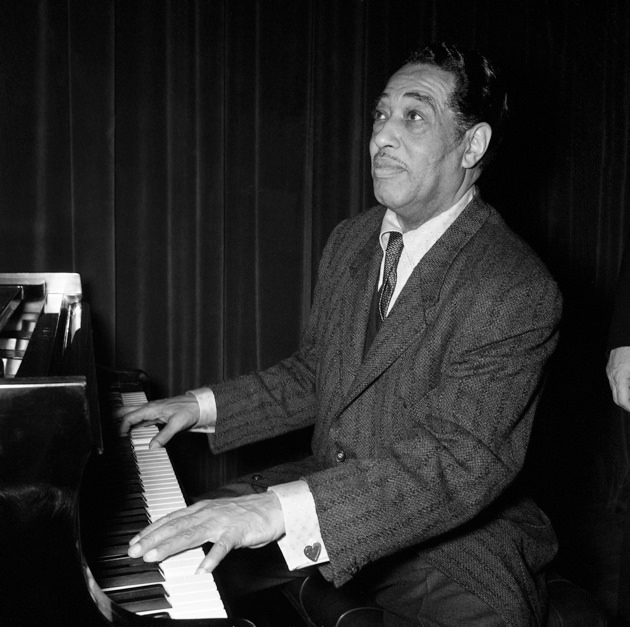
In the latest episode of the podcast, Geoffrey O’Brien talks with Chris Carroll about Duke Ellington’s mid-career crisis and stunning comeback, revisiting his often-overlooked albums of the 1960s and 1970s.
Chris Carroll: People tend to know Duke Ellington for his work from the 1930s and early 1940s—songs like “Take the A Train” and “Mood Indigo”—but I think there’s an unfortunate tendency to overlook the later part of his career, which, as you note in your piece, contains some of his most original and fascinating albums. So I wondered if you might talk a bit about just what’s so remarkable about this later period.
Geoffrey O’Brien: I think there’s been, formerly at least, a tendency to prize Ellington’s earlier work at the expense of the later work. Partly because it is so great, and no one would ever question the work from the late thirties and early to mid forties… But the later work branches out into very ambitious directions, and he never settles down into a predictable groove, even as he has a thriving career as a live performer, and is constantly traveling the country, traveling the world, and in the course of that playing his whole book of standards, but never exclusively that. He’s always filling in with the new music, and releasing albums of new music. It’s almost without parallel, I think, the degree to which he did not stop literally until his death. He was working on new compositions when he was in the hospital.
Listen to the whole conversation below, or subscribe to the podcast with iTunes or your RSS reader to download this and other episodes.
(Podcast produced by Sean Hagerty)