
About a decade ago I had a curious visitor to my office at the London School of Economics. An American in his mid-fifties, he explained that he had been a student in the 1960s and had come by to see who was in the office of a former professor. I asked him what he was now doing. “I am the American ambassador to Saudi Arabia,” he replied. Previously, Wyche Fowler had been a Democratic senator from Georgia, losing his seat in 1992; he had then been appointed US ambassador in Riyadh by President Clinton, a position he held from 1996 to 2001. So, I asked him, how would he evaluate the situation in this notoriously opaque country? Ambassador Fowler explained that indeed it was difficult to monitor the country; he and his colleagues were largely confined to the embassy, and access to Saudis was extremely difficult. As ambassador, he said, the only person he could really talk to was the King—an experience he compared, with a little irony, to talking to Ronald Reagan.
He was not alone in finding it difficult to get a handle on Saudi Arabia. Until the past decade or so, there was almost no reliable academic or journalistic writing on the country.1 US intelligence and diplomatic analysis did little better. As The Bin Ladens, Steve Coll’s fascinating recent book, demonstrates, precise knowledge about the workings of power, members of the ruling elite, security, and money was intrinsically impossible to find.
Along with several other American ambassadors to Saudi Arabia, Wyche Fowler has a walk-on part in Coll’s book. Following the bombings of two US embassies in East Africa in 1998, Fowler was told to put pressure on the Saudis to reveal details of the bin Laden family finances and links to Osama, who took credit for the bombings. He found himself caught up in conflicts between different branches of the US government, each insisting that it had the best means of getting the desired information. It is easy to claim that one or another approach would have made a decisive difference, that the September 11 attacks could have been avoided, or that the Saudis could really have closed down the al-Qaeda operation. Looked at from the outside, however, such assumptions appear less certain. In a world where public statistics, and accounts, are largely inventions, in which even basic figures of national income and expenditure are worthless, conventional forms of investigation, based on experience in the United States or elsewhere, are of little use.
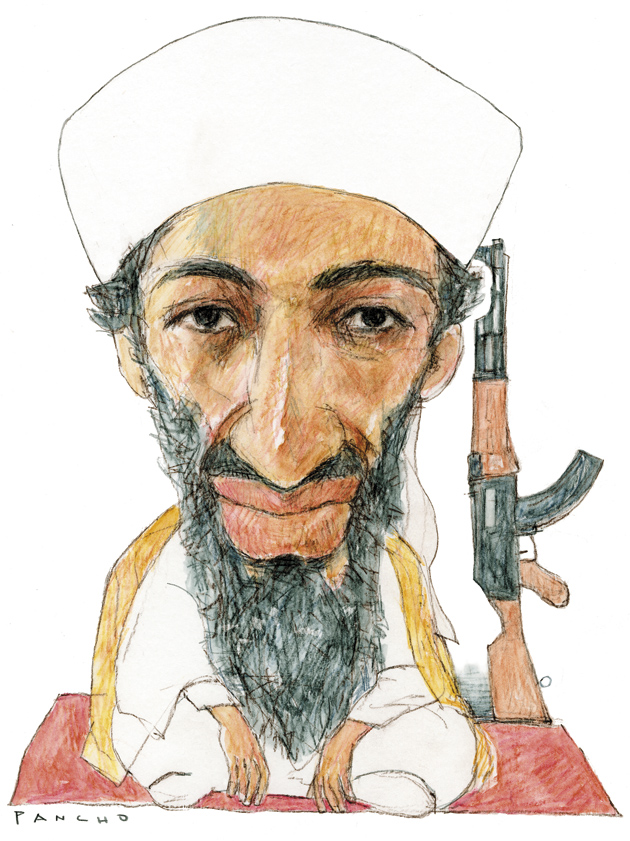
To read Coll’s book is to enter a universe of perpetual movement and deal-making, but one in which little, if anything, is recorded or written down, where power and money are distributed by means of kin networks, informal gatherings of influential Saudi males, and the mobile phone. The Bin Ladens is not so much a book about Osama bin Laden himself, or his terrorist network and political aspirations, as about the power structures of modern Saudi Arabia. And in this it is most informative. Against much contemporary writing about the Arab world, which tends to explain political and social behavior by analysis of culture and religion, Coll’s book is about more secular matters—about sibling rivalry; fascination with modern technology, particularly planes and means of communication; about the attraction of women; and above all, for all the talk of piety, about money.
Drawing on extensive oral testimony from friends and business partners, The Bin Ladens gives persuasive explanations not just of Osama bin Laden, of where he came from and how he was radicalized, but of his gifted and restless family and, perhaps more than anything, of the modern Saudi elite itself. The success of the bin Ladens was tied to their connections and access to the King and his close associates, and the ability to anticipate and carry out, whether in building, engineering, or accounting, the wishes of the House of Saud.
Coll describes the rise of Mohamed bin Laden, a poor immigrant from the Hadhramawt region of Yemen who arrived in Arabia in the 1920s and became one of the country’s leading construction magnates. Beyond ingenuity and hard work, he had a remarkable capacity for understanding and manipulating the shifting and internecine worlds of the Saudi royal family. The Saudis came to power in the 1920s without the experts or trained personnel to run a state, and they relied heavily on enterprising immigrants, like Mohamed bin Laden, together with the more cosmopolitan business elite of western Arabia, the Hijaz. This reliance persisted well into the second and third generations, so that by the time Mohamed bin Laden was killed in a plane crash in 1967, his elder son Salem—educated in Britain and in Lebanon, and with a taste for the life-style of Texas and California—came to occupy the same position, coaxing contracts and payment out of the Saudi court and, in a loose but effective way, managing the family construction business on behalf of Mohamed’s fifty-four children, among them twenty-four sons, of whom Osama was one of the youngest and, initially, less prominent.
Advertisement
Salem bin Laden built up contacts with Americans that would have been unimaginable to his father. These included oil engineers, fixers, financiers, and pilots, as well as a string of lovers whom he met in his ceaseless traveling, flying, purchasing, and negotiating. He died in a plane crash at a small airfield in Texas in 1988. There is something at once elusive and intoxicating about the world of the oil elite of Arabia. Many of its members spend their lives talking, charming, making deals, managing to receive payments, moving from one city and continent to another, accompanied by hangers-on, cronies, sycophants, and friends. The first question that always arises in such circles is ” Mata wasalt? “: “When did you arrive?”
This is a world awash with money, the precise origins of which are hardly clear. In all the pages of The Bin Ladens, and the detailed account of the family’s business, personal, and political activities, three words rarely if ever appear: “book,” “idea,” “read”—although we soon gather that the initially reserved and pensive younger brother Osama must have read extensively. It is small wonder that, exposed to both Saudi puritanism and the Western lifestyle, the members of the bin Laden family should have chosen a variety of paths, from assimilation into the Western elite, such as Yeslam, now in the perfume business in Geneva, to outright rejection, as in the case of Osama. As Coll puts it, perhaps with a little simplification, the bin Laden family divided into the “Hard Rock” and ” jihadi ” factions.
Coll is careful not to bring Salem’s younger brother Osama into the picture too early. This is in part because he wants to show from what kind of world Osama, who was born in the mid-1950s, emerged. He received an elite education in a private school in Jeddah, al-Thaghr, modeled on a British “public” school; it featured English and Scottish teachers, and a school magazine which was edited in Osama’s time by a Saudi who later became a student at the London School of Economics. For many years, until his estrangement from the family in the late 1990s, Osama received his share, estimated by Coll at between $2 and $3 million per year, of the bin Laden business income.
His entire career and life opportunities had been framed by his ties to the Saudi elite; but whereas his brothers concentrated on financial and commercial links, Osama’s links were political. Radicalized by Muslim Brotherhood teachers who were in exile from Egypt in the 1980s, and increasingly drawn to an austere, reserved lifestyle, Osama went to Pakistan in 1984 to help organize the recruitment and deployment of Arab volunteers who had come to fight the Russian and Afghan Communist forces over the border. At first, his primary function was to help funnel money from the Saudi intelligence services to the Mujahideen, and also to use skills, contacts, and, it seems, even construction equipment provided by the family business to build bases and facilities for the anti-Communist forces inside Afghanistan.
Coll is keen to maintain a sense of proportion in describing Osama bin Laden’s role in the Afghan jihad. He was not a major military leader, but had a part in at least two bloody episodes in the latter stages of the war: a battle in 1987 in the border region of Jaji, where he had built a network of caves and fortifications for the Islamist fighters; and the unsuccessful siege of the eastern Afghan town of Jalalabad in 1989. Coll goes on to develop one of his major themes—the degree to which Osama bin Laden, increasingly involved in fighting and an apparently heroic military campaign, came, more and more, to believe in his own rhetoric about his leadership of a global Islamic movement. He quarreled first with his Palestinian mentor, the militant Islamist cleric Abdullah Azzam, who died in mysterious circumstances in 1989, and then with his Saudi sponsors, following the Iraqi attack on Kuwait in 1990. Saudi Arabia supported the US in the Gulf War, while bin Laden saw the presence of infidel US forces in Arabia as violating the sacred land of Islam. It was when King Fahd rejected bin Laden’s offer to fight the Iraqis using Islamist forces instead of relying on the US that the latter’s real falling-out with the Saudi ruling family began.
Coll questions the conventional story about bin Laden’s links to the CIA. As the author of a previous book on the CIA’s role in Afghanistan, Ghost Wars,2 he is well placed to investigate the issue. He finds that there is no evidence of bin Laden ever being paid by, or meeting directly with, American intelligence representatives during the Afghan war. However, as Coll also makes clear, this does not mean too much. Bin Laden was well connected with the Pakistani and Saudi security services, and made at least one trip to London, in 1986, when he stayed in the Dorchester Hotel for six to eight weeks, negotiating for the supply of portable antiaircraft missiles to the Afghan guerrillas with his brother Salem and a representative of the German arms firm Heckler & Koch. Plausible deniability is, in the world of covert operations and intelligence, very much part of the game.
Advertisement
Coll draws on information found by the Bosnian authorities during a raid in 2002 to provide an account of the founding of al-Qaeda as a loose transnational coalition at meetings in Peshawar, Pakistan, in August 1988. The story of Osama’s gradual estrangement from the Saudi state and from his own family is also well told. For Coll, key turning points are Osama’s involvement, however indirect, in the 1993 attempt to bomb the World Trade Center in New York and his open denunciation, beginning in 1994, of the Saudi ruling family for allowing the military bases of American infidels on Arabian soil.
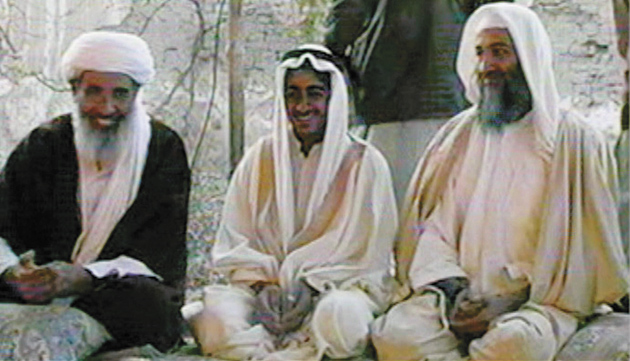
On other questions, such as why the date of September 11, 2001, was chosen, we remain in the dark. Remarkably for a subject on which so little that is reliable has been written to date, The Bin Ladens contains very few erroneous or contestable judgements.3 The main weaknesses occur in Coll’s account of events that have little to do with America or Saudi Arabia as such. He makes rather too little of Osama’s time in Sudan, from 1991 to 1996, a period following the takeover of Sudan by Islamists in 1989, when he was involved in major attempts to overthrow the government of Egypt and other states, including Algeria and Libya. In 1993, al-Jihad, the Egyptian organization run by bin Laden’s close associate Ayman al-Zawahiri, failed in its attempt to assassinate Egypt’s interior minister and prime minister. This was not an interlude: it was the blocking—by the government of Egypt, among others—of the export of the Sudanese Islamic revolution to neighboring states that pushed Osama to his later “global” attacks in East Africa and Manhattan. In this very important sense, September 11, spectacular as it was, was also a sign of failure, not of escalating battle, and it was carried out on behalf not only of bin Laden but of his radical Egyptian allies.
Coll’s account of al-Qaeda’s role in Saudi Arabia’s neighbor, Yemen, in the late 1980s and early 1990s greatly understates the extent to which Islamist militias such as the Abyan Army, led by Tariq al-Fadli, a former sultan, and the armed groups in northern Yemen led by Abd al-Majid al-Zindani supported the pro-Western North against the formerly socialist South. The undermining and ultimate destruction of the Communist regime in South Yemen, the only case other than Afghanistan in which a Soviet-style system was established in the Muslim world, was a major priority for bin Laden and his associates. Coll’s account implies that this was something that occurred only in the late 1980s, whereas the involvement of bin Laden’s allies and kin, in what for them was a struggle against a Communist regime similar to that of Afghanistan, lasted through to the 1994 war between North Yemen and the socialist republic of South Yemen, which the North won.4
On three broader matters relevant to the whole al-Qaeda story, Coll’s book clarifies our understanding. First, Osama bin Laden was not a product of a medieval mentality, or of some rigid “Islamic” way of thinking, but of the modern world—its conflicts, ideas, and, not least, its gadgets, ease of communication, media-produced images, and even fantasies.
Second, while he came from a wealthy and well-connected family, Osama, along with the estimated fifty-three other children of Mohamed bin Laden, did not inherit, or have access to, enormous sums of money: Coll assesses his wealth, calculated on the basis of Mohamed’s estate, divided proportionately between the children, at around $24 million, and at least some of this he is believed to have lost in business ventures in Sudan during his time there in the 1990s. What Osama bin Laden did, and to a degree still does, have is the ability to make use of contacts and to raise money. This network includes sympathetic members of the bin Laden family, among them some of his sisters and half-sisters; informal contacts in the Saudi elite; and, not least, parts of the Pakistani intelligence and business communities.
Third, although the attacks on Manhattan and Washington in September 2001 were direct hits on American soil, Osama bin Laden’s aims do not encompass the defeat of the United States, or the conquest of the West, by, or “for,” Islam: the attacks on Europe and the US are, in Arabian tribal terminology, “raids.” The “planes operation,” as it was originally called when it was first conceived in 1998, was designed to be a spectacular piece of theater, what anarchists used to call “Propaganda of the Deed,” a provocation that would draw the US military into further, and costly, conflicts in the Middle East, primarily Afghanistan. This was also the original purpose of the attack on the USS Cole in Aden harbor in October 2000, an operation that failed to sink the missile-carrying vessel, but that did kill seventeen American servicemen.
The original plan for September 11 seems to have envisaged no fewer than ten simultaneous hijackings and targets on the West as well as the East Coast of the US. As we now can see so clearly, even the scaled-down four-plane operation more than served its purposes, drawing America into a war in Afghanistan which it appeared to win, in 2001, but which has now turned very much the other way. It also led to something Osama bin Laden seems not to have envisaged, a war in Iraq, which, even if it can be stabilized, has served as a recruiting ground, and symbol, for jihadis across the region.
There is, however, a fourth, and wider, lesson of the world portrayed in Coll’s book, namely that of the business practices and modus operandi of the Arabian business and political leaders. During the spike in oil prices in the first half of 2008, much was made in the Western financial press of possible joint ventures with, and major investments by, Middle Eastern sources of capital, and in particular of the growing influence of Arab, along with Russian, Chinese, and Singaporean, “Sovereign Wealth Funds” in investing in the West. A lot of people in banks, and other cash-starved enterprises, are hoping that these donors will help them out of the current world financial crisis. At the same time, Western governments and bank regulators demand that these new investors comply with standards of transparency and what is generally termed “good governance”; this means knowing the source of the funds being invested, the institutional structure of the donor bodies, and the relationship between private and state sectors, and individuals, within the donor communities.
Eminently desirable as such Western-style reforms may be, Steve Coll makes it clear that they are fundamentally incompatible with the financial and decision-making culture of Saudi Arabia and, by extension, of other Middle Eastern states. No major decisions, on investment or payment, are taken in formal meetings. Funds may seem to be attached to particular private donors or entrepreneurs, like members of the bin Laden family, but it is often their links to influential members of the ruling family that provide the key to their wealth: thus any attempt to separate state from private interests is doomed from the start. As for legal commitment, an estimated 80 percent of contracts signed in the Gulf and Saudi Arabia are not carried out. And as is well known, “commissions,” “kickbacks,” “local partners,” and the rest are ubiquitously necessary.
What is more striking about The Bin Ladens are two themes that are not addressed, omissions that follow perhaps inexorably from Coll’s approach to the story. One is a consideration of the qualities that have made Osama bin Laden and his associates so attractive to some in the Muslim world and beyond. Osama bin Laden’s rise is explained not just by his skill with videos, fund-raising, and theatrical mass murder, but also by the chord he strikes among millions of people who, for a variety of reasons, resent the domination though not necessarily the life-style of the West, and in particular of the United States.
By devoting little attention to the larger bin Laden phenomenon, Coll leaves for the most part unexplored the question of what it was that Osama himself felt he was responding to, and the longer-run impact and endurance of the loose movement he initiated and inspired. In the final part of the book, Coll describes the situation of each of the main branches of the bin Laden family since September 2001, ending with a couple of chapters on Osama, portrayed here as on the defensive and increasingly unstable and eclectic in his choice of targets and ideological themes. The al-Qaeda leader—who may, according to some reports, be in the lawless frontier area of Pakistan—is evidently much aged and tested by his recent experience. He has had to contend with repeated divisions within Islamist ranks, and al-Qaeda has apparently failed to build a coherent international organization. Here the point is very well made by Coll that the origins and development of Osama’s thinking are not to be found in anything traditional or scriptural, but are, rather, a response to the tensions of modern Saudi Arabia and of the Middle East as a whole.
In focusing on bin Laden’s family background, Coll does not seem to recognize the extent to which, in some ways, history is, broadly speaking, going Osama’s way. The US will not be able to maintain a permanent presence in Iraq, and even if the present state survives it will in all likelihood become an ally of Iran’s. Turkey has been increasingly alienated from the West, and particularly from the United States. The Muslim Brotherhood is gaining popularity in Egypt, Palestine, Syria, and Kuwait—a trend that has reportedly increased in response to the recent conflict in Gaza. Most importantly, in the opinion of many firsthand observers, the attempt to build a new Western state in Afghanistan seems doomed to failure.
As bin Laden—“a global news junkie,” according to Coll—surveys the world on the Internet and postpones, as all revolutionaries must, his dreams of a worldwide insurgency, he must be gratified to see how his old associates in Afghanistan, the Taliban, and his old patrons and allies in the Pakistani security system are, after the initial US successes of 2001, very much back in business. While it is too early to be sure who inspired, trained, and organized the recent Bombay attackers, there can be little doubt that they will be viewed with pleasure, when not enthusiasm, by al-Qaeda. President Obama has said in a television interview with al-Arabiya that “we are…communicating a message to the Arab world and the Muslim world, that we are ready to initiate a new partnership based on mutual respect and mutual interest.” But the burden of past US policies in the region, both before and after September 11, remains heavy.
Here we come to the other clamoring silence in this book, one obscured all the more by the subtitle “An Arabian Family in the American Century.” One of the leitmotifs of the book is the embrace by the Saudi Arabian elite, and in particular by the majority of the bin Laden family, male and female, of American consumerism and American business. Yet there is a larger question here of who, in the end, had the greater influence on whom. For Osama bin Laden, with at least some support from others in the clan, turned into the greatest enemy of the United States in the early twenty-first century.
At the same time, Coll’s recognition of the interaction between Saudi and US government officials and businessmen may serve to displace, even obscure, the historic responsibility which America should bear, and which few care to investigate, for the rise of al-Qaeda itself. This, to an outside observer, is the most striking failure of the post–September 11 debate within the US: the terrorist attacks on New York and Washington are blamed on everything from the Koran to current Saudi educational practices. But the central stimulant and conditioner of the rise of al-Qaeda and of Osama bin Laden himself, namely US policy in Afghanistan in the last decade of the cold war in particular, and in the Muslim world more generally, is neglected.5
As Steve Coll shows, that Osama bin Laden himself apparently did not meet with US officers is in itself trivial; backed as he was by the Pakistani and Saudi intelligence forces in the conflict with the Soviet Union, bin Laden was both a recruiting sergeant and logistics officer, later prone to exaggerating his role, in an international campaign orchestrated from Washington. In this sense, for all his distance from the other, more compliant, members of the family, Osama bin Laden was as much a part of the involvement with America, and of American global strategy in its supposed “century,” as were those Saudis who bought properties in Florida and Texas, or who invested in US businesses. And lest we forget, and for reasons that go far beyond the plans, malevolence, and indeed survival of one aberrant visionary, this story is still far from over.
This Issue
March 12, 2009

This Issue
March 12, 2009
-
1
The quality of publications and analysis has changed quite dramatically over the past decade. Whereas only a while ago there were few serious academic or journalistic studies of Saudi Arabia, and all of these were by outside observers (Richard Johns, Helen Lackner), we now have a score of books that explain how the country works. Perhaps the first author to do this was the Russian Arab expert Alexei Vassiliev in The History of Saudi Arabia ( NYU Press, 2000). The French social scientist Pascal Ménoret, in The Saudi Enigma (Zed, 2005), a book based on two years living in the country, and the British political economist Tim Niblock, in his recently published The Political Economy of Saudi Arabia (Routledge, 2007), have also helped to lift the curtain. Two women authors with a Saudi connection have done much to remedy past ignorance as well: Dr. Mai Yamani and Dr. Madawi al-Rasheed, in their studies of contemporary Saudi Arabia, have provided analysis that is at once rich in detail and convincing in overall judgment. ↩
-
2
Penguin, 2004; reviewed in these pages by Ahmed Rashid, May 27, 2004. ↩
-
3
There are occasional slips: thus, on page 399, any account of the Bosnian war should include, among the enemies of the Muslim Bosnians, not only Croatians but also Serbs; on page 462 Coll confuses the Arabic word for Jerusalem, al-Quds, with the al-Aqsa mosque; whatever license there may legitimately be in the transcription of Arabic words, there cannot be two d ‘s in Mujahideen. ↩
-
4
Some difference may also be noted in the accounts which the former head of Saudi intelligence, Prince Turki al-Faisal, gave of Saudi involvement in inter-Yemeni conflicts. According to Coll, Prince Turki was approached by Osama bin Laden with proposals regarding Yemen, which were rejected. According to Richard Clarke, who later ran the counterterrorism program in the Clinton White House, it was Turki himself who asked bin Laden to get involved. Both these accounts conflict with what Turki told me, in an interview in 2004 in his London office when he was ambassador to the United Kingdom. He told me that his branch of Saudi intelligence, the General Directorship, had no responsibility for Yemen, this being traditionally the preserve of the governor of the neighboring Saudi province of Najran. ↩
-
5
A similar silence can be noted in the recent film Charlie Wilson’s War, directed by Mike Nichols, an account of the role of a right-wing Texan congressman, played by Tom Hanks, in mobilizing support for the Afghan Mujahideen. In the original script by Aaron Sorkin, of West Wing fame, there was a moment when Hanks, hearing of the September 11 attacks, flashes back to his role in Afghanistan in the 1980s, but this was removed from the final version. Perhaps it was judged too complicated for movie audiences. ↩