


While Charles Baxter is probably best known for his best-selling novel The Feast of Love (2000), made into a popular film starring Morgan Freeman and Greg Kinnear, the passion he inspires in readers—and in particular in readers who are writers—is focused chiefly upon his short stories. He has himself conceded that it is his favored form:
[I prefer] short stories by a long shot. I feel as if I’m in my family’s house when I’m writing short stories since I know where everything is. I know the logic of them so well. The other thing I like about short stories is that they often depend on characters who act impulsively.
Since 1984, Baxter has published five story collections, in addition to five novels and books of essays and poetry, and has gained over time, without fanfare, a significant and committed following, rather at the stately pace and in the discreet manner of Alice Munro. His new book, Gryphon: New and Selected Stories, which shares its title with a story from his 1985 collection, contains both new work and highlights from his oeuvre thus far.
Baxter can be a beautiful writer—there are in his fiction finely lyrical passages, the more lovely for their lack of pretension—but he is far from a pyrotechnic stylist. His protagonists are similarly low-key: largely educated, liberal, amiable midwesterners whose lives have not unfolded in quite the dizzying way they had, in youth, imagined. He has explained, moreover, that their midwesternness is not irrelevant to his literary project:
Mystery can be found anywhere, but there is a quality in the Midwest having to do both with the blandness of the landscape and the ways in which people here don’t always talk about what’s on their minds. The combination of these two things creates an interesting field of vision for writers.
As Peter Jenkins, a childhood piano prodigy, recalls in “Harmony of the World”:
In college I made a shocking discovery: other people existed in the world who were as talented as I was. If I sat down to play a Debussy étude, they would sit down and play Beethoven, only faster and louder than I had.
Fenstad, in “Fenstad’s Mother,” teaches night school and invites his mother to class, only to find that “his mother was watching him carefully, and her face was expressing all the complexity of dismay. Dismay radiated from her.” In “The Cousins” (one of the book’s previously uncollected stories), having told us of his cousin that “we had a kind of solidarity, Brantford and I…. We were oddly similar, more like brothers than cousins,” Benjamin the narrator reflects that
What Brantford had expected from life and what it had actually given him must have been so distinct and so dissonant that he probably felt his dignity dropping away little by little until he simply wasn’t himself anymore. He didn’t seem to be anybody and he had no resources of humility to turn that nothingness into a refuge.
Brantford, a trust fund baby who squanders his inheritance, may have fallen farther than most, but Baxter’s people generally inhabit a world of compromise and tender regret: when, in “Snow,” Russell remembers being twelve and admiring his brother’s girlfriend Stephanie, he gives us a snapshot of her all these years later, in mid-life:
Stephanie had two marriages and several children. Recently, she and her second husband adopted a Korean baby. She has the complex dignity of many small-town people who do not resort to alcohol until well after night has fallen…. She has moved back to the same house she grew up in. Even now the exterior paint on that house blisters in cobweb patterns.
Almost nobody in Baxter’s fiction is without their “complex dignity,” afforded them by a writer whose eye is at once clear and unsparing. Part of the work’s appeal may be that it presents us to ourselves simultaneously as we would wish to be and as we fear we may in fact be. While his characters hail from various strata of life—Brantford and Benjamin in “The Cousins” are at one end of a spectrum that also includes “Harrelson, perpetual Ph.D. student, poverty-stricken dissertation nonfinisher” in “Winter Journey”; Cooper, a twenty-eight-year-old baker and law school dropout in “Shelter”; and Ellickson in “The Old Murderer,” a supervisor of hospital cleaning personnel who has lost his wife and children to his alcoholic bad behavior—all of them share a humility and a quiet striving. All of them, in one way or another, are decent guys, trying their best to do well by their loved ones and the world, grateful for their blessings and baffled by the sometimes bitter blows of fate. Even Ellickson, who “along with the alcoholism…had anger issues,” is by his own lights nobly struggling to rebuild his life, trying to reach out. Even Ellickson has hope.
Advertisement
This modest hopefulness is both an American strength and an American failing. It seems profoundly un-European, as an approach to life. Baxter sees that not only do Americans carry it around within us, but that those who come to America seek to find it here, as in the case of “The Disappeared,” one of his most mysterious stories, originally published in the appropriately named collection A Relative Stranger (1990). In it, a Swedish engineer named Anders arrives in Detroit on business, “to discuss his work in metal alloys.” Determined to see the city’s sights in spite of the dissuasive skepticism of the hotel doorman, he sets out to do so, and opens himself to an intimate encounter—of revelatory intensity—with an elusive woman named Lauren, whom he meets in Belle Isle Park. After a series of inevitable misadventures, Anders winds up in the hospital—as the hotel doorman all but told him he would—and realizes “that he must get home to Sweden quickly, before he became a very different person, unrecognizable even to himself.”
In Baxter’s world, such apparently random encounters—often with people from outside the characters’ social sphere, the result, as he has said, of characters acting “impulsively”—propel the stories’ narratives. Whether on purpose or by accident, his decent people strike up conversations with strangers on the edges of menace, strangers whose unpredictability and unplaceability is distinctly at odds with the mild, ordered movements of ordinary, home-loving folks like Benjamin or Cooper. These encounters, in turn, open the characters’ lives to a gamut of possibility—good, bad, strange, sad, or just plain extraordinary.
In “Shelter,” also from A Relative Stranger, Cooper stops to speak to a homeless man on his way to work, and buys him a meal. Thus begins his journey to try to redeem, or at least feed, the homeless of Ann Arbor. Ultimately, he takes on a twenty-three-year-old named Billy Bell, met at the homeless shelter:
He was standing near the window, with the light behind him, and all Cooper could see of him was a still, flat expression and deeply watchful eyes. When he turned, he had the concentrated otherworldliness of figures in religious paintings.
This last ennobling likening is, of course, from within Cooper’s point of view: and it is this naive elevation of Billy that will prompt him to bring the younger man to his office and finally, unnervingly, to his house—to his wife’s horror. Bad things inevitably ensue from this breach of social decorum. As readers, we at once applaud Cooper’s empathy and scoff at his attempts to assuage his liberal guilt: How could he act so stupidly? And how could he expect things to turn out any other way?
British-born Warren Banks in “Westland” (from the same collection) is initially less deliberate in his courting of the unknown, but ultimately more persistent even than Cooper: approached by a young woman, Jaynee, outside the lions’ cage at the zoo in Detroit, he feeds her, takes her home, meets her father, Earl, and stepmother, and embarks upon a strange journey, with them and with Earl’s gun, which he has agreed to dispose of. Eventually, Warren finds himself shooting the gun at a nearby nuclear reactor:
There’s a kind of architecture that makes you ashamed of human beings, and in my generic rage, my secret craziness that felt completely sensible. I took the gun and held my arm out of the window. It felt good to do that. I was John Wayne. I fired four times at that building, once for me, once for Ann, and once for each of my two boys.
It is not unlike Anders’s encounter with Lauren: in meeting Earl, Warren has somehow allowed an opening for a part of himself heretofore unexpressed. He has also embraced some sense of Americanness—a theme that runs subtly but distinctly through the story. How this actually relates to Earl—whether Warren owes him something, perhaps a gesture of friendship; whether Earl is in some way a part of him—is complicated and uneasy, and Baxter wonderfully captures this uneasiness in the story’s final scene, where Earl summons Warren and his family to Westland, a suburban mall, to watch Earl dressed as a clown to raise money for the Jerry Lewis telethon:
I looked around the parking lot and thought: Everyone here understands what’s going on better than I do. But then I remembered that I had fired shots at a nuclear reactor. All the desperate remedies. And then I remembered my mother’s first sentence to me when we arrived in New York harbor when I was ten years old. She pointed down from the ship at the pier, at the crowds, and she said, “Warren, look at all those Americans.” …And it came back to me in that shopping center parking lot…that feeling of pressure of American crowds and exuberance.
Like Anders, Warren has one reaction only: “I had to get out of there immediately…. I don’t know how I managed to get out of that place, but on the fourth try I succeeded.”
Advertisement
This opening to strangeness and possibility, while always risky, is by no means unmitigatedly negative. In “Kiss Away,” originally published in Believers (1997), a young woman named Jodie (“She was unemployed. She had been out of college for a year, hadn’t been able to find a job she could tolerate for more than a few days”) takes up with a guy she sees from the porch of her apartment. Walton Tyner Ross, nicknamed “Glaze,” and his dog Einstein make their way into her wary heart, in spite of the advice of Jodie’s older sister: “Be careful; he might be a psychopath. Sit tight, she said. Jodie thought the advice was ironic because that kind of sitting was the only sort her sister knew how to do.”
When finally they have sex, she reflects that “maybe fools made the best lovers. They were devotees of passing pleasures”; and it is this sense that they are soulmates, destined for each other, that renders her deeply skeptical of—indeed, hostile to—Gleinya Roberts, an ex-girlfriend of Glaze’s who contacts Jodie to warn her that he is not as he seems, that he is violent, and that his brutality will, in time, show itself.
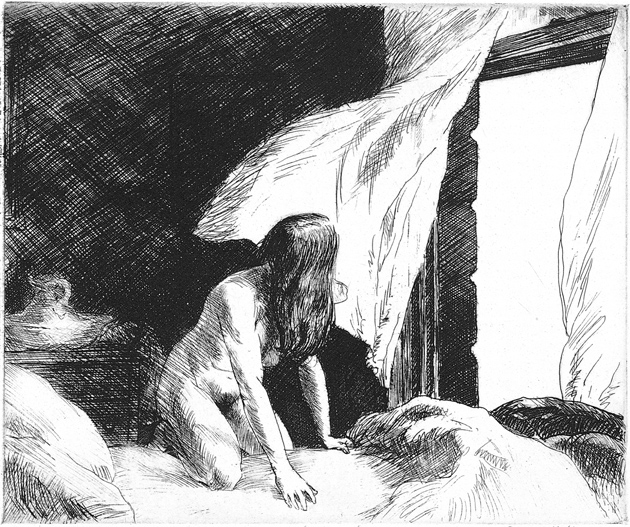
Confronted with this accusation, Glaze assures Jodie, “I’m just what I seem…. A modest man who loves you, who will love you forever…. If what she said was true, would this dog be here with me?” And Jodie makes her choice: “Jodie believes this dog. She believes this dog more than the woman.” Baxter leaves us with the menace, the possibility of violence: Jodie has exposed herself doubly, first to Glaze and then to Gleinya, opening the door both to love and to doubt, to the good and the bad, which are inextricably linked. Possibility, after all, encompasses everything.
It is no surprise, then, that Baxter should take “Gryphon” as his title story. It is, as it were, the beginning: a classical schoolchild’s almost fairy tale, retold in various forms and guises, versions of which exist for the delight of my seven-year-old son. Tommy, the narrator, is in fourth grade; and the story is about what happens when his regular teacher is replaced by a mysterious substitute, Miss Ferenczi, whose passionate, whimsical, and utterly subjective view of teaching and of the world opens the children to new realms of possibility:
“Miss Ferenczi!” One of the Eddy twins was waving her hand desperately in the air. “Miss Ferenczi! Miss Ferenczi!”
“Yes?”
“John said that six times eleven is sixty-eight and you said he was right!”
“Did I?” She gazed at the class with a jolly look breaking across her marionette’s face. “Did I say that? Well, what is six times eleven?”
“It’s sixty-six!”
She nodded. “Yes. So it is. But, and I know some people will not entirely agree with me, at some times it is sixty-eight.”
We all know Miss Ferenczi, or we used to. She appeared in childhood as Willy Wonka, or Miss Frizzle of The Magic School Bus, or even as Miss Jean Brodie, the eccentric authority figure whose magic and imagination were stronger than the everyday world around us. As Miss Ferenczi goes on to say, “I’m your substitute teacher, am I not?… Well, then, think of six times eleven equals sixty-eight as a substitute fact.” Who would not prefer the substitute?
Inevitably, the order of family and society must reassert itself, and Miss Ferenczi will be dismissed—for reading the dark Tarot cards of an unfortunate boy named Wayne Razmer, who reports her to the principal—but not before she has introduced them to stuffed figs and smoked sturgeon, to the cosmic power of pyramids, to the extraordinary monster—seen with her own eyes—that is half bird and half lion, the gryphon. In its exuberance and wistfulness, this is one of the most joyous of Baxter’s random encounters, the cracking open of Tommy’s childhood world to embrace the exotic, the magical and the new.
In the six new stories in the collection, Baxter does not grant his adult protagonists quite such wholehearted delight; and indeed, some are less successful in their insistence on the unpredictable. Notably in “Ghosts,” Melinda, a single mother caring also for her father after a stroke, is surprised by a stranger who wanders into their house and up the stairs. Edward Augenblick claims “I’m not dangerous,” and yet announces “I know you.” He also claims that he grew up in the house, although it is in fact Melinda’s childhood home. Melinda, with surprising open-mindedness, subsequently pursues an e-mail correspondence with Augenblick, then a date or two, then a fling. For Melinda if not for us, Augenblick’s dark aura dissipates entirely; or is clarified, somehow, by her unresolved relationship to her vanished, mentally ill mother.
There are echoes, at the story’s outset, of Joyce Carol Oates’s classic, devastating “Where Are You Going, Where Have You Been?”; and indeed, it is hard to reconcile the aggressive menace at the outset of “Ghosts” with Augenblick’s supposed mildness later in the story. Even more than Glaze in “Kiss Away,” he is tainted by actual, rather than reported, disturbing behavior; and yet Melinda, although she concedes that “the visitation felt like…like what? Like a little big thing—a micro-rape,” is then willing, even keen, to pursue contact with him. She is even content, as she tells a friend, to “fuck him. I was lonely. I wanted to get naked with somebody.” Her desire is all the more mysterious in that she has anticipated that “making love to him (which she would never, ever do) would be like taking a long journey to a foreign locale you didn’t exactly want to visit.” In short, she has gone out of her way to do something she didn’t want to do with someone she didn’t want to do it with. Melinda emerges as a curiously inconsistent, even implausible, character; and the story relies for cohesion on the narrative about her mother’s sad fate (Augenblick, it seems, knew her mother in the neighborhood in his childhood).
It’s as if Baxter wants to prove that, in the constant unfolding of possibility, in the throwing together of impulsive, random encounters, things can sometimes turn out better than we imagine they might: see, the story assures us, Augenblick seems creepy at first, but in fact he isn’t so bad. And yet if I could meet Melinda, I, like the hotel doorman in “The Disappeared,” would warn her otherwise.
“Royal Blue” is perhaps the richest of Baxter’s new stories, its themes at once familiar and deeply affecting. Nicholas is a former model and actor who, having renounced a career that never quite flourished (“his eyes were a bit too close together for the big time”), is now a dealer in folk art. He lives in Brooklyn with Daphne, a real estate agent who, we learn, studied the flute at Juilliard and had hoped to be a musician. Like so many Baxter characters, they’ve made good in spite of failure, resigned themselves, benignly, to real life rather than the dream life. In this case, however, they have seen this adjustment not as failure but as triumph: they are salespeople, and as Daphne says, “You and me, we just can’t be resisted.”
As purveyors to others, however, they don’t take much responsibility for themselves. Of their love, we’re told: “They had known each other since high school and had a devotion to each other that neither of them could quite accept.” When Daphne falls pregnant, not for the first time, Nicholas realizes that “easefulness, ever so gently, was slipping out of his grasp…. Somewhat against his will, he felt the voltage of his love for her pass through him.”
The story, unfolding in the wake of September 11, involves a purchase that Nicholas makes in Alaska, from an artist named Granny Westerby, for Mrs. Andriessen, a childless older client in New Paltz, New York, nicknamed by Daphne “the Adult.” Mrs. Andriessen is infatuated with him, and Nicholas is constantly debating how far to play her. When he delivers the artwork, she asks him to trim a tree branch; and while doing so he experiences a sort of epiphany:
Maybe he was tired, or feverish, but he heard her utter the sentence in blue, royal blue, the color of the northern lights and Granny W.’s inscriptions, and he felt himself spiral into light-headedness. The blue words, having entered his brain, had a sky-feeling to them, a spirit of clarity.
In the numbed veneer of his beauty and complacency, Nicholas cannot in that moment imagine what the epiphany may augur. It is “the Adult,” who sleeps under a Granny Westerby artwork that reads “Sorrow abideth beside my joyous heart,” who can anticipate something of what will lie ahead for Nicholas. When he tells her of Daphne’s pregnancy, she says, “But everything changes now. Love is tested…. You’ll have weight, my dear.”
And indeed, when Daphne miscarries only minutes after he has been thinking, at last, that he should marry her, Nicholas arrives, with Mrs. Andriessen’s prodding, at an intimacy with Daphne that had not been, theretofore, imaginable. As Daphne says to him, “we have a story now”; and more tellingly still: “You look all broken and sideways,” a comment upon which he reflects that “no one had ever used those adjectives about him before.”
Thus this story evokes, without being overly explicit, a belated onset of adulthood that echoes outward into American culture itself. There is the great tragedy of September 11, glimpsed here only obliquely, and the small tragedy of Daphne’s miscarriage: each carries its transformative weight, its human alteration. And somehow, from the Teflon good cheer and patterns of easy success that Nicholas’s model looks have always afforded him, he becomes open—not by a random encounter, but by a random act of fate—to the force of emotion—of love, that is—within himself. He will become, in this way, an adult at last: the bittersweet new world before him is filled both with love and with loss.
This is Baxter at his best: a subtle and astute observer of the human, and more particularly, of what it means to be human in the bourgeois enclaves of the United States in the early twenty-first century. Whether depicting what it entails to hope against hope, like Ellickson in “The Old Murderer,” or fully to experience emotion for the first time like Nicholas in “Royal Blue,” or even to act perversely in pursuit of self-knowledge, like Melinda in “Ghosts,” Baxter is always engaged in a kind of chemistry experiment, closely monitoring what will ensue when two or more disparate elements are—often impulsively—combined. The results, always complex, can be surprising: and, like Miss Ferenczi in “Gryphon,” they can bring us wonders we had not known we might see.
This Issue
April 28, 2011

This Issue
April 28, 2011

