
1.
With the possible exception of Homer, no cultural phenomenon from the ancient world has had a more widespread or persistent impact on subsequent generations, from Aristotle’s day to our own, than Greek tragedy. It developed primarily in Athens, in the late sixth century BCE, and, as is generally agreed, reached its peak there during the Periclean Age, with the works of Aeschylus, Euripides, and, above all, Sophocles. The plays they wrote are still performed today. Many of the problems they confronted are those of our common humanity—love, hatred, jealousy, the stresses of war, conflicting social codes—and remain as urgent now as they were when first staged. Just how urgent, and relevant, is strikingly demonstrated by the wide-ranging essays in a recent special double issue of Comparative Drama (Winter–Spring 2010), not least those, like Eleftheria Ioannidou’s and Gonda Van Steen’s, that see the passions and politics of ancient Athens renewed in the work of modern Greek dramatists.
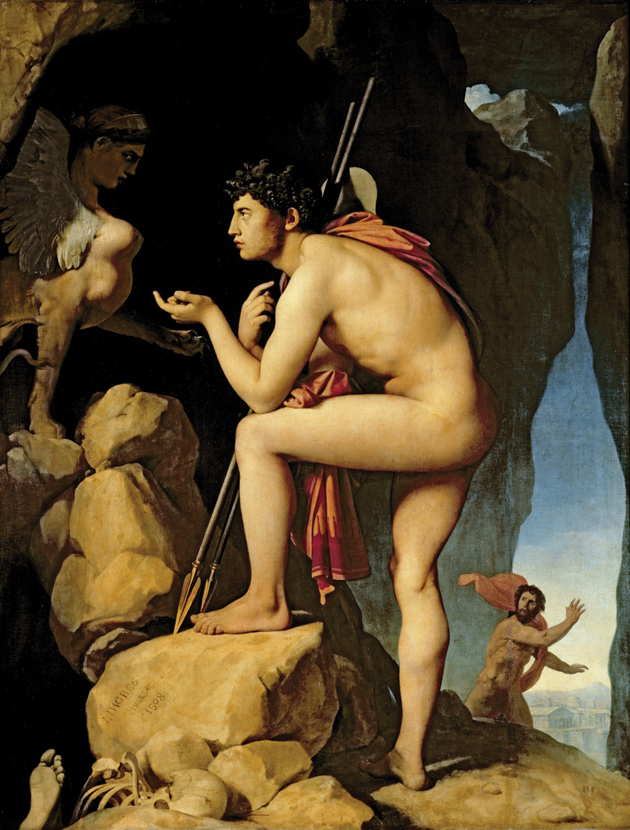
But the problems facing their ancestors could, and can, also be difficult and deceptive. Our Western world, permeated by two millennia of Judeo-Christian religious and moral assumptions, makes it a perilous business to try to understand where Greeks then stood on many crucial issues, let alone why. Their heavily anthropomorphized gods had no more moral standards, in our sense, than those primeval tribal elders and aristocratic young studs on whom they were so clearly modeled: powerful and immortal, they followed their own pleasures and whims (though apparently subject, in some sense, to Fate and Necessity), and tended to be actively malign when crossed. Humans learned to petition them for benefits, flatter them hopefully, and otherwise keep well out of their way. Homer—often described, ironically, as “the Bible of the Greeks”—offered a guidebook to what had been regarded as desirable Bronze Age human upper-class behavior: on the battlefield, in society, and when dealing with a pantheon of deities who, all too often, meddled spitefully in the affairs of mortals.
But from before the time of the Persian Wars (490–479 BCE), and increasingly thereafter, this archaic worldview—in essence a legacy from the Mycenaean Era—had come under persistent attack from a new generation of rationalizing Ionian thinkers. Hecataeus of Miletus dismissed many Hellenic myths (which, incidentally, were to provide Greek tragedy with almost all its characters and themes) as absurd. Xenophanes of Colophon attacked both Homer and Hesiod for portraying the gods as acting in ways that would be morally discreditable in human beings, and also pointed out that, just as the gods of the Thracians had red hair and blue eyes, so horses, if they could draw, would delineate their gods as horses. Later, Protagoras of Abdera, a friend of Pericles and an open religious agnostic, famously declared that man was the measure of all things. The validity of oracles became a much-debated fifth-century topic, as did the anti-Olympian myth of Prometheus defying the gods in the name of human progress.
The predictable result was an acute crisis of belief that not only pitted old against young, radical sophist against pious conservative, and the individual against society, but also split the individual’s own inner certainties. For many, while head pursued inexorable reason, heart clung to the comforts of traditional faith. This atmosphere of divided and conflicting loyalties found a perfect outlet for formal debate in the still-evolving genre of drama. Both sides were represented. While Aristophanes satirized the new thinking in The Clouds, Sophocles’ Antigone spoke up for the rights of an individual against Creon’s official trust in authoritarian law and order. In the words of Simon Goldhill and Edith Hall, tragedy, flourishing at this precise historical juncture,
could be put in the crudest terms as the clash between a Homeric world of mythic norms and a civic world of legal norms…. Tragedy thus becomes a key way of viewing the tensions and ambiguities within fifth-century democratic ideology. In this way, tragedy is recouped for history.1
Till very recently, from Aristotle’s Poetics to Bernard Knox’s seminal Oedipus at Thebes, the interpretation of surviving Greek plays has been firmly grounded in textual exegesis. In many ways this was inevitable. Greek drama, with its complex imagery, odd metaphors, and ambivalent phraseology—chiefly, but not exclusively, in the choruses, the metrical arrangements of which were far from clearly understood—has suffered more than most genres from the vicissitudes of scribal transmission. Thus the editing did indeed perform an essential function. Yet even when the text seemed clear, its meaning often remained (and indeed remains) in dispute.
Also, until very recently the plays were treated, like all other ancient texts, primarily as literature to be read, rather than as theatrical scripts to be performed, for which the music, the stage directions—and, too often, any certainty about who spoke which lines—had been irretrievably lost. This literary approach, validated and virtually prescribed by Aristotle’s Poetics, not only shaped the subsequent nature of Greek dramatic criticism; it for a long time dictated—so great was Aristotle’s authority—both who was the greatest playwright (Sophocles) and which of his plays was the most perfect (the Oedipus Tyrannus).
Advertisement
But as Ruth Scodel reminds us in her sensible recent guide, An Introduction to Greek Tragedy, when all allowances are made, “there is no reason that we should follow Aristotle’s rules for deciding what makes a tragedy good.” Because Aristotle saw plays more or less exclusively as literature, judged them by their plots and emotional impact (on both of which he had highly personal notions, in part through opposition to Plato), and was indifferent to spectacle, music, and theatricality, there is no reason why we should do the same; recent decades have seen a widespread, and persuasive, preference for approaching ancient theater, in the first instance, as performance.2
This has also led to a welcome new scrutiny of the composition, and participatory function, of the audience. Was it, as has often been assumed,3 a more or less homogeneous body of male citizens, who also voted in the Assembly, thus representing a kind of democratic consensus? No, says David Kawalko Roselli, in Theater of the People, a brilliant and convincing reexamination of all the evidence: these formed only one section of a heterogeneous, demanding, and critical body that included foreigners, slaves, resident aliens, and, yes, women. This picture, too, needs to be integrated into our concept of ancient theater and what dictated its playwrights’ aims. Finally, and perhaps most important, how far, today, can we accept the conventional wisdom (originating with Aristophanes in The Frogs, improved by Aristotle, and given a fresh lease of life by Nietzsche) according to which, Scodel writes, “Aeschylus is grand but primitive, Euripides clever but decadent, Sophocles perfect and serene”? And does the Oedipus Tyrannus in fact deserve the supreme position that Aristotle, and so many critics since, have confidently assigned to it?
2.
Though current conventional wisdom dismisses most ancient accounts of Greek poets as fiction generated from their own works,4 enough reasonably reliable evidence survives to enable us to put together a convincing picture of Sophocles’ life and character. Born probably in 496/495, he was seven years younger than Aeschylus and twenty-four years older than Euripides. As a teenager he is said to have led the victory dances celebrating the Battle of Salamis in 480. He was of good birth, and well educated. The debated tradition that his father was a bronze-smith or swordmaker probably in fact means that he was “in armaments.” Aristophanes, conscious in 421, at the end of the ten-year Archidamian War, that such people would lose much of their income, remarks of Sophocles that in his old age he’d go to sea on a mat to turn a profit.
Sophocles, who in his surviving plays never directly attacks warfare, also knew the dirty work of empire at firsthand. In 443/442 he was a chief tribute-collector (Hellenotamias), and several years later a “general” (strategos) during the campaign against the rebellious island of Samos, though his function then seems to have been largely diplomatic, and he himself admitted that Pericles had told him he might write good poetry, but knew nothing about strategy. Happy, clever, pious (in 420 he gave temporary house-room to Asclepius’ sacred snake), good-natured: these are the epithets regularly bestowed on him. He was much in demand to go on embassies, and he was up on all the latest intellectual trends. His plays won at least twenty victories (the first of them in 468 with the Triptolemus, when he defeated the veteran Aeschylus), and he was never beaten into third place. He sounds like an epitome of the genial, talented, successful conformist.
Yet Sophocles’ work is obsessed with scapegoats and outcasts, with mysterious forces beyond human control. After the disastrous failure of Athens’s Sicilian expedition in 413, by now an octogenarian, he was one of ten emergency commissioners (probouloi) given extraordinary powers to deal with the crisis. He joined in voting authority to the conservative group of Four Hundred citizens, which in 411 emerged as a dictatorial junta. Asked about his decision, he admitted that it was bad, but claimed that there was no better way.5 This left its mark on him. Brute necessity (anankê) and the sly political rhetoric that drives it are central features of his brilliant Philoctetes (409). The apologia of Oedipus in his posthumous Oedipus at Colonus (401) may well have been dictated in part by his own feelings of guilt and remorse over that fatal vote.6
Most important of all, the scattered evidence for his life makes it abundantly clear that in Sophocles those conflicting loyalties described above would find their classic embodiment. In the famous chorus of the Antigone beginning “Many the wonders, but none more wondrous than Man,” he admiringly lists all humankind’s Promethean achievements, but ends, nevertheless, by rejecting utterly any individual who in the pursuit of these achievements abandons not only this world’s laws but, more important, the high justice of heaven. A prominent Periclean intellectual, he still (like his friend Herodotus) takes reputable oracular pronouncements seriously, and his natural piety shies away from arguments leading to atheism. So in his dramatic world free will at times seems circumscribed by fate. Fallible humans variously fail, until it is too late, to recognize the truth (of pronouncements by oracles in particular), especially when the message comes wrapped up in those riddling signs used by the gods to warn mankind. The immutabilities of fate and the gods’ arbitrary fiats are the price that must be paid to preserve traditional civic, moral, and emotional stability. Saving the appearances is never easy, and in Sophocles’ tragedies the difficulties involved can sometimes dictate the action. Of no play is this truer than the Oedipus Tyrannus.
Advertisement
3.
The half-century between the defeat of Xerxes’ Persian expedition (479) and the outbreak of the Peloponnesian War (431) witnessed the peak of Athens’s civic and cultural achievements, and is known, with good reason, as the Periclean Age. But success also brought what many regarded as an alarming change in Athenian goals and ambitions. The city-state that had, against all calculable odds, stood off invasion by the greatest empire then known rapidly acquired imperial instincts itself. The original island members of a naval defense league against Persia now found themselves de facto subjects of Athens, the protection money they had paid turned into tribute, while any—most notably Samos—that tried to break loose were ruthlessly whipped back into line. Meanwhile a new generation of Athenian intellectuals was setting out to prove that rational man, rather than the sanctified tradition of the gods, was indeed the measure of all things.
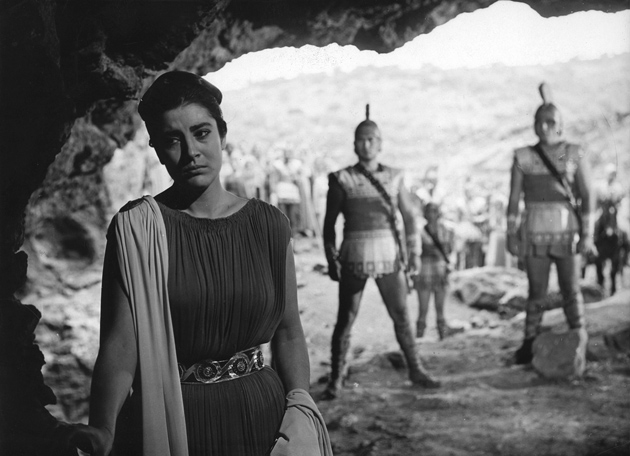
The political and economic success of this new regime made its beneficiaries reluctant to challenge it openly, though conservatives regularly accused the Periclean government of public contempt for religious scruples, and many saw trouble ahead in Athens’s looming power struggle with Sparta. But the indirect approach was another matter. Herodotus in his Histories, great though his admiration was for the men who had fought at Marathon and Salamis, again and again subtly indicates that Athenians were in very real danger of themselves becoming the aggressive imperialists they had so triumphantly defeated.7 Nor was it to be supposed that his friend Sophocles, who wrote the chorus we looked at earlier in the Antigone warning sophists and scientists against Promethean excess, would not in his own way warn of the same danger; and we should be eternally grateful to the late Bernard Knox for spelling out for us, in meticulous detail, how he did so.8 Of all Sophocles’ plays, the Oedipus Tyrannus is the most quintessentially Athenian, and the fate of its overconfident protagonist can be seen as offering a stern warning to Athens’ radical and increasingly secular leaders.9
Early versions of the Oedipus myth have little in common with that presented by Sophocles apart from the central facts of parricide and incest.10 What, for example, was the original cause of Oedipus’ fate? His father Laius, we are told, fancied Pelops’ son Chrysippus, and carried him off in the first (but by no means the last) homosexual abduction known to Greek myth. Pelops cursed Laius; and the latter’s death at the hands of his son, who then unwittingly married his mother Jocasta, was the working out of this curse. Oedipus was thus paying, in effect, for the sins of his father. We also learn that Hera sent the Sphinx to terrorize Thebes in retribution for Laius’ unlawful passion. Even more disconcertingly, early tradition has nothing to say about Oedipus’ self-blinding or exile: he seems to have remained in wealth and power at Thebes until his death, leaving the sons of his incest (whom he, in his turn, cursed, for what seem trifling reasons) to fight over his flocks and destroy each other in a meaningless civil war.
This unedifying and largely amoral legend does not, on the face of it, look like promising material for a Sophoclean tragedy. But watch. Sophocles discards the embarrassing curse by Pelops altogether, leaving the fate prescribed for Oedipus unexplained (both Jocasta and Oedipus himself simply report it as an oracle). Instead he introduces, as an index of something rotten in the state of Thebes, a plague very similar to that which had devastated Athens in recent memory.11 Again, Delphi pronounces: the plague is due to pollution caused by Laius’ murder. This lets Sophocles set up the rest of the play as a gripping investigation, full of unconscious ironies, in which Oedipus, drawn as a self-reliant, not to say arrogant, Athenian-style intellectual, determinedly hunts down the man responsible for this pollution: himself.
Vigorous, rational, energetic, daring, and brusquely patriotic, Sophocles’ Oedipus is the very embodiment of the popular image of a fifth-century polis leader. He prides himself on having solved the Sphinx’s riddle (something the seer Teiresias failed to do) by native wit. He is quick to suspect treasonous conspiracies. His inquiry is described in the language of the Athenian law courts, and he conducts his interrogation of witnesses in proper judicial form. His virtues and faults are, as Knox says, those of the Athenian democracy. “The audience which watched Oedipus in the theater of Dionysus was watching itself,” and what it saw reflected was a disbelief in oracles, a contempt for divine law, and a hubristic pride, all ultimately brought low by inexorable fate and the will of heaven. Hubris engenders a tyrannos, the Chorus declares. How far, the play’s spectators must have asked themselves, was Athens, too, proving to be its own tyrannos?
4.
For all these reasons, but above all because it is a well-constructed play written by a subtle, brilliant, and difficult poet, the Oedipus Tyrannus has never lacked for critics or translators: the first group seldom agreeing among themselves, the second rarely, if ever, producing a version that accounts for Sophocles’ literary reputation. As H.D.F. Kitto, musician as well as scholar, modestly but correctly declared in the preamble to his own attempt in his Greek Tragedy, “Sophocles’ style is so supple, with such constant and dramatic variation of diction, rhythm, pace, and tension that no translator dare pitch his hopes very high.”12 Perhaps as a result even the best ones, such as David Grene’s, tend to have a slightly anodyne quality: their blank verse narrative is careful but unremarkable, their choruses conduct their vers libre reflections in the general style of the poet H.D. and the early Eliot. Watching the Greek with care, keeping line-equivalence, and avoiding embarrassing literalisms, they are acceptable, even actable, and about as near to the general pattern of their original as anyone had previously come. The trouble is, they’re just not as exciting as the Greek, and this many would regard as inevitable anyway.
Thus those setting out to compete in what by now is a crowded, if not over-distinguished, field need to have a very clear idea of just how they think they can improve on their predecessors. In the translations of Robert Bagg, James Scully, and David Mulroy, the most pressing need felt seems to be to radically simplify the original. Bagg, who translates the Oedipus Tyrannus, uses a plain, clipped style for both choral passages and speeches, ironing out the ambiguities, favoring colloquialisms, and occasionally inserting a brief explanatory word.
The result is printed as verse but reads more like chopped-up conversational prose. Here and there a blank verse line surfaces in the speeches; Bagg’s choruses, even more staccato, work at unraveling Sophocles’ complex choruses in a way apparently deemed acceptable to (that is, understandable by) a modern theater audience, but one of a pretty low intellectual level. On the other hand this version, purged as it is of Sophocles’ subtleties, does suggest, when read aloud, that it could play well on stage. Depth has been traded for dramatic impact. You win some, you lose some.
David Mulroy is a professional classicist who would seem to have had bad luck with the students in his classics-in-translation courses. His audience (to judge by his intriguing preface) is one that needs to be painstakingly taught just how long and short syllables are used to make up a blank verse line, while the line itself he regards as so difficult for the layman to appreciate that he carefully avoids all variations of stress in his translation, since such irregularities (his word) tend “to obscure the regular rhythm and derail the momentum.” Thus his speeches read as though written to a metronome, while his idea of making Sophocles’ choruses accessible to that hypothetical man-in-the-street is to avoid free verse “with its characteristic obscurity” and to bundle the choruses up instead in catchy little rhyming stanzas, a ploy, I’d argue, that confuses by false associations, besides seriously underestimating the critical intelligence of those ancient theatergoers who took pleasure in learning intricate choral sequences by heart. On the other hand his introductory notes on such matters as the historical background, fate vs. free will, and (inevitably) the Oedipus Complex are clear and useful.
Perhaps the best way to illustrate the competing methods, virtues, and drawbacks of these translations is to compare their versions of a difficult but fairly familiar choral passage: that on the dangers of hubris (lines 873–881). First, then, the literal prose version of Hugh Lloyd-Jones:
Insolence has a child who is a tyrant; insolence, if vainly satiated with profusion that is not right or fitting, mounts to the topmost cornice and is forced to leap from a steep pinnacle into sheer constraint where its feet can do it no service. But I pray the god never to undo the wrestler’s throw that brought good to the city.13
How to bring these odd images home to a modern audience? Here is Bagg: “A violent will/fathers the tyrant,/and violence, drunk/on wealth and power,/does him no good./He scales the heights—/until he’s thrown/down to his doom,/where quick feet are no use./But there’s another fighting spirit/I ask god never to destroy—/the kind that makes our city thrive.” And Mulroy: “Hubris breeds a tyrant. When/hubris satisfying its yen/for harmful substances ascends/the topmost beam to where it ends,/there must come next a sharp descent/that skilful feet can not prevent./God, keep the city in your grip.”
The first thing we learn from this is that (as every Herodotean is painfully aware) no two people are likely to agree on what that elusive vice hubris is. Equally in evidence is the old standby for verse translators: if you don’t like it or can’t fathom it out, either omit it, explain it, or change it to something else. Bagg identifies the improper profusion as wealth and power: he may be right, but Sophocles doesn’t say this, and neither should he (Kitto, interestingly, makes exactly the same mistake). The epithets attached to the “profusion” are gone. Violence in Sophocles’ Greek is glutted, not drunk: Why such a change, if not for a comforting cliché? It climbs, dramatically, to the rooftop: Why lose this vivid image? It also isn’t thrown down, let alone “to his doom” (not in the Greek); it jumps (even Lloyd-Jones’s “is forced to” is an arbitrary addition). Mulroy’s jingle with its strained rhymes grates on the ear and calls up wholly irrelevant associations, but does in fact get a little nearer to the sense of the original. Even so, those “harmful substances” sound as though they’ve strayed in from Reefer Madness, and the wrestling metaphor, with its hint of stimulating civic rivalry, has simply been dumped.
Performance here, clearly, is all: anything that hinders immediate apprehension is watered down or discarded. It’s revealing, in this context, to compare these two versions with that of David Grene: “Insolence breeds the tyrant, insolence/if it is glutted with a surfeit, unseasonable, unprofitable,/climbs to the rooftop and plunges/sheer down to the ruin that must be,/and there its feet are no service./But I pray that the god may never/abolish the eager ambition that profits the state.” All that’s been sacrificed is the wrestling metaphor (palaisma), while “unseasonable, unprofitable” is closer to what Sophocles is saying even than Lloyd-Jones’s “not right or fitting.”
Grene has gone to the trouble—by no means an easy task—of making Sophocles’ meaning crystal clear to any reasonably intelligent listener. This is not to say he can’t be improved upon. Of course he can. But neither Bagg nor Mulroy, on current showing, has done so, and for now Grene’s version is still the best bet for any Greekless student or theatergoer who wants to get some sense of Sophocles’ style. The field remains enticingly wide open.14

-
1
Sophocles and the Greek Tragic Tradition, edited by Simon Goldhill and Edith Hall (Cambridge University Press, 2009), pp. 14–15. In a recapitulation of the arguments presented in support of this thesis by its originators, Jean-Pierre Vernant and Pierre Vidal-Naquet, most recently in Myth and Tragedy in Ancient Greece, translated by Janet Lloyd (Zone, 1988), Goldhill has since, in Sophocles and the Language of Tragedy (Oxford University Press, 2012), developed these ideas further, analyzing the theatrical implications of Sophocles’ language for actors, chorus, and audience, and then setting his results against the changing contexts of social and critical reception. ↩
-
2
In this, as in so many other ways, H. D. F. Kitto’s Greek Tragedy (first published in 1939) was decades ahead of its time. The revised third edition (1961) has recently been republished, with a useful foreword by Edith Hall (Routledge, 2011). ↩
-
3
See, for example, Simon Goldhill and Edith Hall in Sophocles and the Greek Tragic Tradition, pp. 27–47; Victor Ehrenberg, The People of Aristophanes (Blackwell, 1943), pp. 27–28; David Wiles, Tragedy in Athens: Performance Space and Theatrical Meaning (Cambridge Univeristy Press, 1997), p. 212. ↩
-
4
This attitude, largely a somewhat exaggerated reaction to the “biographical fallacy” that interpreted a poet’s work in terms of his own life, owes most to Mary Lefkowitz’s highly influential monograph, The Lives of the Greek Poets (Johns Hopkins University Press, 1981). John Gould, in his article on Sophocles in The Oxford Classical Dictionary (revised third edition, 2003), p. 1423, argues that “there seems to be just enough reliable material to construct a public persona.” ↩
-
5
See Thucydides 8.1.3, 63.3–70; Aristotle Athenian Politics 29–33, Rhetoric 3, 1419a25–30. See also M.H. Jameson, “Sophocles and the Four Hundred,” Historia 20 (1971), pp. 541–568; William M. Calder III, “The Political and Literary Sources of Sophocles’ Oedipus Coloneus,” in Hypatia: Essays in Classics, Comparative Literature, and Philosophy, presented to Hazel E. Barnes on her Seventieth Birthday, edited by William M. Calder III, Ulrich K. Goldsmith, and Phyllis B. Kenevan (Colorado Associated University Press, 1985), pp. 1–14. ↩
-
6
See in particular lines 270–274, aptly cited (in R.C. Jebb’s translation) by Calder, Hypatia, p. 10: “And yet in nature how was I evil? I who was but requiting a wrong, so that, had I been acting with knowledge, even then I could not be accounted wicked; but, as it was, all unknowing went I—whither I went—while those who wronged me knowingly sought my ruin.” ↩
-
7
See, for example, Charles Fornara, Herodotus: An Interpretative Essay (Clarendon Press/Oxford Univeristy Press, 1971). ↩
-
8
Bernard Knox, Oedipus at Thebes (Yale University Press, 1957). See in particular Chapter 2. ↩
-
9
Many have wondered why the play that garnered Aristotle’s stamp of particular approval did not win first prize. The unease created by its unwelcome coded message suggests one persuasive reason. ↩
-
10
For an excellent exegesis of this Theban Ur-myth and its complicated variants, see Timothy Gantz, Early Greek Myth: A Guide to Literary and Artistic Sources (Johns Hopkins University Press, 1993), pp. 488–502. ↩
-
11
We do not have sure evidence for the date of the Oedipus Tyrannus, but Knox’s arguments for 425 BCE or thereabouts remain by far the most convincing: see his article “The Date of the ‘Oedipus Tyrannus’ of Sophocles,” American Journal of Philology, Vol. 77, No. 2 (1956), pp. 133–147. The plague (of 430–426 BCE) is that described by Thucydides (2.47-58, 3.87). It was spread by overcrowding within the Long Walls, caused by Pericles’ unpopular policy of bringing in the folk of rural Attica and leaving the countryside to Spartan raiders. Spectators of the Oedipus Tyrannus would not have been slow to make the connection. ↩
-
12
H.D.F. Kitto, Sophocles: Three Tragedies. Antigone, Oedipus the King, Electra (Oxford University Press, 1962), p. v. See also David Grene, Three Greek Tragedies in Translation (University of Chicago Press, 1942), Robert Fagles, Sophocles: The Three Theban Plays (Viking, 1982), and Stephen Berg and Diskin Clay, Sophocles: Oedipus the King (Oxford University Press, 1978). ↩
-
13
Sophocles: Ajax, Electra, Oedipus Tyrannus, edited and translated by Hugh Lloyd-Jones (Harvard University Press, 1994) p. 413. ↩
-
14
Any future translator should heed the wise warning of the late Donald Carne-Ross—described by his posthumous editor Kenneth Haynes as “the finest critic of classical literature in English translation after Arnold” (often in these pages)—who once wrote, in an essay entitled “Jocasta’s Divine Head”: “When we read Sophocles in Greek, we know that we are abroad. Ethnocentric translation naturalizes Sophocles, leaving us with the false comfort of feeling chez nous.” See Classics and Translation: Essays by D.S. Carne-Ross, edited by Kenneth Haynes (Bucknell University Press, 2010), p. 20. ↩