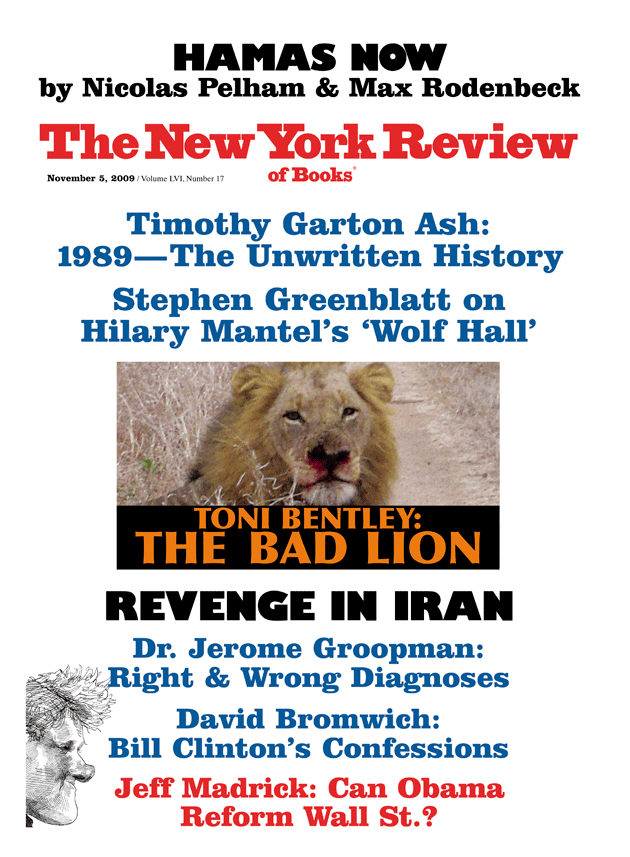
1989: The Struggle to Create Post–Cold War Europe
by Mary Elise Sarotte
Uncivil Society: 1989 and the Implosion of the Communist Establishment
by Stephen Kotkin, with a contributionby Jan T. Gross
Der Vorhang Geht Auf: Das Ende der Diktaturen in Osteuropa
by György Dalos
The Year That Changed the World: The Untold Story Behind the Fall of the Berlin Wall
by Michael Meyer
Histoire secrète de la chutedu mur de Berlin
by Michel Meyer
Revolution 1989: The Fall of the Soviet Empire
by Victor Sebestyen
The Fall of the Berlin Wall: The Revolutionary Legacy of 1989
edited by Jeffrey A. Engel
There Is No Freedom Without Bread! 1989 and the Civil War That Brought Down Communism
by Constantine Pleshakov
Tear Down This Wall: A City, a President, and the Speech That Ended the Cold War
by Romesh Ratnesar
Luis Meléndez: Master of the Spanish Still Life
an exhibition at the National Gallery of Art, Washington, D.C., May 17–August 23, 2009; the Los Angeles County Museum of Art, September 23, 2009–January 3, 2010; and the Museum of Fine Arts, Boston, January 31–May 9, 2010
The Clinton Tapes: Wrestling History with the President
by Taylor Branch
Carrying the Heart: Exploring the Worlds Within Us
by F. González-Crussi
The Deadly Dinner Party and Other Medical Detective Stories
by Jonathan A. Edlow, M.D.
The Secret Sentry: The Untold History of the National Security Agency
by Matthew M. Aid
Edward Lear in Albania: Journals of a Landscape Painter in the Balkans
by Edward Lear, edited by Bejtullah Destani and Robert Elsie, with a preface by Vivien Noakes
Edward Lear: The Life of a Wanderer
by Vivien Noakes
The Complete Verse and Other Nonsense
by Edward Lear, edited by Vivien Noakes
Nonsense Botany and Nonsense Alphabets
by Edward Lear
Nonsense Songs and Stories
by Edward Lear
Inside Hamas: The Untold Story of the Militant Islamic Movement
by Zaki Chehab
Hamas in Politics: Democracy, Religion, Violence
by Jeroen Gunning
Kill Khalid: The Failed Mossad Assassination of Khalid Mishal and the Rise of Hamas
by Paul McGeough
Byzantium Rediscovered
by J.B. Bullen
Hagia Sophia, 1850–1950: Holy Wisdom Modern Monument
by Robert S. Nelson
The Wilderness Warrior: Theodore Roosevelt and the Crusade for America
by Douglas Brinkley
The Big Burn: Teddy Roosevelt and the Fire That Saved America
by Timothy Egan
A Paradise Built in Hell: The Extraordinary Communities That Arise in Disaster
by Rebecca Solnit
A New Literary History of America
edited by Greil Marcus and Werner Sollors
Financial Regulatory Reform: A New Foundation: Rebuilding Supervision and Regulation
In Fed We Trust: Ben Bernanke's War on the Great Panic
by David Wessel
House of Cards: A Tale of Hubris and Wretched Excess on Wall Street
by William D. Cohan
A Colossal Failure of Common Sense: The Inside Story of the Collapse of Lehman Brothers
by Lawrence G. McDonald with Patrick Robinson
Subscribe and save 50%!
Read the latest issue as soon as it’s available, and browse our rich archives. You'll have immediate subscriber-only access to over 1,200 issues and 25,000 articles published since 1963.
Subscribe now
Subscribe and save 50%!
Get immediate access to the current issue and over 25,000 articles from the archives, plus the NYR App.
Already a subscriber? Sign in